

Remember when you could pop down to the chemist for Ranitidine and not give it a second thought? The game's totally changed now. For many folks living with heartburn or acid reflux, especially if Gaviscon just won’t cut it, Ranitidine was a kitchen cupboard staple. But headlines around the globe changed all that in 2020, when regulators pulled Ranitidine from most of the world’s shelves, citing possible contamination with NDMA, a chemical thought to increase cancer risk if taken long term. Suddenly, millions were left scrambling for answers, and the shape of the online market was turned upside-down. But with internet pharmacies multiplying faster than you can say "indigestion," and new international rules for medicines, can you really trust what’s in your shopping basket?
What Happened to Ranitidine and Why Are People Still Searching for It?
It’s wild—remember seeing those news updates about Ranitidine recalls nearly everywhere in 2020? The UK’s Medicines and Healthcare products Regulatory Agency (MHRA) led the charge, saying Ranitidine might contain traces of NDMA. Suddenly, Ranitidine vanished from Boots, supermarkets and even NHS prescription lists. This left millions of heartburn sufferers in an awkward spot, let alone parents whose kids needed liquid Ranitidine for rare pediatric cases like reflux or Zollinger-Ellison syndrome. Why does it matter now, in 2025? Well, alternatives aren’t always perfect: other meds like famotidine or omeprazole can have side effects or don’t work as well for everyone. That’s driven a persistent online search for "buy ranitidine online"—a whopping 12,000+ Google searches in the UK alone last month. Many people can’t shake the feeling that Ranitidine worked best for them and want to find a reliable source.
But here’s the twist: In early 2023, some global pharmaceutical manufacturers started reissuing Ranitidine after changing their production methods to remove NDMA risk. Not all countries approved its comeback, and in the UK it’s still not sold over the counter or included on NHS prescriptions. This has created a kind of ‘pharmacy black market’ online. The MHRA and NHS advise against self-sourcing from questionable sites—but plenty do, determined to get back what once helped their symptoms. “If you’re taking a medicine not approved in your country, you’re taking on extra risk,” warns Dr. James Toogood, consultant in allergy and respiratory medicine at Southmead Hospital, Bristol.
So, why is there so much demand? Partly nostalgia, partly that nothing has quite replaced Ranitidine for some. Some people believe their own risk is low, if they don’t take it long-term or only use as-needed. The online demand continues, despite all the warnings.
What to Know Before You Buy Ranitidine Online
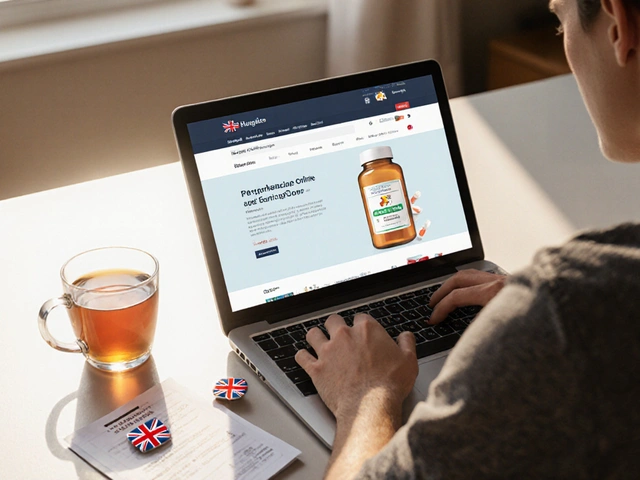
So, you’re more than tempted to look up “where to buy ranitidine online” or have even tried to track down a trustworthy-looking pharmacy. Makes sense—after years of trying every chewable tablet in Sainsbury’s, who wouldn’t? But there are some rules (and red flags) you shouldn’t ignore. Number one: you can’t buy Ranitidine from any UK-registered pharmacy, full stop. Any shop selling it as a "new" medicine in Britain without a prescription is not following the law. Some online pharmacies based overseas claim they’re legal, but in reality, the rules are patchy. The most trusted are the ones certified by their own government agencies, like the FDA (USA) or EU regulators—but even then, the UK’s MHRA points out, importing prescription-only meds into the UK can lead to customs seizures, or worse.
Here are a few simple signs to look for if you’re determined to shop online (but don’t say I didn’t warn you!):
- The website is registered and shows a real pharmacy licence (check for the GPhC logo or a Verified Internet Pharmacy logo if it serves the UK).
- It asks for a copy of your prescription or a doctor’s online consultation—be wary of sites that just take your money and send drugs, no questions asked.
- There’s clear contact info (like email, not just a form), and the business address matches what the licence shows.
- No strange prices—a box of ranitidine for pennies probably means counterfeit meds.
- Packaging and expiry dates are pictured clearly.
- The check-out uses proper payment processors and secure HTTPS browsing.
Even the best-looking overseas pharmacies might get stuck at customs. The UK Border Force has stepped up medication checks post-Brexit, and customs can destroy “unauthorised drugs” on arrival. Not only that, but some fakes look scarily like the real deal, even to pharmacists. Poisoning from counterfeit meds is a genuine threat, not tabloid scare-mongering. As one BBC investigation from 2024 showed, eight of ten supposedly "genuine" Ranitidine packs sold online failed simple drug-content tests, and one even contained no active ingredient at all. Wild, right?

Safer Ways to Find Reliable Ranitidine Alternatives
All this might have you feeling a bit defeated—but there are workarounds that actually help. Some people do try to order Ranitidine online from countries where it’s been re-approved (like some areas in Asia, Canada, or the Middle East), but this comes with all the headaches we just talked about. For most families, talking with a GP or pharmacist is a smarter next step. There’s been huge progress with new antacid and H2 antagonist medicines since 2022, and you don’t need to risk dodgy pills bought off the web. New brands of famotidine have fewer side effects than the old school versions, and liquid alternatives now exist for kids, which is a relief for mums like me.
The Royal Pharmaceutical Society in 2023 released advice saying,
"Patients who used to rely on ranitidine should speak to their pharmacist about newer, licensed medicines that are both safer and more effective due to stricter controls introduced post-recall."This is important because these medicines have been through the latest EU/UK safety hoops. Gaviscon Advance and Esomeprazole are now available in higher-strength over-the-counter forms and can be just as effective if you give them a fair shot. Your pharmacist can point you toward the next-best option. Some even offer virtual consults, so you don’t need to queue in person.
If you still want to check out international pharmacies, stick to these tips:
- Research the laws in both the source country and the UK about importing meds.
- Ask customer service specific questions and see how informed they seem.
- Only pay with traceable, protected methods (never cryptocurrency or wire transfers).
- Save screenshots of all correspondences and the website’s details just in case.
- Be honest with your doctor about what you’re ordering—they can help spot counterfeits if something seems off.
Some families connect with rare disease support groups where members share reliable websites for hard-to-find medications, including Ranitidine. Facebook Groups and Reddit threads from 2024 suggest some legitimate Canadian pharmacies—these still won’t always get past UK customs, but it’s a better option than random sellers. An unofficial tip floating around the reflux groups: check the Canadian International Pharmacy Association (CIPA) site, which lists online chemists that have proven trustworthy for UK customers. Of course, this is always a gamble, but reading recent reviews helps weed out the worst scams.
The Future of Ranitidine: Will It Be Back in the UK?
People are anxiously waiting for a UK-legal comeback. There’s talk in the pharmaceutical industry of a "clean" version of ranitidine that might pass all the NDMA safety checks, possibly hitting the European and UK markets in late 2026. Until then, regulators like the MHRA stress patience: “We are tracking every newly developed ranitidine sample from international labs—none have passed our full panel of impurity checks as of July 2025.”
Meanwhile, some NHS consultant gastroenterologists are quietly hopeful. They believe that with modern synthesis and strict independent lab checks, Ranitidine will eventually be back on the shelf for those who really need it, but the timeline remains uncertain. Until then, keep your eyes peeled for any medical news or official MHRA releases. If a recall gets lifted, it’ll be headline news, and proper pharmacies will advertise it—never rely on social media hearsay.
So, if you’re sitting there frustrated and searching the web at midnight, you’re not alone. Loads of us are, including parents scrambling for safe antacid options for kids, or older folks watching their favourite go-to medicine slip out of reach. Put your health first, check the source, and always talk to a real pharmacist before you click ‘buy’—that’s what’s going to keep you, and your stomach, happiest in the long run.


sharicka holloway July 29, 2025
I remember when I first tried ranitidine after my doctor switched me from omeprazole-worked like magic for my acid reflux. No more midnight wake-ups, no more burning throat. It’s frustrating that something so effective got pulled without a clear replacement for everyone. I get the NDMA concerns, but I also know people who took it for years and never had issues. The real problem isn’t the drug-it’s the lack of transparency from regulators and the rush to replace it with more expensive alternatives that don’t work the same way.
Now I’m stuck buying from a Canadian pharmacy I vetted for months. They’re CIPA-certified, require a prescription, and ship with tracking. It’s not perfect, but it’s the only way I can manage my condition without risking my health with sketchy online sellers.
Don’t let fear stop you from finding safe options. Just do your homework. Talk to your pharmacist. Don’t trust Amazon sellers or Instagram ads. Real help exists, but you have to hunt for it.
And yes, I’m still waiting for the UK to bring it back. It’s 2025. We deserve better than this.
Alex Hess July 31, 2025
Wow. Another emotional plea for a drug that was pulled for being a potential carcinogen. Did you even read the science? NDMA isn’t some vague ‘maybe’-it’s a confirmed genotoxin. People are dying from contaminated meds, and you’re out here romanticizing a 1980s antacid like it’s a vintage wine? The fact that you’d risk your liver for nostalgia is pathetic. Go try famotidine. It’s cheaper, safer, and not banned for good reason. Stop being a liability to public health.
Lauren Zableckis July 31, 2025
I get why people miss ranitidine. I used to take it for years too. But I also get why it got pulled. It’s not about being scared-it’s about being smart. I switched to famotidine and honestly? It’s better. Less bloating, no weird taste, and my doctor says it’s got a cleaner safety profile now. I know it’s not the same for everyone, but I think we’re all just trying to find what works without risking our health. Maybe the real issue isn’t the drug-it’s that we don’t have enough affordable, accessible options that feel as reliable as the old stuff.
Still, I’m glad someone’s talking about this. It’s not just about pills. It’s about trust in the system.
Asha Jijen July 31, 2025
ranitidine was my lifesaver no cap i took it for 10 years and never got cancer my mom still takes it from india and she’s 72 and fine why are we pretending this is a big deal the west overreacts to everything and now we’re stuck with expensive stuff that dont even work same as before
Edward Batchelder August 2, 2025
Let’s pause for a moment and recognize the humanity here. Millions of people aren’t just chasing a drug-they’re chasing relief. Relief from pain. Relief from sleepless nights. Relief from feeling like they’ve been abandoned by the system. Ranitidine wasn’t just a pill; it was a rhythm in their lives. And now, because of bureaucratic caution and corporate risk-aversion, they’re being forced into untested alternatives or risky underground markets.
This isn’t about ignorance. It’s about inequity. The people who can afford to see specialists, get prescriptions, and pay for imported meds are fine. But what about the single parent working two jobs? The elderly on a fixed income? The child with rare reflux? They’re the ones left holding the bag.
Let’s stop villainizing people who are trying to survive. Let’s demand better from regulators. Let’s push for transparent, affordable, safe access-not just for the privileged few, but for everyone. That’s what real public health looks like.
reshmi mahi August 3, 2025
lol usa and uk act like they’re so advanced but they banned a cheap medicine that worked and now people are buying from india and canada like it’s a crime? 😂 we have better quality meds here than your overpriced pharma junk. why are you scared of a pill that your grandmas used? your doctors just want you on $200/month protonix. wake up!
laura lauraa August 5, 2025
It’s profoundly tragic, isn’t it? The commodification of health has reached such a zenith that individuals are now forced to navigate the labyrinthine, perilous terrain of unregulated pharmaceutical markets-not because they’re reckless, but because the very institutions entrusted with their well-being have, in the name of risk mitigation, rendered them utterly helpless. The psychological toll is immeasurable: the erosion of autonomy, the institutional betrayal, the quiet despair of knowing that your body’s needs are being treated as a liability rather than a human imperative.
And yet, the silence from the medical establishment is deafening. Where are the advocacy efforts? The policy reform? The compassionate reconsideration of risk-benefit ratios? Instead, we are met with sterile, algorithmic directives: “Take famotidine.” “Use Gaviscon.” As if the soul of a patient’s lived experience could be reduced to a clinical algorithm.
Is this what progress looks like? A world where safety is weaponized, and suffering is sanitized into compliance?
Gayle Jenkins August 5, 2025
Hey, I see you. I’ve been there. I remember the first time ranitidine actually made my heartburn disappear instead of just masking it. And I get how scary it is to lose that. But here’s the thing-you don’t have to choose between desperation and danger.
I started with famotidine, didn’t like it. Then I tried a low-dose omeprazole with a probiotic, and that combo changed everything. My doctor helped me adjust the timing and dosage until it clicked. It took three tries. It took talking to a pharmacist who actually listened. And guess what? I haven’t had a flare-up in 11 months.
Don’t give up. Don’t buy from shady sites. Don’t assume the system is broken beyond repair. It’s just slow. And you’re not alone. There are real, safe alternatives. You just have to be persistent. And yes, it’s a pain. But your stomach deserves better than a gamble.
Kaleigh Scroger August 5, 2025
People keep talking about ranitidine like it’s some lost wonder drug but the truth is most of the time it was just placebo effect with a side of confirmation bias. The real reason it seemed better than other H2 blockers is because it was cheap and available for decades so people got used to it. The NDMA contamination was real and measurable and not some conspiracy. You can’t just ignore chemical impurities because you liked the taste.
Also famotidine has been reformulated multiple times since 2022 and now has much better bioavailability and fewer GI side effects than the old versions. The new extended-release versions last longer and work more consistently. Most people who say it doesn’t work just didn’t give it a fair shot or took it wrong.
And if you’re still buying from overseas pharmacies you’re not just risking your health you’re risking your entire tax ID being flagged by customs and getting a letter from the FDA. I’ve seen it happen. It’s not a joke.
Talk to your pharmacist. They know the new formulations. They know what’s covered by insurance. They can help you find the right one without risking your life. Don’t let nostalgia override science.
Elizabeth Choi August 7, 2025
Interesting how the narrative has shifted from ‘ranitidine is dangerous’ to ‘ranitidine is misunderstood.’ The science hasn’t changed. The regulatory stance hasn’t changed. The NDMA levels in the original formulation were above acceptable limits. The fact that some people feel better on it doesn’t negate the carcinogenic risk-it just means they’re lucky.
What’s more concerning is the romanticization of black-market pharmaceuticals. This isn’t a civil rights issue. It’s a public health failure. And the people who defend it aren’t heroes-they’re enablers of a system that preys on desperation.
Also, the CIPA recommendation is misleading. Many CIPA-listed pharmacies still violate import laws. The FDA has shut down dozens of them. This isn’t ‘finding a workaround’-it’s playing Russian roulette with your organs.
Allison Turner August 7, 2025
why are you all so dramatic it’s just a pill. if it worked for you great. if it didn’t you’re just mad because you’re not special. everyone’s got heartburn. everyone’s got options. stop acting like you’re the only one who ever suffered. just take the gaviscon. it’s fine.
sharicka holloway August 7, 2025
I appreciate your perspective, but I’m not romanticizing anything. I’m surviving. And I’m not the only one. My neighbor’s 8-year-old has Zollinger-Ellison syndrome. The liquid ranitidine was the only thing that didn’t make him vomit. The new alternatives? He throws them up within minutes. His mom ordered from a verified Canadian pharmacy. It’s not a choice-it’s necessity.
And yes, I’ve tried famotidine. Twice. It gave me migraines. Omeprazole? Made me feel like I was digesting rocks. Gaviscon? Only works if I’m sitting upright for an hour. None of it is sustainable.
So no, I’m not being reckless. I’m being resourceful. And I’m not alone. The fact that this conversation keeps happening means the system is failing. We need better options-not more judgment.