
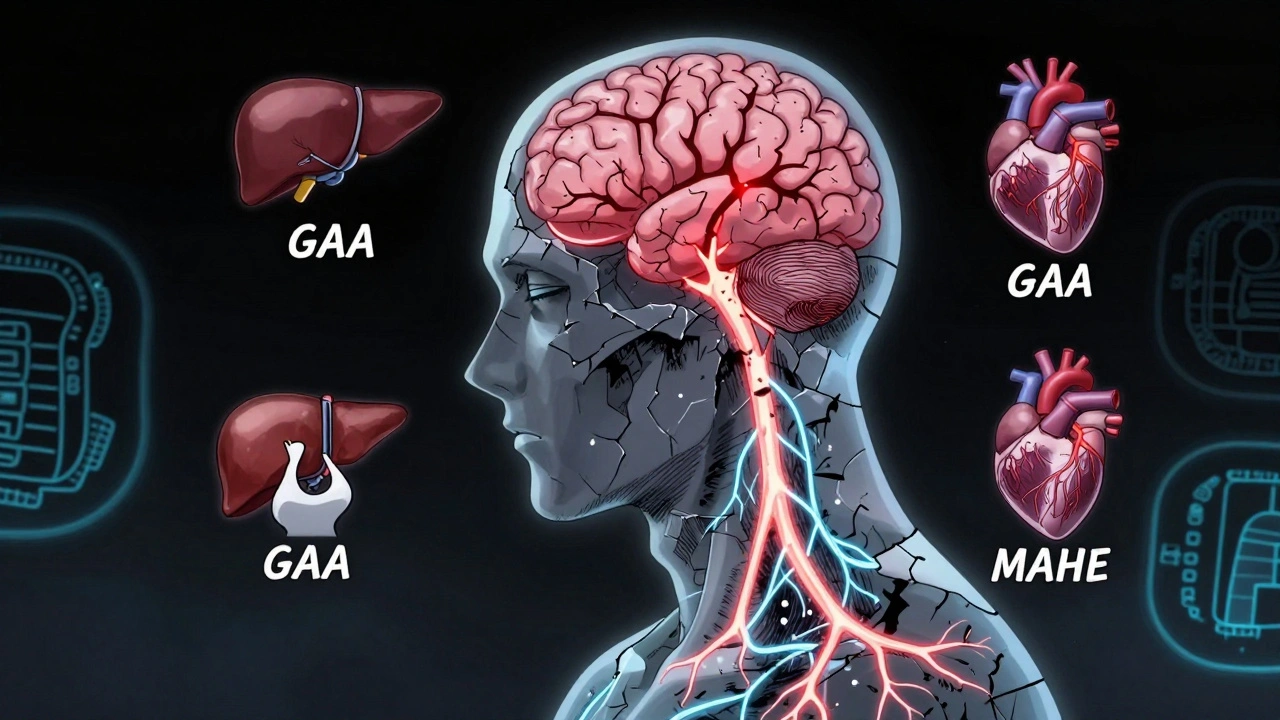
Chronic Alcohol Use Disorder isn’t just about drinking too much. It’s a medical condition where your brain and body become so dependent on alcohol that stopping feels impossible-even when it’s destroying your health, relationships, and future. This isn’t a lack of willpower. It’s a disease that rewires your nervous system, damages your organs, and traps you in a cycle of craving and withdrawal. And it’s more common than most people realize. In the U.S. alone, over 14 million adults struggle with it. But here’s the truth: alcohol use disorder is treatable. Recovery isn’t just possible-it’s happening every day, with the right support.
How Alcohol Changes Your Brain and Body
When you drink regularly, your brain starts adapting. At first, alcohol feels like a relaxant-maybe even a boost. But over time, your brain reduces its own natural production of chemicals like GABA and dopamine to balance out the alcohol’s effects. That’s when tolerance kicks in. You need more to feel the same buzz. Then comes dependence. Your body now expects alcohol to be there. Skip a drink, and your nervous system goes into overdrive. You might shake, sweat, feel anxious, or even have seizures. This isn’t weakness. It’s neurochemistry.
Alcohol doesn’t just affect your head. It hits every system. Your liver, for example, works overtime to break down alcohol. After years of heavy use, 90% of people develop fatty liver. It’s reversible-if you stop drinking. But if you keep going, inflammation sets in. Alcoholic hepatitis follows: liver cells die, bile ducts swell, and jaundice appears. Left unchecked, this leads to cirrhosis. Scar tissue replaces healthy liver tissue. At this stage, the damage is often permanent. The liver can’t filter toxins, produce proteins, or store energy properly. Many people don’t realize they have cirrhosis until they’re in crisis.
Organ Damage You Can’t Ignore
Your heart isn’t safe either. Heavy drinking raises your blood pressure, thickens your heart muscle, and triggers irregular rhythms like atrial fibrillation. That increases your stroke risk by 34% and your chance of a heart attack. Alcohol also weakens your immune system. You’re 2.7 times more likely to get pneumonia. Even a simple cold can turn dangerous.
Neurological damage is silent but severe. Many people with long-term AUD develop peripheral neuropathy-numbness, burning, or pain in their hands and feet. Memory problems creep in. You forget names, lose track of conversations, or blank out for hours. In extreme cases, thiamine (vitamin B1) deficiency leads to Wernicke’s encephalopathy. Symptoms include confusion, loss of coordination, and abnormal eye movements. If untreated, it can become Korsakoff’s syndrome-a permanent form of dementia.
And then there’s cancer. Alcohol is a known carcinogen. Heavy drinkers have five times the risk of mouth and throat cancer. Breast cancer risk goes up 12% for every daily drink. Liver cancer, bowel cancer, and esophageal cancer rates climb too. The link isn’t theoretical. It’s backed by decades of data from the American Cancer Society and the World Health Organization.
Mental Health and the Hidden Costs
Alcohol doesn’t just hurt your body-it breaks your life. Depression and anxiety often go hand-in-hand with AUD. Some people start drinking to cope. But alcohol worsens both conditions over time. It disrupts sleep, lowers serotonin, and amplifies negative thoughts. Relationships crumble. Jobs are lost. Finances collapse. Many end up homeless or in legal trouble. In the UK, alcohol-related hospital admissions have doubled since 2000. In the U.S., 29% of all traffic deaths involve alcohol. It’s not just personal. It’s societal.
And yet, many still see AUD as a moral failure. That stigma keeps people from seeking help. They’re ashamed. They think they should be able to quit on their own. But here’s the reality: you can’t out-willpower a brain disease. Just like you wouldn’t tell someone with diabetes to stop producing insulin, you can’t tell someone with AUD to just stop craving alcohol. It’s not that simple.
How Treatment Actually Works
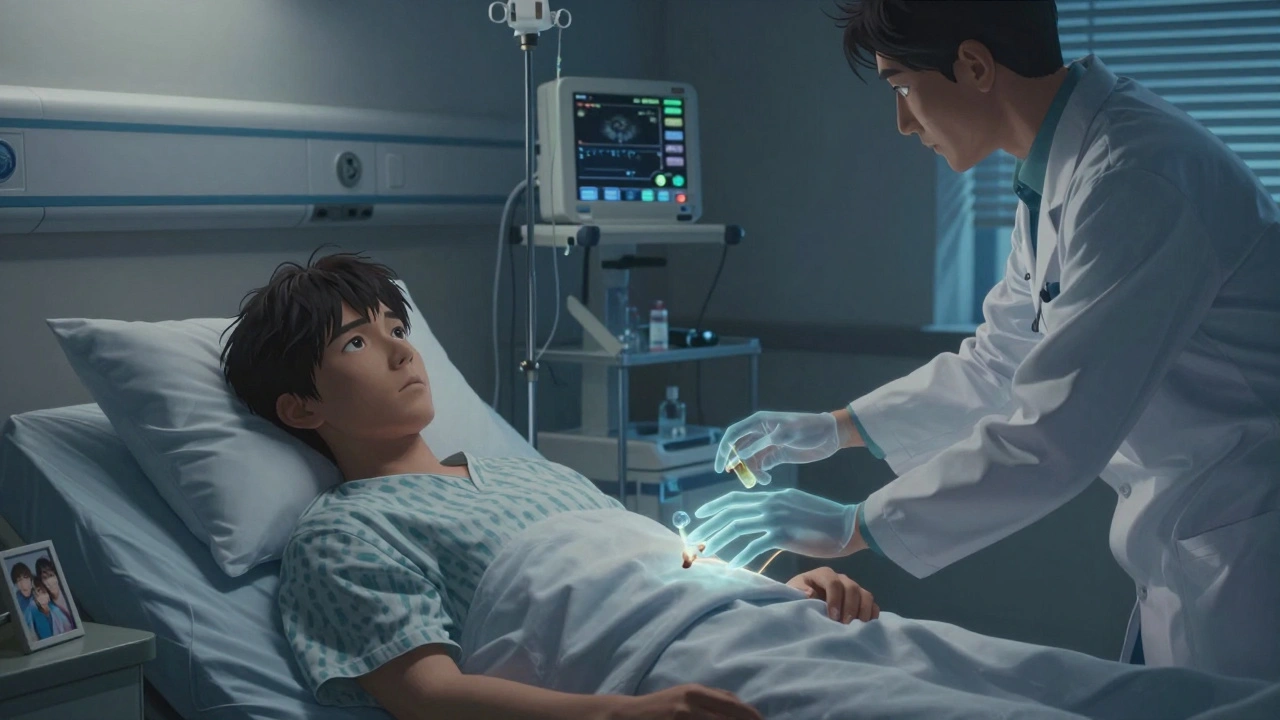
Recovery starts with acknowledging the problem. That’s often the hardest step. But once you’re ready, help is available. Treatment isn’t one-size-fits-all. It’s layered. First, if you’re physically dependent, detox is necessary. This isn’t just quitting cold turkey. It’s medically supervised withdrawal. Doctors monitor your vital signs, manage seizures or delirium tremens, and give medications to ease symptoms. Skipping this step can be deadly.
After detox, the real work begins. Three FDA-approved medications are proven to help:
- Naltrexone blocks the pleasurable effects of alcohol, reducing cravings.
- Acamprosate helps stabilize brain chemistry after stopping drinking.
- Disulfiram makes drinking unpleasant-causing nausea, flushing, and rapid heartbeat if you consume alcohol.
Medication alone isn’t enough. Therapy is essential. Cognitive Behavioral Therapy (CBT) teaches you to recognize triggers and change thought patterns. Studies show it reduces heavy drinking days by 60%. Motivational Enhancement Therapy helps you find your own reasons to quit. It doesn’t push you-it guides you.
Support Systems That Make a Difference
Alcoholics Anonymous (AA) has been around since 1935. It’s not for everyone, but for many, the structure, accountability, and shared experience are life-saving. Their 12-step program isn’t magic, but the community is. One study found 27% of members stayed abstinent after one year. Other groups like SMART Recovery offer science-based, non-spiritual alternatives. Peer support works because isolation fuels addiction. Connection heals it.
And new tools are emerging. Transcranial magnetic stimulation (TMS), a non-invasive brain stimulation technique, showed 50% abstinence rates in a 2022 study. Digital apps like reSET, approved by the FDA, deliver CBT through your phone. In trials, users using the app had over twice the abstinence rate of those who didn’t. These aren’t gimmicks. They’re evidence-based tools expanding access to care.

Can Your Body Heal?
Yes. And that’s the most hopeful part. Your liver can regenerate. Fatty liver reverses within weeks of stopping. Inflammation from hepatitis can calm down. Even early-stage cirrhosis can stabilize. The sooner you quit, the better your chances. Nerve damage may improve slowly. Cognitive function can recover over months. Your skin clears. Your energy returns. Your sleep improves. You stop forgetting names. You start remembering what it feels like to be yourself.
But healing isn’t linear. Relapse is part of recovery for many. It doesn’t mean failure. It means you need to adjust your plan. Maybe you need stronger medication. Maybe you need more therapy. Maybe you need a different support group. Recovery is a process, not a one-time event.
Why So Few People Get Help
Only 19.2% of people with AUD in the U.S. get treatment. Why? Cost. Stigma. Lack of access. Many doctors don’t screen for it. Insurance doesn’t cover enough. In the UK, NHS services are stretched thin. You might wait months for a referral. That’s unacceptable. AUD is the most common substance use disorder in the country. Yet, it’s treated like a secret.
But change is coming. The NIAAA’s Rethinking Drinking guide helps people assess their habits without shame. New laws are pushing for better insurance coverage. Telehealth makes therapy more accessible. You don’t have to wait for the system to catch up. Start today. Talk to your GP. Ask about naltrexone. Look up local support groups. Download a digital tool. You don’t need to have hit rock bottom to begin healing.
What to Do Right Now
If you or someone you care about is struggling:
- Track your drinking for a week. Write down how much, when, and why.
- Visit your doctor. Ask: “Could I have alcohol use disorder?”
- Ask about medications. Don’t assume therapy is the only option.
- Find a support group-even one meeting a month makes a difference.
- If you’re in withdrawal, don’t try to quit alone. Go to an ER or detox center.
Alcohol Use Disorder doesn’t define you. It’s a condition you can overcome. Not with punishment. Not with guilt. But with science, support, and time. Your body remembers how to heal. You just have to give it the chance.
Is alcohol use disorder the same as alcoholism?
Yes. Alcoholism is the informal term for what doctors now call Alcohol Use Disorder (AUD). The DSM-5, the official diagnostic manual, combines what used to be called alcohol abuse and dependence into one condition with mild, moderate, and severe levels. So if someone says they’re an alcoholic, they’re describing a severe form of AUD.
Can you recover from liver cirrhosis caused by alcohol?
If you stop drinking completely, early-stage cirrhosis can stabilize and even improve. The liver has a remarkable ability to regenerate. Scar tissue doesn’t disappear, but the liver can regain function. However, advanced cirrhosis with severe scarring may cause permanent damage. The key is early intervention-stopping before the liver is too far gone.
Do medications for AUD just replace one addiction with another?
No. Medications like naltrexone, acamprosate, and disulfiram don’t create addiction. They help reduce cravings or make drinking unpleasant. They’re not intoxicating. Think of them like insulin for diabetes-they correct a biological imbalance. These drugs are used under medical supervision and are not addictive when taken as prescribed.
How long does it take to feel better after quitting alcohol?
Withdrawal symptoms peak in 24-72 hours and usually fade within a week. But healing takes longer. Sleep improves in 2-4 weeks. Mood stabilizes after 4-8 weeks. Liver enzymes begin normalizing in 2-6 weeks. Cognitive function and energy levels often improve over 3-6 months. Full physical recovery can take a year or more, depending on how long and how heavily you drank.
Is it safe to quit alcohol cold turkey?
If you’ve been drinking heavily for months or years, quitting cold turkey can be dangerous. Severe withdrawal can cause seizures, delirium tremens, and even death. Always seek medical advice before stopping. Detox under supervision is safer and more effective. Even if you’ve only been drinking moderately, it’s wise to talk to a doctor before quitting.
What’s the difference between binge drinking and alcohol use disorder?
Binge drinking is a pattern-consuming 5+ drinks for men or 4+ for women in about 2 hours. It’s dangerous, but not everyone who binges has AUD. Alcohol Use Disorder is diagnosed when you have at least two of 11 symptoms over a year, like cravings, loss of control, withdrawal, or continuing to drink despite harm. You can binge drink without being dependent. But frequent binge drinking greatly increases your risk of developing AUD.
Can alcohol use disorder be cured?
There’s no permanent cure for AUD, but it can be managed successfully-just like diabetes or hypertension. Many people achieve long-term abstinence and live full, healthy lives. Recovery means learning to live without alcohol, managing triggers, and building a supportive environment. Relapse doesn’t mean failure. It means the treatment plan needs adjusting.


Steve Sullivan December 9, 2025
bro this hit different. i thought i was just a heavy drinker til i read the part about GABA and dopamine getting rewired. now i get why i feel like a ghost when i don't drink. it's not me being weak, it's my brain being hijacked. 🤯
Simran Chettiar December 9, 2025
It is indeed a profound and deeply unsettling revelation that the human neurochemical architecture can be so profoundly altered by the chronic ingestion of ethanol, a substance that, while culturally embedded, carries within it the seeds of systemic physiological collapse. The liver's regenerative capacity, though remarkable, is not infinite, and the cognitive degradation wrought by thiamine deficiency-manifesting in Wernicke-Korsakoff syndrome-is not merely a medical curiosity but a tragic erosion of identity itself. One must contemplate, therefore, whether societal normalization of alcohol consumption is, in fact, a collective denial of a public health emergency of epic proportions.
Anna Roh December 9, 2025
idk why people make this so complicated. just stop drinking. done.
Richard Eite December 11, 2025
USA has the best treatment options in the world and you still whine about access? Get off your butt. We have telehealth free apps and naltrexone for 5 bucks at Walmart. If you cant get help here you dont want it
Katherine Chan December 13, 2025
you are not broken. you are not a failure. you are a human being who got caught in a cycle that was never meant to be survived alone. every step you take toward asking for help is a victory. i believe in you. you got this 💪
Philippa Barraclough December 14, 2025
The statistical correlation between alcohol consumption and cancer incidence is well-documented, yet I find it curious that public health messaging often emphasizes individual responsibility while underfunding systemic interventions. The 12% increased breast cancer risk per daily drink is alarming, yet screening programs remain inconsistent across primary care networks. Furthermore, the disparity between the prevalence of AUD and the proportion receiving treatment-only 19.2%-suggests structural barriers that extend beyond stigma, including workforce shortages in addiction medicine and fragmented care pathways. It is not merely a matter of willpower or access to apps; it is a failure of policy integration.
Tim Tinh December 15, 2025
i used to think AA was just old guys in chairs but then i met this guy who’d been sober 12 years and he just… listened. no preaching. no judgment. just ‘been there’. that’s what saved me. also try the reSET app. it’s free and actually works. dont let shame stop you from reaching out. you’re not alone
Olivia Portier December 16, 2025
i used to think i was the only one who forgot my kid’s birthday because i was blackout drunk. then i found a local group for moms in recovery. we laugh, cry, and share recipes for non-alcoholic cocktails that actually taste good. healing isn’t about perfection. it’s about showing up. even if you’re shaking. even if you’re scared. even if you’ve messed up before. you’re still worthy of a second chance
Tiffany Sowby December 16, 2025
why do we even care? alcohol is legal. people die from coffee. people die from walking. this is just another moral panic. if you wanna drink, drink. stop trying to make everyone feel guilty for enjoying life