
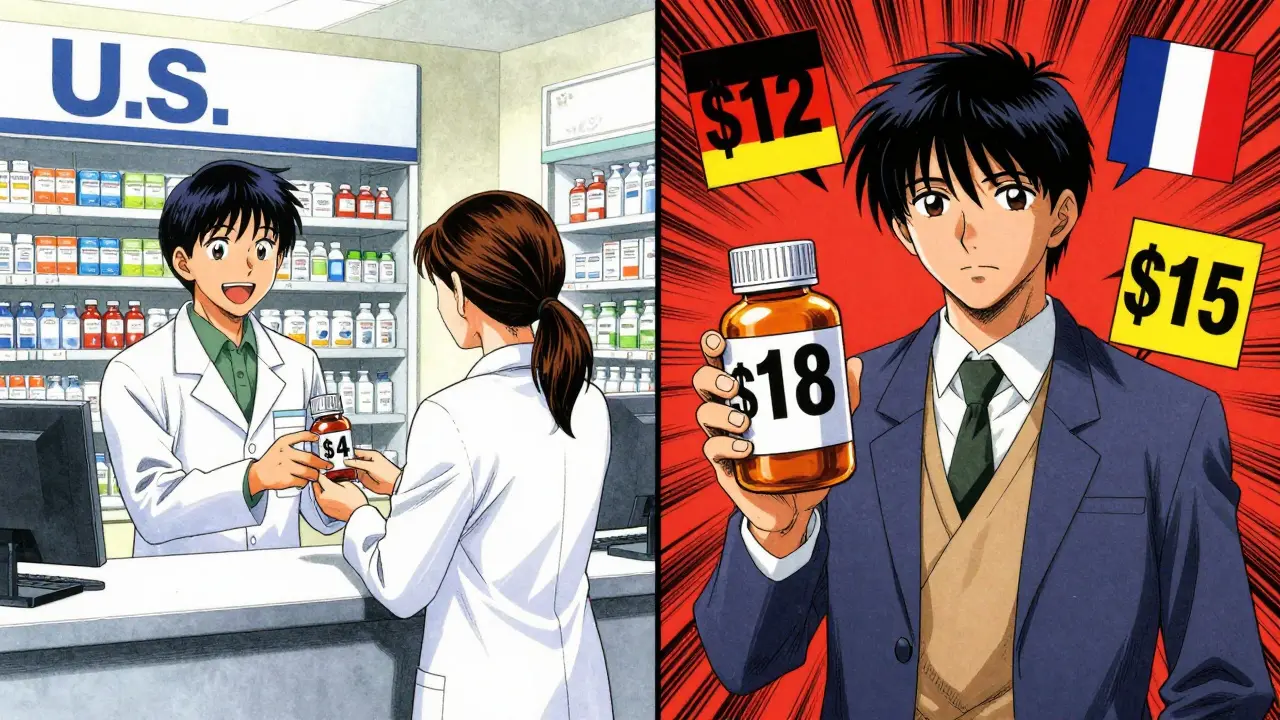
When you walk into a pharmacy in the U.S. and pick up a generic pill-say, metformin for diabetes or lisinopril for high blood pressure-you’re likely paying less than someone in Canada, Germany, or Japan. That’s not a myth. It’s backed by data. But here’s the twist: while generic drugs in America are cheaper than almost anywhere else, brand-name drugs cost more than four times what they do in other rich countries. The U.S. doesn’t just have high drug prices. It has two entirely different pricing systems, side by side.
Generics in the U.S. Are Actually Cheaper
You might assume all drug prices in America are sky-high. That’s true for brand-name pills. But for generics? The story flips. According to the RAND Corporation’s 2022 study for the U.S. Department of Health and Human Services, U.S. prices for unbranded generic drugs were 33% lower than in 33 other developed nations. That means if a generic version of a common blood pressure drug costs $5 in Germany, it costs about $3.35 in the U.S. The same pattern holds across dozens of widely used generics: atorvastatin, amoxicillin, levothyroxine.
Why? Three big reasons. First, Medicare Part D and other public programs buy massive volumes of generics. They don’t just negotiate-they bulldoze prices down. Second, the U.S. has far more generic competition. About 90% of all prescriptions filled in America are for generics, compared to just 41% in countries like France and Japan. More manufacturers = more price pressure. Third, the FDA approves generics faster than most other countries. When three or more companies start making the same generic, prices plunge to 15-20% of the original brand’s cost.
Take a real example: metformin. In the U.S., a 30-day supply costs as little as $4 at Walmart or CVS. In the U.K., it’s around $12. In France? $15. In Japan? $18. And that’s not an outlier. The FDA says 93% of generic prescriptions in the U.S. cost under $20. For brand-name drugs? Only 59% do.
Brand-Name Drugs Are Where the U.S. Gets Hammered
Now flip the script. For brand-name drugs, the U.S. pays more than anyone else. The RAND study found U.S. prices for originator drugs were 422% higher than the OECD average. That means if a new cancer drug costs $100 in Germany, it’ll cost $422 in the U.S. before rebates. Why? Because U.S. insurers and pharmacies don’t control prices the way other countries do. In Canada, the U.K., and Japan, governments set price caps. In the U.S., drugmakers set list prices, and insurers scramble to negotiate discounts behind closed doors.
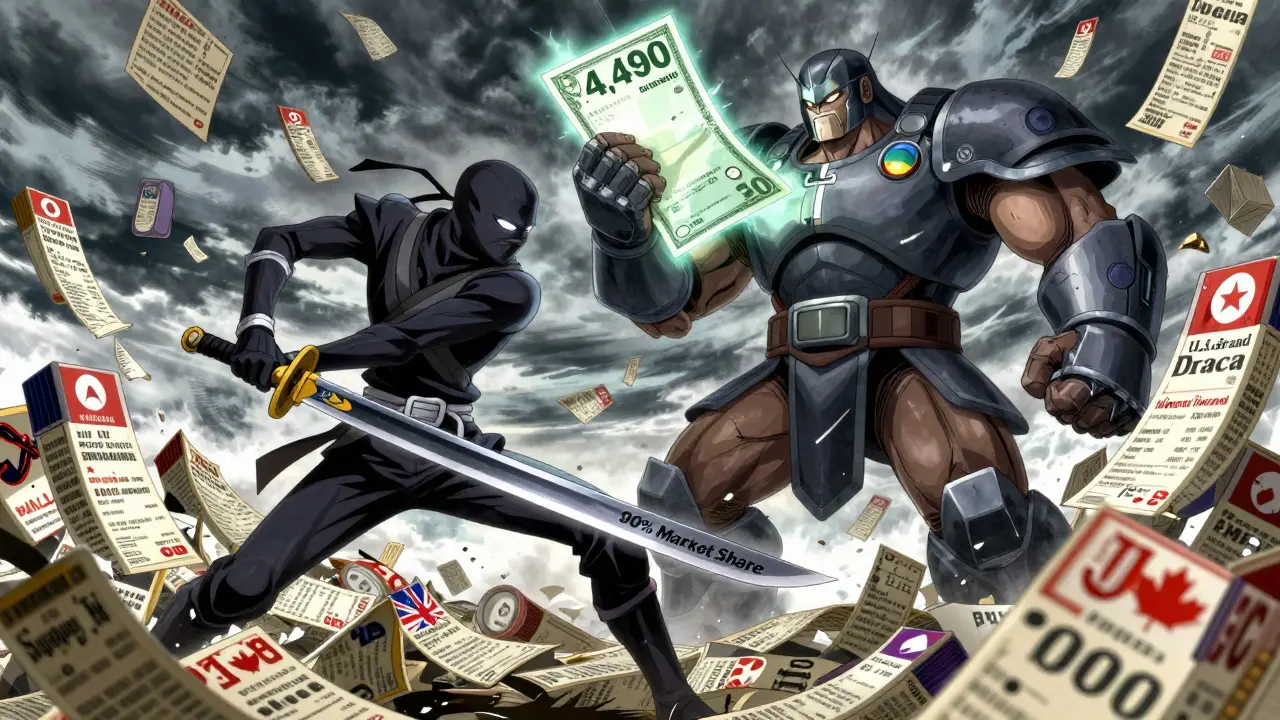
The Health System Tracker looked at the first 10 drugs negotiated under Medicare in 2024. The results were eye-opening. Medicare’s price for Jardiance (a diabetes drug) was $204 per month. The average price in 11 other countries? $52. For Stelara (a psoriasis drug), the U.S. paid $4,490 per month. The average international price? $2,822. In every case except one, the U.S. paid more-even after Medicare’s hard-nosed negotiations.
And here’s the kicker: brand-name drugs make up only 10% of prescriptions. But they account for over 80% of total drug spending. That’s why the U.S. spends more per person on drugs than any other country. It’s not the generics. It’s the new, expensive, patent-protected pills.
The Rebate Mirage: Why List Prices Lie
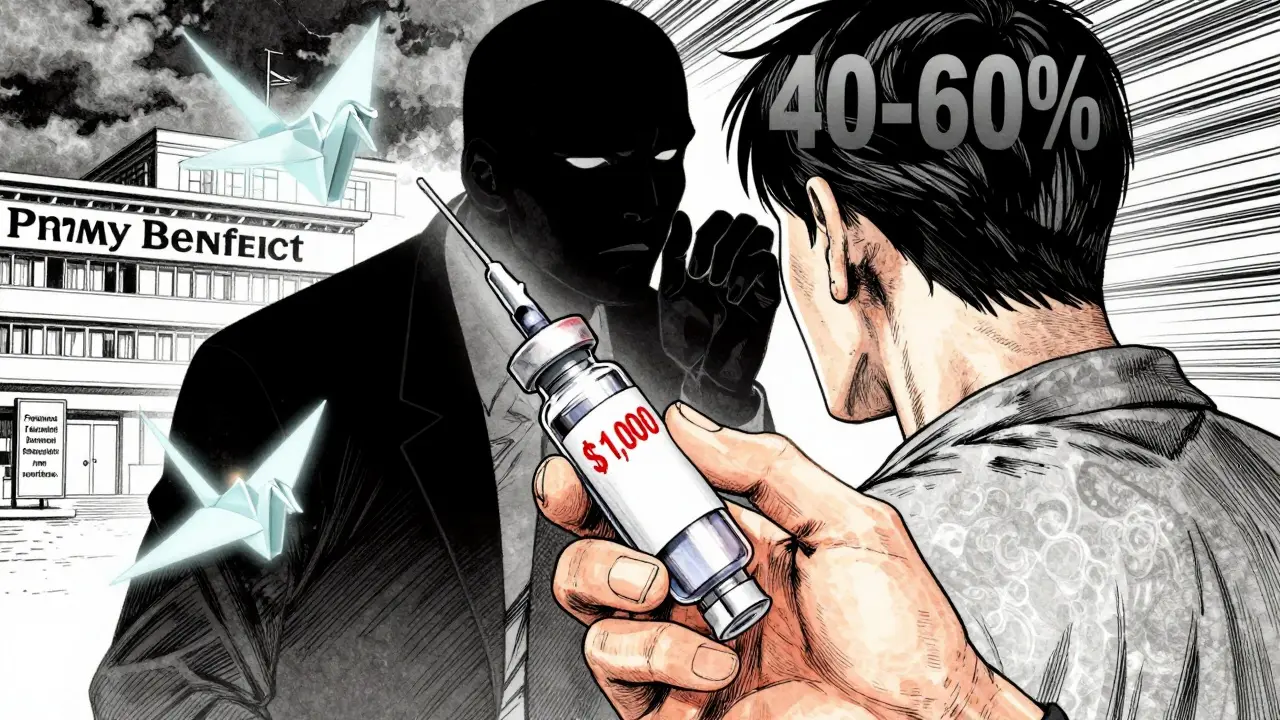
Pharma companies love to point to list prices. They say, “Look how expensive U.S. drugs are!” But list prices aren’t what most people pay. Behind the scenes, drugmakers give huge rebates to insurers, pharmacy benefit managers (PBMs), and government programs. These discounts are secret, complex, and rarely passed on to patients at the pharmacy counter.
A University of Chicago study in April 2024 looked at net prices-the real amount paid after rebates. Guess what? U.S. net prices for generics were 18% lower than in Canada, Germany, the U.K., France, and Japan. Even for brand-name drugs, the gap narrowed. The U.S. wasn’t the most expensive anymore.
But here’s the problem: those rebates don’t help people who pay out of pocket. If you’re uninsured or on a high-deductible plan, you see the full list price. That’s why a $1,000 insulin vial still breaks budgets. The rebate system helps insurers and Medicare, but not patients. And it’s why the U.S. still looks like a pricing nightmare to outsiders.
Why Other Countries Pay Less
France and Japan have the lowest drug prices in the world. Why? They use centralized price-setting. The government decides what a drug is worth, based on its medical value and cost to produce. If a company won’t accept the price, it can’t sell in that country. No haggling. No rebates. Just a price cap.
Germany and the U.K. use similar systems. They don’t ban drugs. They just say, “This is what we’ll pay.” That keeps profits low but ensures access. The U.S. doesn’t do that. We let companies set prices, then try to cut deals after the fact. It’s like letting a car dealer name the price, then haggling with your insurance company in the back room. The customer still pays the sticker price at the counter.
And there’s another factor: innovation funding. The U.S. pays more for brand-name drugs partly because it’s effectively subsidizing R&D for the world. Other countries buy cheaper, knowing U.S. consumers are covering the cost of discovery. It’s not fair. But it’s how the system works.
What Happens When Generics Compete
Price drops don’t happen overnight. They come with competition. The FDA found that when the first generic enters the market, prices fall to 35-40% of the brand price. When two more companies join? Prices crash to 15-20%. That’s why some generics get dirt cheap.
But there’s a dark side. Sometimes, companies collude or exit the market. When only one generic maker is left, prices spike. In 2023, the FDA reported cases where a single manufacturer raised the price of a generic antibiotic by 500% after competitors left. It’s rare-but it happens. And when it does, patients pay.
That’s why the number of generic applicants matters. In 2023, the FDA approved 773 new generic drugs. The FDA estimated that would save $13.5 billion in one year. That’s real money. And it’s all because of competition.
The Real Cost to Americans
For most Americans, the system works better than you think. If you take generics, you’re getting them cheaper than almost anyone else. The average generic copay? $6.16. The average brand-name copay? $56.12. That’s nearly nine times more.
But if you need a new, expensive drug-say, for cancer, MS, or rare disease-you’re stuck. You’re paying the U.S. price. And that’s where the pain hits.
The Medicare negotiation program is trying to fix that. But even after negotiation, Medicare’s prices are still 2.8 times higher than the average in other countries. The system is broken for brand-name drugs. And until we fix that, the U.S. will remain the most expensive place in the world for new medicines.
What’s Next?
The next round of Medicare-negotiated drugs comes out in early 2026. More drugs. More pressure. But also more risk. If the U.S. keeps paying 3-4 times more than other countries, drugmakers might raise prices overseas to make up the difference. That’s what Dana Goldman warned about: if we force global prices down, we might end up hurting patients everywhere.
For now, the answer isn’t to copy other countries. It’s to fix what’s broken here: make generic approvals faster, punish price gouging, and bring transparency to rebates. Until then, Americans get cheap generics-but pay a fortune for the drugs that change lives.
Why are generic drugs cheaper in the U.S. than in other countries?
Generic drugs are cheaper in the U.S. because of massive volume purchases by Medicare and private insurers, strong competition from multiple manufacturers, and faster FDA approvals. When three or more companies make the same generic, prices drop to 15-20% of the brand-name price. Other countries have fewer competitors and stricter price controls that limit how low prices can go.
Do Americans pay more for all prescription drugs?
No. Americans pay less for generic drugs than people in most other developed countries. But they pay significantly more for brand-name drugs-often 3 to 4 times higher. Since brand-name drugs make up most of drug spending, the U.S. still has the highest overall pharmaceutical costs in the world.
Why do list prices and net prices differ so much in the U.S.?
List prices are what drugmakers charge before discounts. Net prices are what insurers and government programs actually pay after secret rebates and discounts. In the U.S., rebates can be 40-60% of the list price, but patients at the pharmacy often pay the full list price. Other countries set prices upfront, so there’s no gap between list and net.
How does Medicare negotiation affect drug prices?
Medicare negotiation lowers prices for some brand-name drugs, but even after negotiation, U.S. prices are still 2-4 times higher than in countries like Japan and Australia. The program targets only 10 drugs in its first round, and most of them are still more expensive than elsewhere. It helps, but it doesn’t fix the core problem: the U.S. doesn’t set price caps.
Can the U.S. model reduce global drug prices?
Not directly. The U.S. model relies on high brand-name prices to fund innovation, which other countries benefit from by paying less. If the U.S. forces global prices down, manufacturers might raise prices abroad to compensate. Some experts argue that exporting U.S.-style competition and transparency could help, but it’s not a simple fix.

Sally Lloyd March 14, 2026
So let me get this straight - the U.S. pays less for generics because we have more manufacturers, but the moment a drug gets a patent, it becomes a free-for-all where Big Pharma rips us off? And you're telling me this isn't orchestrated? The FDA approves generics faster… but who controls the patents? Who owns the patents? Who's quietly buying up competitors before they even hit the market? I've seen it. I've seen the filings. This isn't capitalism. It's a monopoly masquerading as competition.
Emma Deasy March 16, 2026
Let me be absolutely clear: The American healthcare system is not broken - it was designed this way. The fact that metformin costs $4 while insulin costs $1,000? That’s not an accident. That’s a feature. The rebate system? A labyrinth designed to obscure the truth from patients. The government doesn’t negotiate - it negotiates behind closed doors with PBMs who pocket the difference. And you call this a market? It’s a rigged casino where the house always wins - and you’re the sucker at the table.
tamilan Nadar March 16, 2026
In India, we get generics for pennies - because we don’t have patent monopolies like the U.S. We make them. We export them. We don’t wait for FDA approval to start production. The U.S. system is not about affordability - it’s about control. Why should a patient in Lagos pay more than a patient in Chicago? The answer? Because the system is built to extract wealth from the global south while pretending to be a model of innovation.
Adam M March 16, 2026
Generics cheap. Brands expensive. That’s it. No drama. No conspiracy. Just math.
Rosemary Chude-Sokei March 17, 2026
I appreciate the nuance in this analysis - particularly the distinction between list and net prices. It’s crucial to understand that while patients on high-deductible plans are bearing the brunt of inflated list prices, the structural rebates that benefit insurers and Medicare do, in fact, reduce overall system costs. However, this creates an inequity that cannot be ignored. The ethical imperative is clear: transparency must be mandated, and out-of-pocket costs must be decoupled from list pricing. We owe our patients more than a system that works for some and crushes others.
Noluthando Devour Mamabolo March 18, 2026
OMG this is so real 😭 The rebate system is a total *pharma-adjacent* shell game. PBMs are the middlemen who are literally profiting off our suffering. And don’t even get me started on how insulin is still $300+ in 2024. We need systemic reform - not band-aids. #PharmaCrisis #TransparencyNow 💊💸
Leah Dobbin March 19, 2026
How quaint. You speak of "competition" as if it exists. The FDA approves 773 generics - but how many of them actually reach the market? How many are quietly bought out by the same conglomerates that make the brand? You think it’s about supply? It’s about control. The system is engineered to keep prices high for branded drugs - and the "cheap generics" are just a distraction. A placebo for the public. The real cost? You’re paying for it - in your premiums, your deductibles, your silence.
Ali Hughey March 20, 2026
Wait - so you’re telling me the U.S. pays less for generics because we have more competition? That’s the official story? 🤔 Let me ask you this: Who owns the majority of generic manufacturers? Who owns the patents on the active ingredients? Who owns the distribution channels? Hint: It’s the same 3-4 conglomerates that make the brand-name drugs. The FDA approves generics - but they’re all made by the same companies under different names. This isn’t competition. It’s a shell game with a different logo.
Alex MC March 20, 2026
It’s not perfect, but the system does work - for most people, most of the time. Generics are affordable. Medicare is negotiating. Innovation still happens. I know it’s easy to get angry - and we should be - but let’s not throw out the baby with the bathwater. Progress is slow, but it’s happening. Let’s keep pushing for transparency, fair rebates, and better access. We’re not hopeless. We’re just in the middle of the fight.