

When you pick up a prescription at the pharmacy, you might not realize that behind the scenes, a strict scientific system is deciding whether the pill in your hand is a safe swap for the brand-name drug your doctor wrote. That system is the FDA’s therapeutic equivalence codes. These aren’t just letters on a label-they’re the legal and clinical green light that lets pharmacists swap a brand-name drug for a cheaper generic without asking your doctor again. And if you’ve ever saved money on a prescription, this is why.
What Therapeutic Equivalence Codes Actually Mean
Therapeutic equivalence codes are the FDA’s way of saying: ‘This generic drug works just like the brand-name version.’ It’s not enough for a generic to have the same active ingredient. It has to deliver the same amount of medicine into your bloodstream at the same speed. That’s called bioequivalence. And it has to be made under the same quality standards. If it passes all those tests, the FDA gives it an ‘A’ rating. That means pharmacists can substitute it automatically under state law.
The code system lives in the FDA’s Orange Book-officially called Approved Drug Products with Therapeutic Equivalence Evaluations. It’s been around since 1980, but it’s updated every month. As of July 2023, over 12,600 drug products in the Orange Book had an ‘A’ rating. That’s 90% of all multisource prescription drugs listed. The rest? They’re flagged with a ‘B’-and that’s where things get tricky.
The ‘A’ and ‘B’ Codes: What They Tell You
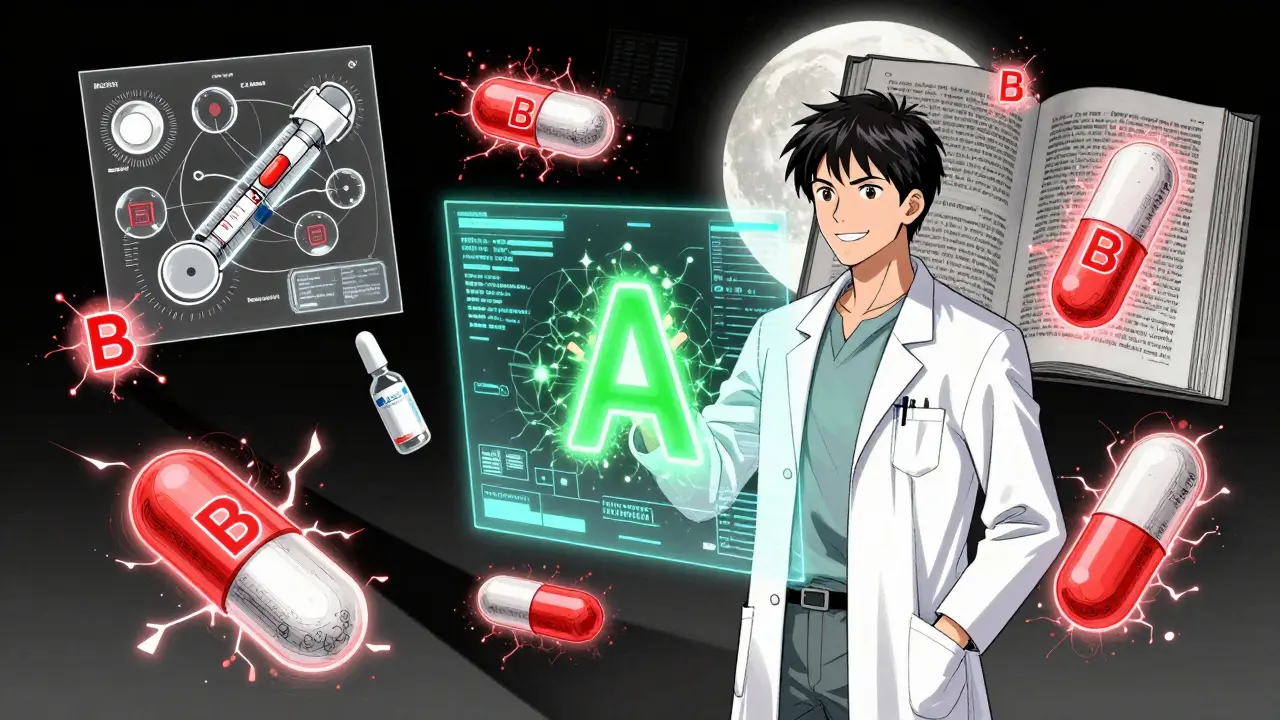
The first letter tells you everything. ‘A’ means therapeutically equivalent. ‘B’ means the FDA hasn’t confirmed it’s interchangeable yet.
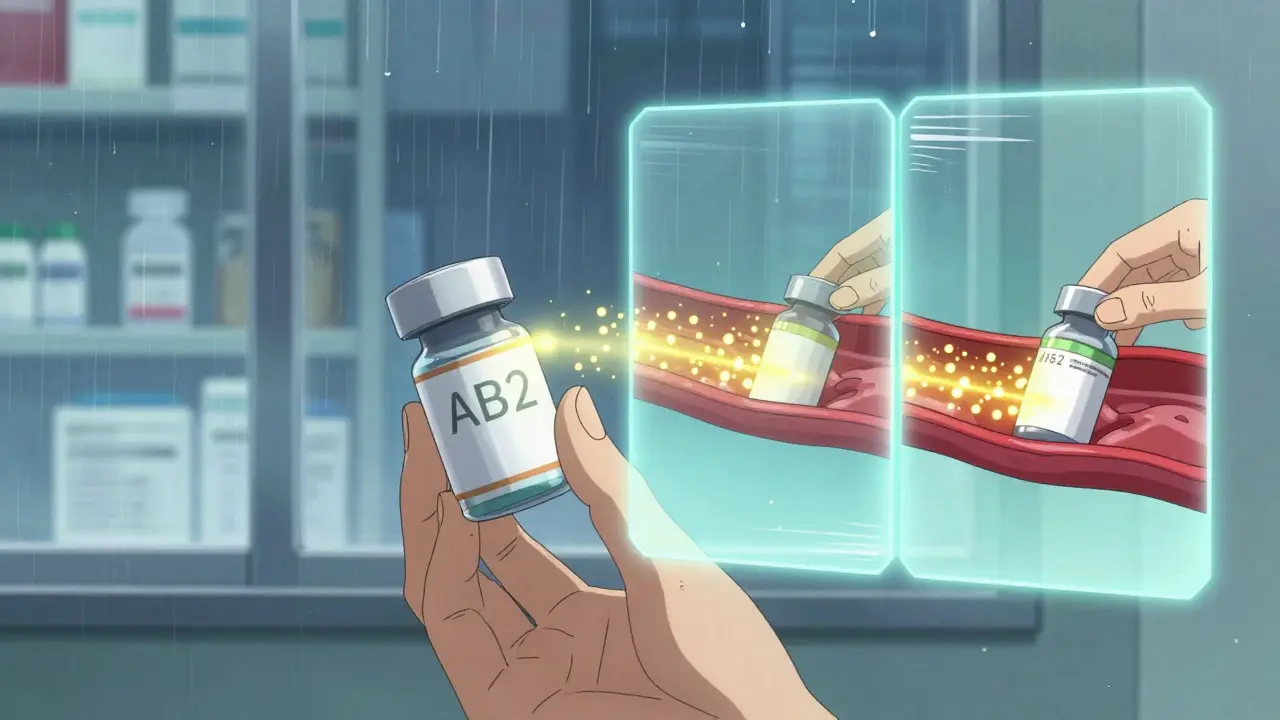
But ‘A’ isn’t just ‘A.’ There are subcodes. AB1, AB2, AB3, AB4-these tell you which brand-name drug the generic was tested against. If two different brands exist for the same drug, each gets its own AB number. For example, if you’re prescribed a generic version of a drug that has two brand-name versions, the pharmacist needs to match the AB code to the one your doctor intended. Mixing them up could lead to a mismatch in how the drug is absorbed.
‘B’ codes are the gray area. They don’t mean the drug is unsafe. It just means the FDA can’t be sure it’s interchangeable yet. Some common ‘B’ codes:
- BC - Extended-release tablets or capsules where bioequivalence is hard to prove
- BT - Topical creams or ointments where skin absorption varies
- BN - Inhalers or nebulizers with complex delivery systems
- BX - Not enough data to make a call
Here’s the problem: a ‘B’ rating doesn’t mean the drug doesn’t work. It just means the FDA hasn’t seen enough proof that it behaves exactly like the brand. That’s why some pharmacists hesitate to substitute them-even when a doctor says it’s okay.
Why This System Exists (And Why It Works)
The FDA didn’t create this system to make life harder for pharmacists. It was born out of the Hatch-Waxman Act of 1984. Before that, generic drugs were a legal gray zone. Companies could copy brand-name drugs but had to run full clinical trials-costing millions. The law changed that. It let generics skip expensive trials if they could prove bioequivalence. That opened the floodgates for cheaper drugs.
Today, generics make up 90% of prescriptions filled in the U.S. But they cost only 23% of what brand-name drugs do. That’s $370 billion saved every year. The TE code system is what makes that possible. Without it, every generic substitution would need a doctor’s note. Pharmacists would be stuck calling offices all day. Insurance companies wouldn’t push generics. Patients would pay more.
And the system works. Since its start, there’s never been a documented case of a patient harmed because of an FDA-approved generic substitution. That’s not luck. It’s science.
Where the System Falls Short
But it’s not perfect. The biggest gap? Complex drugs.
For a simple pill-like a 10mg lisinopril tablet-it’s easy to prove bioequivalence. You give it to volunteers, measure blood levels, and compare. Done.
But what about a steroid cream? Or an inhaler? Or a long-acting injectable? The way the drug gets into your body matters more than how much is in your blood. A cream might look the same, but if it’s absorbed slower or unevenly, it won’t work the same. The current bioequivalence tests just don’t capture that well.
That’s why topical products, inhalers, and some injectables often get ‘B’ ratings-even when doctors and patients report they work fine. In 2022, the FDA admitted this. They released draft guidance saying they’re working on better methods to test complex generics. Their goal? Cut ‘B’ ratings for these products by 30% by 2027.
Right now, pharmacists spend an average of 2.7 minutes per prescription checking TE codes. That adds up. And doctors? A 2022 survey found 42% of them don’t understand what ‘B’ means. Some think it means ‘unsafe.’ Others think it means ‘not generic.’ Neither is true.
What Pharmacists and Doctors Really Do
Most pharmacists check the Orange Book at least once a week. Nearly 9 out of 10 say the TE code system saves them time. But they’re also the ones caught in the middle.
If a drug has an ‘A’ code, they can swap it without asking. In 49 states, they’re even required to substitute unless the doctor says ‘do not substitute.’
But if it’s a ‘B’? That’s where rules get messy. Thirty-eight states require pharmacists to tell the doctor before substituting. Some won’t substitute at all unless the patient agrees. Others wait for the doctor’s okay.
And here’s the real-world impact: A pharmacist might refuse to swap a ‘B’-rated cream because the code says ‘BT’-even if the patient has used it for years without issue. The system doesn’t account for real-world experience. Only lab data.
How to Use This Information
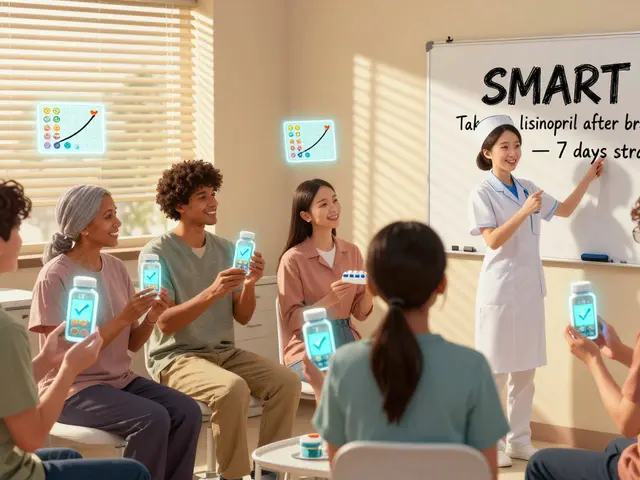
If you’re a patient: Always check your prescription label. If your generic has an ‘A’ code, you’re getting an FDA-approved substitute. If it’s ‘B,’ ask your pharmacist: ‘Is this safe to use instead of the brand?’ Don’t assume ‘B’ means ‘bad.’
If you’re a prescriber: Know what the codes mean. If you want to prevent substitution, write ‘dispense as written’ or ‘DAW 1’ on the prescription. If you’re okay with substitution, don’t block it. You’re saving your patient money.
If you’re a pharmacist: Use the Orange Book website daily. It’s free. It’s updated monthly. Bookmark it. Learn the AB subcodes. Know your state’s substitution laws. And when in doubt, call the prescriber.
What’s Next for Therapeutic Equivalence?
The FDA is moving toward using real-world data-like patient outcomes from electronic health records-to supplement lab tests. That could help clear up ‘B’ ratings for complex drugs. They’re also expanding their Product-Specific Guidance documents to over 1,850 drugs, giving manufacturers clearer rules to get an ‘A’ rating.
Eventually, the goal is simple: more generics. More savings. Less confusion. The TE code system isn’t going away. It’s just getting smarter.
For now, it’s the quiet engine behind the biggest cost-saving shift in U.S. healthcare. And it’s working-just not perfectly. Understanding it means you can make smarter choices, whether you’re paying for the prescription, filling it, or writing it.
What does an 'A' rating mean for a generic drug?
An 'A' rating means the FDA has determined the generic drug is therapeutically equivalent to the brand-name version. It has the same active ingredient, strength, dosage form, and route of administration, and has passed bioequivalence testing. Pharmacists can substitute it without needing a new prescription.
Can I always get a generic instead of a brand-name drug?
Only if the generic has an 'A' rating and your doctor hasn’t written 'dispense as written.' In 49 states, pharmacists are allowed-and sometimes required-to substitute 'A'-rated generics. For 'B'-rated drugs, substitution depends on state law and prescriber instructions.
Why do some generics have a 'B' rating if they’re the same drug?
A 'B' rating doesn’t mean the drug doesn’t work. It means the FDA hasn’t confirmed it’s interchangeable based on current testing methods. This often happens with complex products like inhalers, topical creams, or extended-release pills where standard blood tests can’t fully predict how the drug behaves in the body.
Are over-the-counter (OTC) drugs given therapeutic equivalence codes?
No. The FDA’s therapeutic equivalence codes only apply to prescription drugs. OTC medications are not evaluated or coded in the Orange Book, even if they have generic versions.
How often is the Orange Book updated?
The Orange Book is updated monthly. New drug approvals, code changes, and withdrawn products are added each month. Pharmacists and prescribers are encouraged to check the official FDA website regularly for the latest ratings.





Melissa Cogswell January 30, 2026
I’ve been a pharmacist for 18 years and this system is the backbone of affordable care. I check the Orange Book every morning before my shift. Knowing the AB subcodes saves me from calling doctors 20 times a day. The only time I hesitate is with BT-rated creams-patients often say they’ve used the generic for years with no issues, but the data says otherwise. We’re stuck between science and real life.
And yes, 42% of prescribers don’t get what ‘B’ means. I’ve had patients come in furious because their doctor wrote ‘dispense as written’ even though the generic was AB1. It’s not about trust-it’s about clarity.
Thank you for explaining this so clearly. More docs need to read this.
Blair Kelly February 1, 2026
STOP. JUST STOP. The FDA’s entire therapeutic equivalence framework is a bureaucratic farce built on 1980s bioequivalence models that ignore pharmacokinetic variability in real populations. You say ‘no documented harm’? That’s because no one’s tracking subclinical outcomes-like increased hospitalizations from inconsistent topical steroid absorption in elderly patients with eczema. The ‘B’ rating isn’t a gray area-it’s a red flag the system refuses to acknowledge.
And don’t get me started on how ‘AB’ subcodes are assigned. Two different brand-name versions? One gets tested, the other gets a free pass? That’s not science-it’s corporate convenience disguised as regulation. If you think this system is ‘working,’ you’re not looking at the data-you’re looking at the PR pamphlet.
Rohit Kumar February 1, 2026
In India, we don’t have an Orange Book. Generics are everywhere-cheaper, accessible, trusted. But here’s the truth: in rural clinics, patients don’t care about AB codes. They care if the pill stops the fever. The FDA system is elegant, yes-but it’s built for a healthcare system that can afford lab tests and electronic records.
What about the 3 billion people who don’t have access to this precision? We need a global standard that balances science with survival. Not every life needs a bioequivalence study. Sometimes, a working drug is better than a perfect one that never reaches the shelf.
Also, why does the U.S. still treat generics like second-class citizens? In my country, generics are the default. No stigma. No confusion. Just medicine.
Lily Steele February 2, 2026
Just wanted to say thanks for writing this. I’m a diabetic and I’ve been on metformin for 10 years. Switched to generics early on because I couldn’t afford the brand. Never had an issue. Found out later it was AB1-so I felt good knowing it was legit.
But I had a friend who got a BT-rated cream for her psoriasis and her pharmacist refused to swap it even though she’d used the same generic for 5 years. She ended up paying $80 extra. That’s not fair.
People need to know: B doesn’t mean bad. It just means the FDA hasn’t caught up yet. And that’s okay. We’re learning.
Jodi Olson February 3, 2026
Therapeutic equivalence is not merely a regulatory construct-it is a pharmacoeconomic imperative undergirding the sustainability of public health infrastructure. The absence of standardized, evidence-based substitution protocols would result in catastrophic cost inflation, disproportionately affecting Medicaid populations and the elderly.
Furthermore, the delineation of AB subcodes reflects a sophisticated understanding of pharmaceutical formulation variance, which, while imperfect, remains the most robust method available for intergeneric interchangeability assessment.
It is regrettable that laypersons conflate ‘B’ ratings with inefficacy, when in fact they denote a methodological limitation in current bioanalytical models, not a clinical failure.
One must appreciate the nuance: bioequivalence is not bioidenticality. The system works because it acknowledges uncertainty-not because it denies it.
Beth Beltway February 3, 2026
Let me guess-you’re one of those people who thinks generics are just as good because you saw a YouTube video. Newsflash: the FDA doesn’t test for real-world outcomes. They test for blood levels in 24 healthy young men. That’s it. No diabetes. No kidney disease. No elderly patients with 12 meds.
And you call this ‘science’? That’s not science-that’s corporate lobbying dressed in lab coats. The reason there are ‘no documented harms’ is because no one’s tracking the subtle drops in efficacy that lead to hospitalizations months later. You’re not saving money-you’re gambling with people’s lives.
And don’t even get me started on how pharmacists are forced to substitute. That’s not patient care-that’s insurance-driven coercion.
Wake up. This system is broken and you’re defending it like it’s gospel.
Kelly Weinhold February 5, 2026
I just want to say how much I appreciate this breakdown. I’m a nurse and I see so many patients scared of generics because they think ‘B’ means ‘unsafe.’ This post helped me explain it to them in a way that actually makes sense.
One of my patients switched from a brand-name inhaler to a BT-rated generic and was terrified she’d have an asthma attack. We sat down, looked up the Orange Book together, and she realized the ‘B’ was just because the delivery system is complex-not because it doesn’t work. She’s been using it for 6 months now and says it’s fine.
Education is the key. More docs and pharmacists need to do this kind of patient coaching. You’re doing great work.
Also-can we make a meme about ‘B’ not meaning ‘bad’? I’d share it every day.
Kimberly Reker February 5, 2026
As someone who’s worked in pharmacy for over 20 years, I’ve seen this system evolve-and it’s gotten better. But the biggest issue isn’t the code-it’s the communication gap. Patients don’t know what AB1 means. Doctors forget to write DAW codes. Pharmacists are overloaded.
Here’s what I do: I print out a one-page cheat sheet for my patients with the most common AB codes and what they mean. Simple. No jargon. Just: ‘This one’s safe to swap. This one? Let’s check with your doctor.’
And yes, I’ve had patients cry because they saved $200 a month on insulin thanks to generics. That’s why this matters.
It’s not perfect. But it’s the best system we’ve got. Let’s fix the gaps-not trash the whole thing.
calanha nevin February 7, 2026
The therapeutic equivalence framework is a triumph of regulatory science. It enables market competition without compromising safety-a rare feat in pharmaceutical policy. The AB subcoding system, while intricate, is purposefully granular to account for formulation differences that may impact clinical outcomes.
It is not the system’s failure that complex products like inhalers or topical agents receive B ratings-it is the limitation of current analytical methodologies. The FDA’s initiative to incorporate real-world evidence is a necessary evolution.
Pharmacists and prescribers must be educated not to interpret B as ‘unsafe,’ but as ‘incomplete data.’ The burden of misunderstanding lies not with the code, but with the lack of public and professional literacy.
This system, flawed yet functional, remains the most effective mechanism for expanding access to affordable therapeutics in a high-cost environment.
April Allen February 8, 2026
Let’s talk about the elephant in the room: bioequivalence is a pharmacokinetic proxy, not a pharmacodynamic guarantee. For simple molecules like lisinopril, sure-Cmax and AUC are valid surrogates. But for complex drug delivery systems-liposomes, nanoemulsions, extended-release matrices-these metrics are statistically inadequate to predict therapeutic equivalence.
The Orange Book’s AB codes are a proxy for regulatory convenience, not biological fidelity. We’re using 1980s pharmacokinetic models to regulate 2020s nanomedicines. That’s not innovation-that’s institutional inertia.
And the ‘B’ ratings? They’re not just gaps-they’re warnings. The system knows it can’t validate these. But it’s still letting them be sold. That’s not transparency. That’s liability avoidance disguised as progress.
We need new endpoints. We need patient-reported outcomes. We need real-world pharmacovigilance integrated into equivalence evaluation. Until then, ‘A’ is a statistical illusion for complex drugs.