
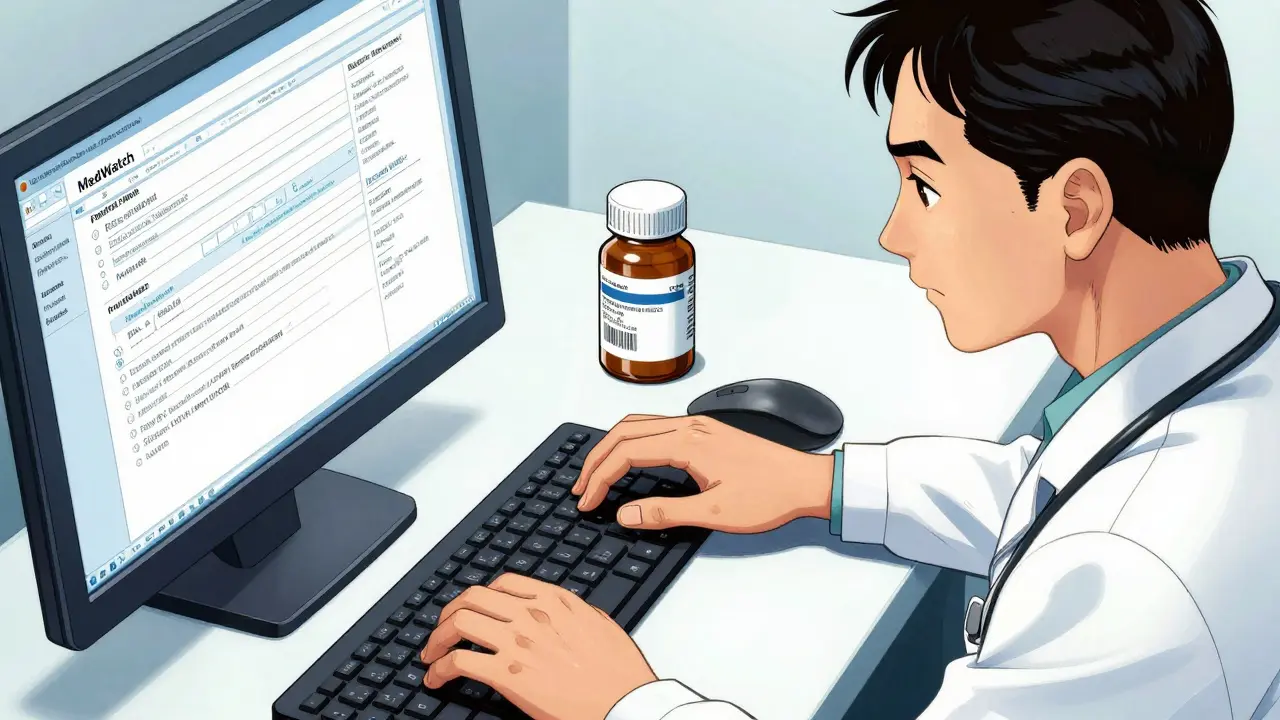
What is MedWatch and why it matters for generics
The FDA created MedWatch to monitor drug safety after products hit the market. While brand-name drugs undergo rigorous clinical trials before approval, generics rely on bioequivalence studies showing they work similarly to the original drug. However, real-world use can reveal differences in how patients respond. For example, a 2022 study found patient concerns about generic medications increased significantly, especially around therapeutic inequivalence-where patients report reduced effectiveness or unexpected side effects compared to brand versions.
MedWatch data feeds into the FDA Adverse Event Reporting System (FAERS), which contains over 9 million reports. This system follows international safety standards and processes data across seven key tables, including patient demographics, drug details, and adverse event descriptions. Without MedWatch, the FDA would lack critical real-world evidence to identify safety signals specific to generic drugs.
How safety data gets into MedWatch
Reporting happens through two main channels: the online MedWatch portal (www.fda.gov/MedWatch) or Form FDA 3500 for paper submissions. Healthcare professionals typically submit reports using the online system, while consumers can report directly or through pharmacists. For generic drugs, accurate reporting requires specific details:
- Exact drug name (e.g., "generic sertraline")
- Manufacturer name (if known)
- National Drug Code (NDC) number from the packaging
- Description of the adverse event
- Patient age, symptoms, and relevant medical history
The National Drug Code (NDC) is especially important-it uniquely identifies the drug manufacturer, strength, and package size. Yet only 28.3% of consumer reports include this code, according to FDA analysis of 2023 data. This missing detail makes it harder to track which specific generic version caused issues.

Key challenges in tracking generic-specific issues
One major hurdle is distinguishing between brand-name and generic drugs in reports. A 2022 study revealed that only 32.7% of generic drug reports include the specific manufacturer name, compared to 89.4% for brand-name drugs. This gap creates "blind spots" in pharmacovigilance. For instance, if multiple manufacturers produce the same generic drug, the FDA can’t pinpoint which one caused problems without manufacturer details.
Another challenge is therapeutic inequivalence. Patients often report issues like "this generic doesn’t work like my previous brand," but they may not realize the difference stems from the generic version. A 2024 FDA Drug Info Rounds video highlighted that "distinguishing between brand and generic products in adverse event reports remains one of our most persistent data quality challenges." Even when reports mention "generic," the system struggles to link them to specific manufacturers due to inconsistent labeling.
Here’s how reporting differences look in practice:
| Aspect | Brand-Name Drugs | Generic Drugs |
|---|---|---|
| Manufacturer Name in Reports | 89.4% | 32.7% |
| NDC Code Included | 85% (healthcare pros) | 28.3% (consumers) |
| Therapeutic Inequivalence Reports | Higher rate for brand-specific issues | Only 4.7% of all drug-related reports |
How to report a problem with a generic drug
Reporting a generic drug issue is straightforward but requires precision. First, check the medication packaging for the NDC number-a 10- or 11-digit code usually found near the barcode. For example, a levothyroxine package might list NDC 0002-5000-02. This code tells the FDA exactly which manufacturer produced the drug.
Next, visit the MedWatch online portal. Fill in the "Drug Name" field as "generic [drug name], manufacturer [if known]". If unsure about the manufacturer, include the NDC number. Describe symptoms clearly: "After switching to generic sertraline, I experienced severe dizziness and nausea within 2 days." Include details like dosage, duration of use, and any relevant medical history. The FDA strongly encourages submitting as much information as possible-this improves their ability to analyze patterns.
Healthcare professionals should also note the prescribing doctor’s details and any lab results. A 2024 AMA survey found 96% of physicians found MedWatch "easy to use," but 78% reported difficulty distinguishing between generic manufacturers in the system. Using the NDC code is the best way to overcome this.
Real cases where MedWatch data made a difference
MedWatch reports have directly led to safety improvements for generics. In 2022, multiple reports of therapeutic failure with a specific Mylan-made bupropion XL generic prompted an FDA investigation. Within 11 months, the agency required label changes to clarify potential side effects. Similarly, reports about inconsistent effects with generic levothyroxine led to updated dosing guidelines in 2023.
Pharmacist John M. shared on Reddit’s r/pharmacy community: "I’ve submitted 17 MedWatch reports for generic medications over the past 3 years, mostly concerning therapeutic inequivalence with levothyroxine generics. Only 2 responses from FDA, but one led to a label change." Meanwhile, patient Sarah K. noted on Drugs.com: "When I tried to report a reaction to generic sertraline, the MedWatch form didn’t have a field to specify which manufacturer’s version I was using, just 'generic sertraline'." This highlights why including NDC codes matters-they help the FDA trace issues to specific manufacturers.
What’s next for MedWatch and generics
The FDA is actively improving how it handles generic drug safety data. In 2024, they integrated a new algorithm into FAERS that identifies generic drugs with 92.4% accuracy. This tool, developed from a 2022 study, cross-references NDC codes and manufacturer details to better isolate generic-specific issues. The agency also launched the Generic Drug User Fee Amendments (GDUFA) III action plan in 2023, which includes commitments to enhance safety monitoring for generics.
By 2026, the FDA plans to integrate MedWatch with electronic health record systems. This will automatically capture NDC codes and manufacturer information during prescribing, reducing manual reporting errors. However, challenges remain. FDA Commissioner Dr. Robert Califf stated in a 2025 Congressional testimony: "While we’ve made progress in distinguishing generics in our reporting systems, the voluntary nature of MedWatch means we’re likely missing significant safety signals specific to individual generic manufacturers." Industry analysts project a 22% increase in generic-specific adverse event reports by 2027 as identification methods improve.
How do I report a problem with a generic drug?
Visit www.fda.gov/MedWatch and fill out the online form. Include the exact drug name (e.g., "generic sertraline"), manufacturer name (if known), and the National Drug Code (NDC) from the packaging. Describe symptoms clearly, including when they started and any relevant medical history. For healthcare professionals, add prescribing details and lab results. The FDA processes reports within 30 days and may follow up for additional information.
Why is it harder to track safety issues with generic drugs?
Many reports lack specific manufacturer details. Only 32.7% of generic drug reports include the manufacturer name compared to 89.4% for brand-name drugs. Patients often don’t know which manufacturer produced their generic, and forms don’t always have fields to specify this. Without this information, the FDA can’t link issues to specific batches or manufacturers, making it difficult to address problems effectively.
What’s the difference between MedWatch and FAERS?
MedWatch is the reporting system where patients and professionals submit safety concerns. FAERS (FDA Adverse Event Reporting System) is the database that stores and processes these reports. Think of MedWatch as the "input" channel and FAERS as the "storage and analysis" system. All MedWatch reports feed into FAERS for evaluation by FDA scientists.
Can I report a problem without knowing the manufacturer?
Yes, but it’s less effective. Submit what you know-drug name, symptoms, and NDC code if available. The NDC number alone helps the FDA identify the manufacturer. If you don’t have the NDC, describe where you bought the medication (e.g., "Walmart pharmacy") and the prescription date. The FDA will use this information to trace the product, though it may take longer to resolve the issue.
How does the FDA use MedWatch data to improve generic drug safety?
The FDA analyzes trends in MedWatch reports to detect safety signals. For example, if multiple reports link a specific generic manufacturer to severe side effects, the agency may require label changes, issue safety alerts, or even recall the product. In 2022, MedWatch reports about Mylan’s bupropion XL led to updated warnings within 11 months. The FDA also shares data with drug manufacturers to improve quality control and works with international regulators to address global safety concerns.
What should I include in a MedWatch report for a generic drug?
Include: the exact drug name (e.g., "generic metformin 500mg"), manufacturer name (if known), NDC code from the packaging, detailed symptoms (e.g., "severe nausea after 3 days of use"), dosage, duration of use, patient age and medical history, and any other relevant details like pharmacy name or prescription date. The more specific you are, the easier it is for the FDA to investigate.
How long does it take for the FDA to respond to a MedWatch report?
The FDA processes all reports within 30 days. For urgent safety concerns, they may contact you sooner. However, individual responses are rare-most reports contribute to broader trend analysis rather than direct follow-ups. For example, a 2024 FDA review showed only about 20% of reports receive a personalized response, but all data is used to inform regulatory decisions.
Are there tools to help identify generic manufacturers?
Yes. The NDC number on your medication packaging is the quickest way to identify the manufacturer. You can also check the FDA’s NDC Directory online (www.accessdata.fda.gov/scripts/cder/ndc) by entering the code. Many pharmacies include manufacturer names on prescription labels, and some drug apps like GoodRx show manufacturer details when searching for generics. Pharmacists can also help you find this information.
What’s the role of NDC codes in reporting?
The NDC code uniquely identifies the drug manufacturer, strength, and package size. For example, NDC 0002-5000-02 refers to a specific levothyroxine product made by a particular company. Including this code in MedWatch reports allows the FDA to trace issues to exact batches and manufacturers. Without it, reports often get lumped under "generic [drug name]" with no way to pinpoint the source-making it harder to address problems quickly.
How does the FDA handle therapeutic inequivalence reports for generics?
Therapeutic inequivalence reports are prioritized because they indicate potential safety or efficacy issues. The FDA cross-references these reports with other data, like lab results or manufacturer quality records. For example, if multiple patients report reduced effectiveness with a specific generic thyroid medication, the FDA may investigate manufacturing processes or require additional bioequivalence testing. In 2023, this led to updated dosing guidelines for certain levothyroxine generics after analyzing MedWatch data.


jan civil February 7, 2026
Patients need to report generic issues with NDC codes for accurate tracking.
Cullen Bausman February 8, 2026
Generic drugs pose a significant risk to public health The FDA must enforce stricter reporting requirements Patients are often unaware of the details This system is fundamentally flawed
Albert Lua February 9, 2026
Hey everyone! I'm a pharmacist in Texas. I've submitted over 20 MedWatch reports. It's super easy and makes a difference. Always include the NDC code! Let's keep each other safe.
Dr. Sara Harowitz February 9, 2026
Pharmacist? Really? You think it's 'super easy'? Have you seen the FDA's response rate? It's abysmal! Most reports are ignored. This system is a joke. Seriously, how can you be so naive?
Matthew Morales February 10, 2026
lol the doctor is too harsh. i think it's better than nothing. maybe the fda is swamped? 😅 but yeah ndc code is important. my bad i misspelled 'medwatch' earlier 😂
Jennifer Aronson February 12, 2026
MedWatch is a vital tool for monitoring generic drug safety. However, the current system has limitations. Patient education on proper reporting is essential. More research is needed to improve data quality.
Andre Shaw February 13, 2026
MedWatch is a complete sham. The FDA has more efficient ways. This is just for show. Trust me, I've done the research. You're all wasting your time.
Johanna Pan February 15, 2026
aww someone is so negative. but i think medwatch is important. even if it's not perfect, it's better than nothing. let's keep trying. maybe the fda will improve it. 😊
Jenna Elliott February 16, 2026
Generic drugs are a threat to American health The FDA is failing We need stronger regulations This is unacceptable Period
Elliot Alejo February 16, 2026
I agree we need better regulations but MedWatch is still useful. It's a starting point. We should improve it rather than dismiss it. Let's work together.
Sam Salameh February 17, 2026
Hey y'all, let's not be too hard on the FDA. They're doing their best. But we can all help by reporting correctly. Just check the NDC code and fill out the form. It's simple!
Dina Santorelli February 19, 2026
lol 'doing their best'? they're incompetent. most reports get ignored. why bother? it's a waste of time. i've submitted 10 reports and never heard back. useless system.
Lana Younis February 21, 2026
The MedWatch system is critical for post-marketing surveillance of generics.
However, the current reporting process lacks standardization.
NDC codes are essential for traceability.
We need better integration with EHRs to reduce errors.
This is a pharmacovigilance challenge that requires collaborative solutions.
Many patients are unaware of how to report issues.
Healthcare providers should educate patients on the importance of including NDC codes.
The FDA should streamline the reporting process.
There are gaps in data collection that need addressing.
Without accurate data, safety signals may be missed.
It's important to have clear guidelines for reporting.
Training for pharmacists and doctors could help.
Public awareness campaigns are needed.
More research is required to improve the system.
Collaboration between industry and regulators is key.
Rene Krikhaar February 22, 2026
you're right about ndc codes being important. also ehrs integration would help. but we need to educate patients too. many don't know how to find the ndc. pharmacists should explain it. thanks for sharing this info