
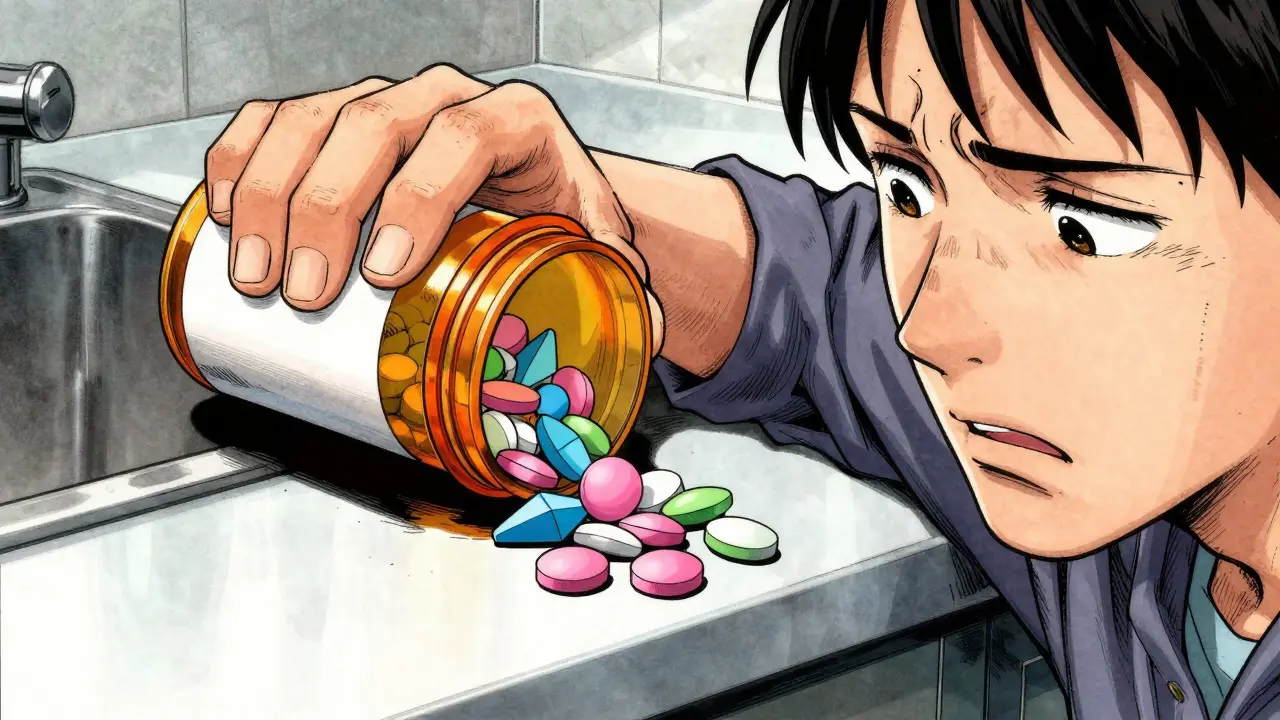
Imagine reaching for your daily blood pressure medication only to find the familiar white oval has been replaced by a pink circle. Panic sets in immediately. Did the pharmacy make a mistake? Is this new pill weaker? Stronger? Dangerous? You aren't alone in feeling that spike of anxiety. In fact, a staggering number of patients have stopped taking their life-saving medications simply because the pills looked different.
This phenomenon-known as generic pill appearance change-is one of the most common yet misunderstood issues in modern healthcare. It sits at the intersection of legal trademark restrictions, pharmaceutical economics, and human psychology. While the active medicine inside remains exactly the same, the physical vessel changes frequently enough to disrupt routines and erode trust. Understanding why this happens, whether it is safe, and how to manage the confusion is critical for maintaining your health.
The Legal Reason Behind the Look
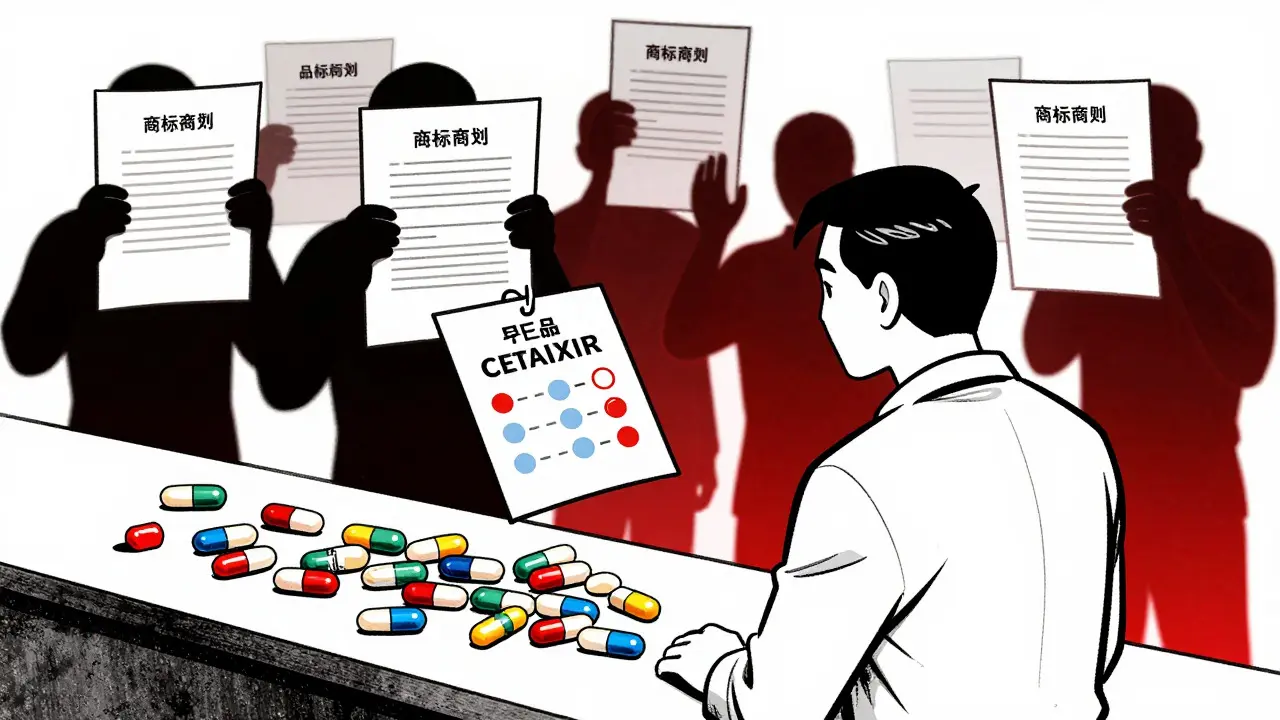
To understand why your pill keeps changing shape or color, you first need to look at the law. Specifically, U.S. trademark laws play a massive role here. Brand-name drug companies spend billions developing new medications and then register trademarks not just for the name, but often for the specific look of the pill-the unique shape, color, and imprint.
When a patent expires, other manufacturers can step in to produce generic drugs, which are medications with identical active ingredients to brand-name drugs but sold under different names and often different appearances. However, these generic manufacturers cannot legally copy the brand-name pill's exact appearance. If they did, they would risk trademark infringement lawsuits from the original company.
So, what do generic makers do? They choose their own colors, shapes, and sizes. This means that while Pfizer’s brand-name version might be a distinct blue diamond, Manufacturer A’s generic might be white and round, while Manufacturer B’s could be green and oblong. All three contain the same therapeutic dose of the active ingredient, but they look nothing alike. This legal necessity creates a landscape where variability is the norm, not the exception.
Bioequivalence: The Science of Safety
The core question on every patient's mind is usually: "Is it still safe?" The short answer is yes, provided the drug is approved by the Food and Drug Administration (FDA). The regulatory body enforces strict rules regarding bioequivalence, which ensures that a generic drug delivers the same amount of active ingredient into a patient's bloodstream over the same period as the brand-name drug.
According to FDA standards, a generic drug must meet rigorous criteria before it hits the shelves:
- It must contain the exact same active ingredient(s) as the brand-name counterpart.
- It must match the brand drug in strength, dosage form (tablet, capsule, liquid), and route of administration (oral, injection, etc.).
- It must demonstrate bioequivalence, meaning it performs similarly in the body.
- It must be manufactured under the same strict Good Manufacturing Practice (GMP) regulations.
The only areas where differences are permitted are the inactive ingredients-things like fillers, binders, and dyes. These components hold the pill together or give it color, but they do not affect the therapeutic outcome. For example, a patient taking sertraline (often known by the brand name Zoloft) might receive tablets that are blue, green, or white depending on who made them. The serotonin reuptake inhibition remains identical across all versions.
| Feature | Brand-Name Drug | Generic Drug |
|---|---|---|
| Active Ingredient | Original formulation | Identical to brand |
| Appearance | Consistent (trademarked) | Varies by manufacturer |
| Cost | High (R&D recovery) | 80-85% lower than brand |
| Inactive Ingredients | Specific formula | May vary (fillers/dyes) |
| Efficacy | Clinically proven | Bioequivalent to brand |
The Patient Impact: Confusion and Non-Adherence
While the science says generics are safe, human behavior tells a different story. The visual cue of a pill is powerful. Patients build routines around recognizing their medication. When that visual anchor disappears, trust erodes.
Data paints a concerning picture. A study published in the *Annals of Internal Medicine* highlighted a significant correlation between appearance changes and medication discontinuation. Researchers found that there is a 34% likelihood of patients stopping their medication after a simple color change. That number jumps to 66% if the shape of the pill changes. Why such high numbers? Because uncertainty breeds fear. Many patients associate specific colors with effectiveness or safety. When a white pill turns pink, the subconscious alarm bells ring.
Real-world anecdotes reinforce these statistics. One patient reported experiencing nine different appearance changes for the same medication over a 15-year period. Another shared on Reddit that they nearly stopped taking their blood pressure meds because the pills shifted from white to pink, leading them to believe it was a different, potentially stronger drug. This isn't just about pickiness; it's about the psychological contract between the patient and their treatment plan. When the pill looks wrong, the patient feels the treatment is wrong.
Why Does My Pharmacy Keep Switching Manufacturers?
If you've noticed your pills changing frequently, it’s likely due to economics rather than medical strategy. Pharmacies operate on thin margins. To keep costs down for insurance providers and patients, pharmacies often switch to whichever generic manufacturer offers the lowest price at any given time.
As Dr. Darrick Lee, a family-medicine physician at UCLA, explains, "Pharmacies look for the most economical option, which can vary from month to month, so a pill's appearance may change accordingly." Since generic drugs make up more than 70% of all prescriptions in the United States, this economic volatility is constant. One month, Manufacturer A is cheapest; the next, Manufacturer B undercuts them. You get the cheaper pill, but you also get the new look.
This dynamic affects common medications like metformin, lisinopril, and gabapentin. Metformin, for instance, might appear as a round white tablet from one maker and an oblong pink one from another. Lisinopril can shift between white, pink, or peach tones. Gabapentin varies widely in size and marking. These shifts are normal within the system, even if they feel disruptive to the individual.

How to Manage Appearance Changes Safely
You don't have to live in fear of the next refill. There are practical steps you can take to ensure safety and maintain peace of mind when your medication's appearance changes.
- Keep a Master Medication List: Don't rely on memory. Maintain a written list of all your medications, including the generic name, strength, and intended use. Bring this list to every doctor's appointment.
- Use Digital Tools: Resources like the NIH's "Tracking Your Medications" guide or the online pill identifier at Medscape can help verify that a new-looking pill matches your prescription. Simply enter the imprint code (the letters or numbers stamped on the pill) to confirm its identity.
- Talk to Your Pharmacist: Pharmacists are your best defense against confusion. When you pick up a prescription that looks different, ask them directly. They can confirm that the active ingredient is the same and explain why the change occurred. According to the American Society of Health-System Pharmacists, 78% of pharmacies now include appearance change notifications with refills, up from 45% in 2018. Take advantage of this.
- Request Consistency (If Possible): If a particular generic works well for you and another causes digestive upset or anxiety, ask your pharmacist if they can dispense from a specific manufacturer. Note that insurance plans may not cover the cost difference, so this might require a co-pay adjustment.
The Future of Generic Labeling
Regulators are aware of the adherence crisis caused by appearance variability. The MODERN Labeling Act of 2020 introduced mechanisms to update generic drug labeling more quickly when new scientific evidence emerges or when current labels no longer reflect legal requirements. Additionally, recent Federal Register notices indicate the FDA is implementing stricter requirements for application holders to update labeling based on new safety information.
Experts like Drs. Uhl and Peters have long argued that bioequivalent generic drugs that resemble their brand-name counterparts enhance patient acceptance. While trademark laws currently prevent identical copying, there is growing pressure for greater standardization among generic manufacturers themselves. Imagine if all generic sertraline were required to be the same shade of blue, regardless of who made it. That level of consistency would drastically reduce patient confusion. Until then, vigilance and communication remain your best tools.
Is it dangerous if my generic pill changes color?
No, it is generally not dangerous. Color changes are due to different inactive ingredients (dyes) used by various manufacturers. As long as the pill is FDA-approved and contains the same active ingredient, the therapeutic effect remains the same. However, always verify with your pharmacist if you are unsure.
Why does my pharmacy keep changing the brand of my generic medication?
Pharmacies often switch manufacturers to secure the lowest cost for your insurance plan or out-of-pocket payment. Since generic prices fluctuate based on supply and competition, the cheapest option available today might be different from last month. This economic decision drives the frequent appearance changes.
Can I ask my pharmacist to stick to one specific generic manufacturer?
Yes, you can request a specific manufacturer, especially if you have experienced side effects with one version but not another. However, check with your insurance provider first, as they may charge a higher copay for a non-preferred manufacturer. Some pharmacies may also have limited stock of specific brands.
What should I do if I think my pill is the wrong medication?
Do not stop taking your medication abruptly without consulting your doctor, as this can be harmful. Instead, contact your pharmacist immediately. Use the imprint codes on the pill to identify it using online resources like the Medscape Pill Identifier. If it is indeed the wrong drug, the pharmacist will correct the error and advise on next steps.
Are generic drugs as effective as brand-name drugs?
Yes, generic drugs are required by the FDA to be bioequivalent to brand-name drugs. This means they deliver the same amount of active ingredient into your bloodstream over the same period. Studies consistently show that generics perform just as well as brand-name medications for the vast majority of patients.





Prashant Shishodia July 26, 2026
Just take the pill. It works.
Crystal Tadlock July 27, 2026
They are just trying to poison us with different dyes every month so we never know what is in our bodies. The government wants us sick and confused. I keep my old bottles under the bed because I know they are watching the pharmacy logs. It is all a big lie to sell more tests.
Scott Colter July 27, 2026
The visual anchor of identity is fragile, isn't it? We project our internal stability onto these small ceramic-like objects. When the pink circle appears, it is not just a dye change; it is an existential crisis in miniature. We fear the unknown variable. But perhaps the constant is the intent to heal, regardless of the vessel. Trust the process, not the pigment.
Autumn LW July 28, 2026
Oh please. If you cannot handle a color change you are too weak for modern medicine. Read the label. Use your brain. It is not rocket science. Stop whining about aesthetics when people are dying from lack of access. You are privileged to have any generic at all. Get over yourself.
Tad Cronn July 30, 2026
You think you are safe? Look closer. The fillers contain microplastics that leach into your blood stream over time. The FDA does not test for long term accumulation of these binders. They only check if it kills you immediately. Your liver is working overtime to filter this garbage. You are paying for your own slow destruction with every refill. Wake up.
Andrew Donovan July 31, 2026
It is fascinating how our brains wire themselves to specific visual cues. The pink circle triggers a mismatch error in the cognitive map. This is why checking the imprint code is vital. It grounds you in reality rather than assumption. The chemistry remains steadfast while the packaging dances. Embrace the variability as a reminder of the complex supply chain keeping costs down for everyone. Knowledge is the best antidote to panic.
Paul Lyons July 31, 2026
This is why America is failing! Our pharmacies are run by greedy corporations cutting corners while Europe gets consistent meds. We are second class citizens in healthcare. The system is rigged against the little guy. Big Pharma wins again. Typical American incompetence. Fix the borders and fix the pills!
MiMi Stanley August 2, 2026
I just look at the bottle and shrug. It is what it is. I asked my pharmacist once and she explained it clearly. Now I just expect it. Life is full of changes. Why make it harder?
Najmunisa Govender August 3, 2026
It is completely understandable to feel anxious!!! The body remembers the white pill!!! When the pink one arrives!!! It feels like a betrayal!!! Please talk to your pharmacist!!! They are there to help!!! Do not suffer in silence!!!
Deva Vidya August 4, 2026
You can do this! Just ask questions. Be assertive with your health. Tell them you want consistency if you need it. You deserve to feel safe. Take control of your medication routine. It is your body after all. Stay strong and informed.
ANINDA GHOSH August 6, 2026
In my culture we respect the healer but also question the method. The pill is a symbol of trust. When it changes the trust wavers. We must bridge this gap with dialogue. Namaste. 🙏
Patrick Meyer August 7, 2026
Its obvious the generics are cheaper crap. The brand name is always better even if it cost more. Smart people buy the real thing. The rest of you are just lucky it doesnt kill u. Bioequivalence is a joke made up by accountants.