
Cardiac Risk Screening Tool
Use this tool to identify potential "red flags" that should be discussed with a healthcare provider before starting or adjusting stimulant medication.
Low Risk Profile
Your profile suggests a lower risk of cardiac arrhythmias. Regular monitoring of blood pressure and pulse is still recommended as per medical guidelines.
Moderate Risk Profile
You have identified some risk factors. It is highly recommended to discuss these specific concerns with your prescribing physician.
High Risk Profile
Your profile contains significant "red flags." This may include a history of sudden cardiac death, use of illicit stimulants, or severe symptoms.
Disclaimer: This tool is for educational purposes only and does not constitute medical advice. Always consult a licensed healthcare provider for medical diagnosis and treatment.
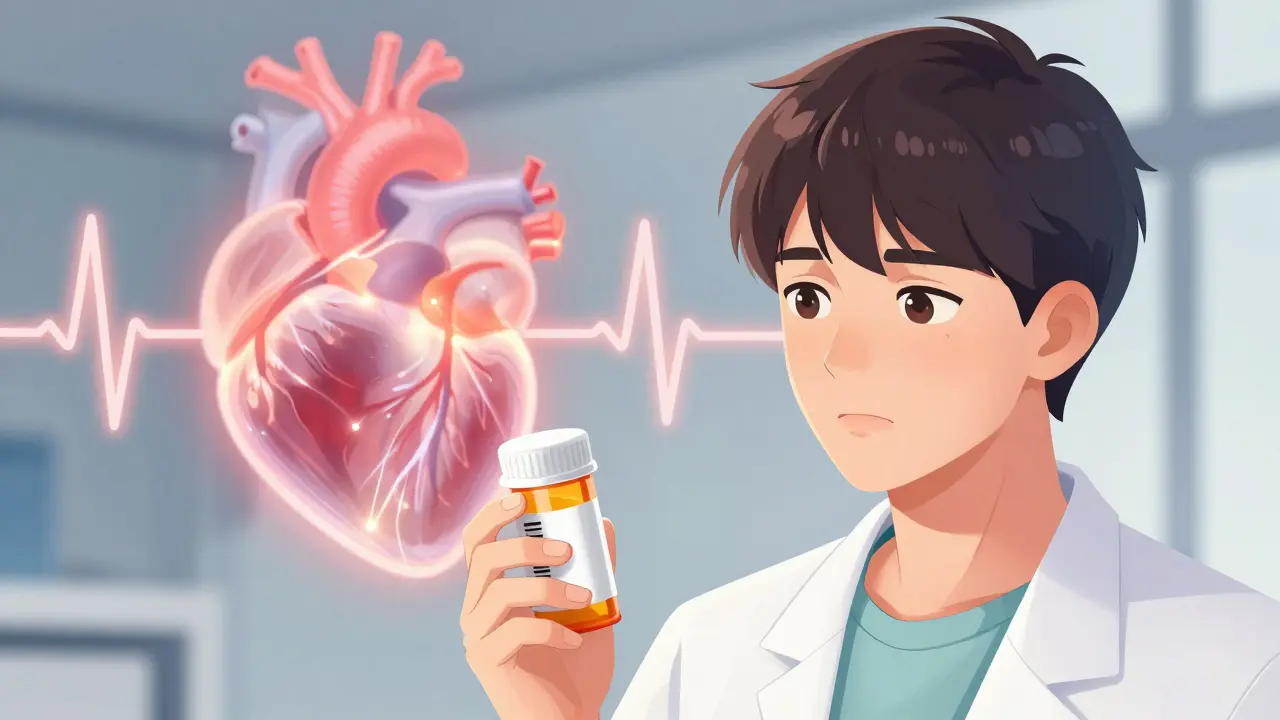
Taking a medication to focus better or manage ADHD can feel like a game-changer, but for some, it comes with a nagging question: Is this safe for my heart? The relationship between stimulant medications is a class of central nervous system stimulants used primarily to treat ADHD by enhancing executive function and reducing impulsivity and the heart is complicated. While most people handle these drugs without a hitch, there is a real conversation to be had about cardiac arrhythmias-those irregular heartbeats that can range from a harmless flutter to a serious medical emergency.
| Stimulant Type | Common Examples | Primary Cardiac Effect | Relative Risk Level |
|---|---|---|---|
| Prescription (Methylphenidate) | Ritalin, Concerta | Mild increase in heart rate/BP | Low |
| Prescription (Amphetamines) | Adderall, Vyvanse | Higher catecholamine release | Low to Moderate |
| Illicit Stimulants | Methamphetamine, Cocaine | Ion channel blockage, structural remodeling | High |
How Stimulants Affect Your Heart's Rhythm
To understand the risk, we have to look at how these drugs actually work. Most prescription stimulants, like Methylphenidate or Amphetamines, trigger the release of catecholamines (like norepinephrine). This tells your heart to beat a bit faster and your blood vessels to tighten, slightly raising your blood pressure. For a healthy person, an increase of 1-2 beats per minute is barely noticeable.
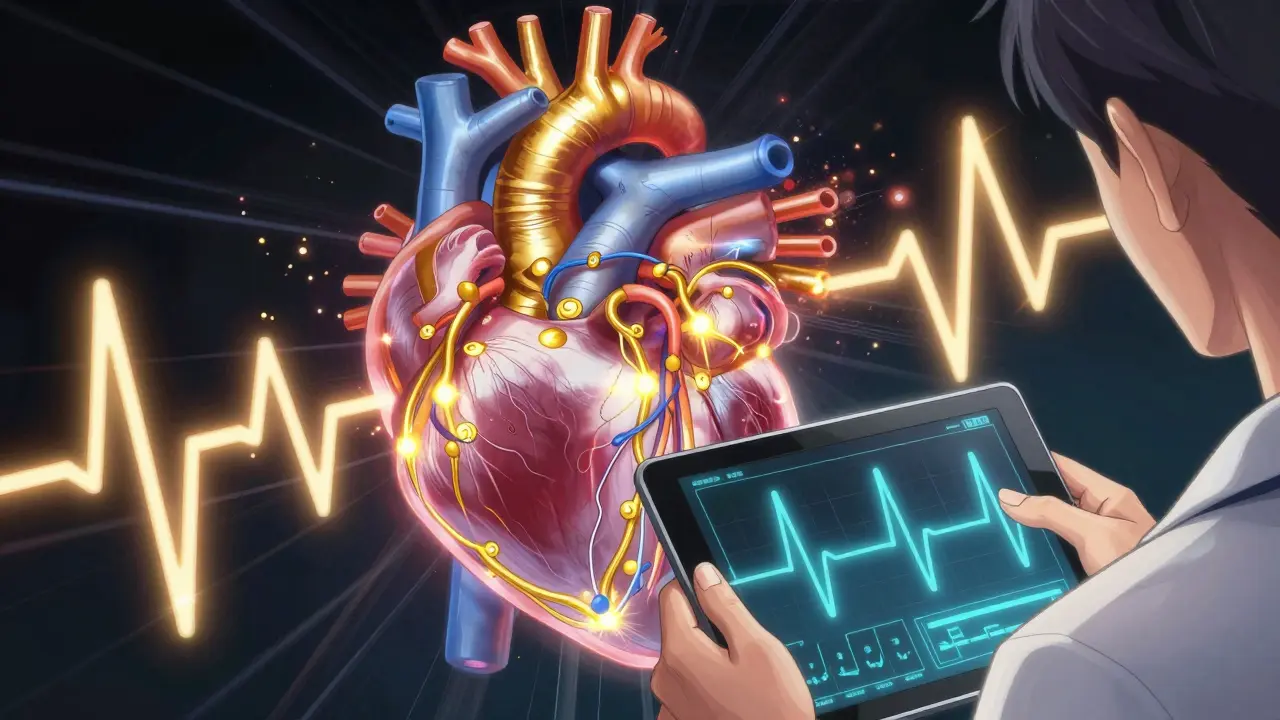
However, the story changes when we talk about Cardiac Arrhythmias, which are disruptions in the electrical impulses that make the heart beat. In some cases, stimulants can create an environment where the heart's electrical system becomes unstable. For older adults-specifically those 66 and older-research has shown that starting a stimulant can triple the risk of ventricular arrhythmias within the first 30 days. This suggests that the "startup" phase of treatment is the most volatile period for the heart.
If we move from prescription drugs to illicit substances, the danger spikes. Cocaine and methamphetamine don't just nudge the heart; they attack the electrical gateways. They block potassium and sodium channels, which are the "doors" that allow ions to move in and out of heart cells. When these doors are blocked, the heart's electrical recovery (the QT interval) slows down, making it much easier for the heart to slip into a dangerous, chaotic rhythm.
Assessing Your Individual Risk
Not everyone is at the same risk level. A 10-year-old with no medical history is in a very different category than a 70-year-old with a history of hypertension. The goal of a professional risk assessment isn't to scare patients away from treatment, but to identify those who might need a closer eye on their heart health.
Medical guidelines from the American Heart Association (AHA) generally suggest that a full-blown ECG isn't necessary for everyone before starting ADHD meds. Instead, the focus is on a thorough history. If you or a close relative have had an unexplained sudden death before age 50, or if you've experienced fainting spells (syncope) or chest pain, that's a red flag that requires a cardiologist's input.
Once treatment starts, the "baseline" is key. Doctors usually check your pulse and blood pressure at the start, again within the first three months, and then every six to twelve months. If your blood pressure consistently hits the 95th percentile for your age and size, it's usually time to reconsider the dose or the drug.
When the Risk Outweighs the Reward
There are specific "stop signs" that tell a clinician the risk has become too high. One of the most critical is the QT interval. If an ECG shows a QT interval exceeding 0.46 seconds, the risk of a sudden, dangerous arrhythmia becomes too significant to ignore. Similarly, if a patient develops a clinically significant arrhythmia that can't be controlled, the stimulants usually have to go.
It's also worth noting that the risk changes over time. While older adults face a spike in risk immediately after starting, some studies in young adults suggest a slow increase in the risk of cardiomyopathy (thickening or weakening of the heart muscle) the longer they stay on the medication. While the absolute risk remains low, it emphasizes why long-term monitoring is better than a one-time checkup.
Exploring Non-Stimulant Alternatives
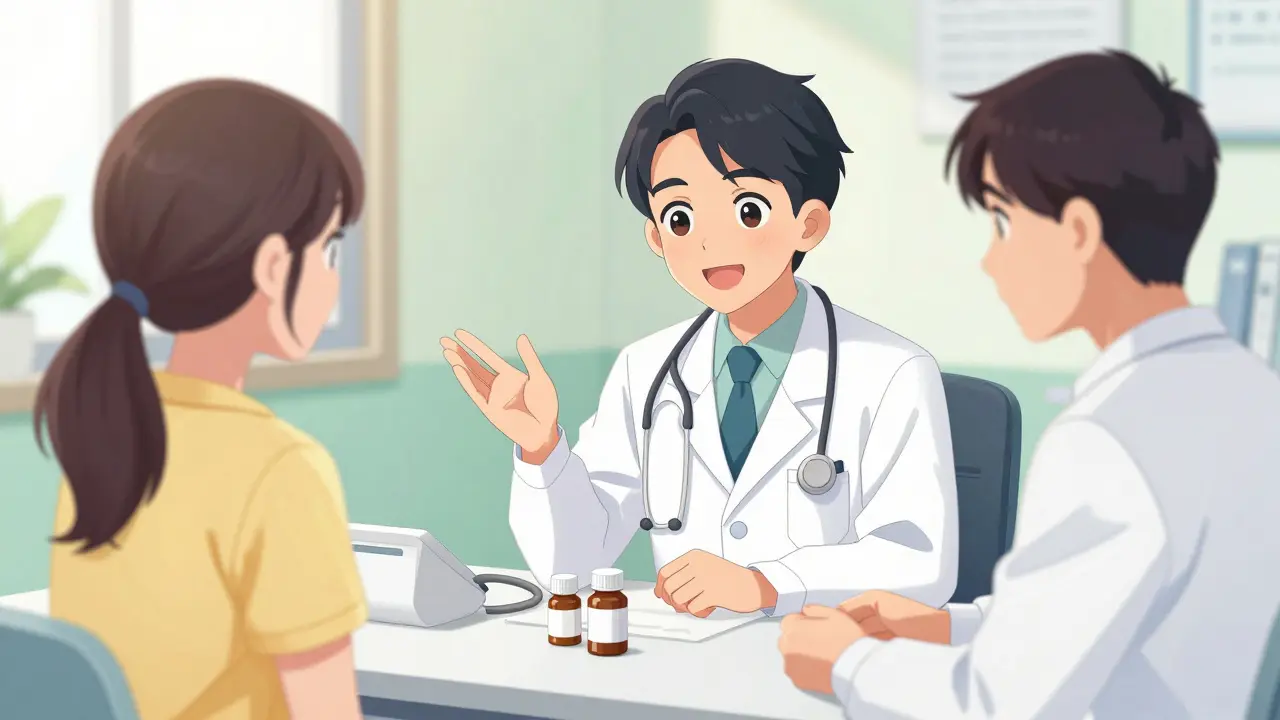
If you're in a high-risk group or if stimulants are causing too much cardiac stress, you aren't out of options. There are Non-stimulant medications designed to help with ADHD without the same aggressive impact on the heart's electrical system.
- Atomoxetine: A selective norepinephrine reuptake inhibitor that doesn't have the "rush" of amphetamines.
- Guanfacine: Often used to treat high blood pressure, it can help with impulsivity and hyperactivity.
- Clonidine: Another blood-pressure-related medication that can calm the nervous system and improve focus.
The trade-off here is efficacy. Stimulants typically work for 70-80% of people, while non-stimulants often hover around a 50-60% success rate. However, for someone with a known heart condition, a slightly less effective drug is a fair price to pay for cardiac safety.
Practical Tips for Patients and Caregivers
If you or your child are starting a stimulant, don't panic, but do be proactive. Here is a simple checklist to keep your heart health on the radar:
- Be honest about family history: Tell your doctor if any relative died suddenly or had a "heart condition" without a clear cause.
- Track your vitals: If you have a home blood pressure cuff, keep a simple log of readings during the first few months of a new dose.
- Watch for symptoms: Keep an eye out for palpitations (the feeling that your heart is skipping a beat) or unusual shortness of breath during light activity.
- Schedule regular check-ins: Don't skip the six-month blood pressure and pulse checks, even if you feel great.
Do I need an ECG before starting ADHD medication?
For most people, no. According to the American Academy of Pediatrics and the AHA, routine ECG screening isn't required for everyone. However, if you have a family history of sudden cardiac death or symptoms like fainting, your doctor will likely order one to be safe.
Are all stimulants equally risky for the heart?
No. Illicit stimulants like cocaine and methamphetamine are significantly more dangerous because they actively block ion channels in the heart. Between prescriptions, amphetamines may pose a slightly higher risk than methylphenidate due to a stronger release of catecholamines, but both are generally considered safe under medical supervision.
What are the signs that a stimulant is affecting my heart?
Common signs include an unusually rapid heart rate, palpitations, chest pain, or a significant increase in blood pressure. If you feel lightheaded or faint unexpectedly, you should contact your doctor immediately.
Can people with heart disease still take stimulants?
Yes, it is often possible. Many people with repaired congenital heart disease or stable heart conditions can use stimulants safely. The key is close coordination between your psychiatrist and a cardiologist to monitor for arrhythmias.
Is the heart risk higher for children or adults?
The risk manifests differently. In children, the absolute risk of a serious event is very low. In older adults (66+), there is a noted spike in arrhythmia risk during the first 30 days of starting the medication. In young adults, some evidence suggests a long-term, slight increase in the risk of structural heart changes.



Sarina Montano April 10, 2026
It is absolutely vital to mention the role of hydration and electrolytes here. Potassium and magnesium levels can drastically swing how your heart reacts to the catecholamine surge from amphetamines. If you're running low on magnesium, those 'harmless flutters' can feel like a drum set in your chest. A simple supplement or just eating more spinach and avocados can sometimes mitigate the jitteriness that people mistake for a cardiac event. Also, caffeine is a huge multiplier-mixing a double espresso with Vyvanse is basically like redlining your heart for no reason. Just a little tip for anyone feeling the physical anxiety of these meds.
Ben hogan April 11, 2026
The sheer banality of this summary is almost offensive. We're reducing the complex bio-electrical symphony of the human heart to a simplified table for the masses to skim through while they wait for their next dose of chemical productivity. It's a quaint attempt to bridge the gap between clinical pharmacology and the average layperson's limited attention span, but it lacks any real intellectual rigor.
Lynn Bowen April 11, 2026
Interesting perspective on the different age groups.
Victor Parker April 11, 2026
Big Pharma just wants us on these forever so they can sell us the heart meds later 🙄 It's all a cycle to keep us dependent on the system and numb our brains while they track our every heartbeat with these new 'smart' devices. Wake up people! 👁️
Kelly DeVries April 12, 2026
literally me last year on adderall i felt like my heart was trying to escape through my ribs and my doctor just told me to drink more water lol the medical system is a joke
Rakesh Tiwari April 13, 2026
Oh wow, a table that says illegal drugs are bad for your heart. Truly groundbreaking research here. I'm sure the meth users are just shocked to discover that blocking ion channels isn't a great health strategy. Pure genius.
Suchita Jain April 14, 2026
It is highly imperative that one considers the moral obligation to maintain one's health for the sake of their family. One must not be reckless with such potent chemicals when the consequences extend beyond the individual to the dependents who suffer upon a provider's collapse. It is a matter of utmost discipline and familial duty.
Simon Stockdale April 16, 2026
I bet these fancy doctors in their ivory towers dont even know what it is like to actually work a real job in the heartland of america where we just deal with the stress and keep moving forward without needing a fancy ecg every time we feel a twitch in our chest and frankly this whole obsession with risk assessment is just a way for the government to track our health data more closely and keep us in line with their rules about what we can and cant take for our own brains while the real economy is crumbling around us because nobody can focus anymore without a pill!!
Ryan Hogg April 17, 2026
I've been struggling with this for years. Every time I try to stabilize my focus, I feel this crushing weight of anxiety about my heart failing. It's like I can't win. Either I can't function at work and my life falls apart, or I function but I spend every waking second terrified that I'm one heartbeat away from a hospital bed. It's an exhausting way to live, just constantly vibrating with fear and stimulants.