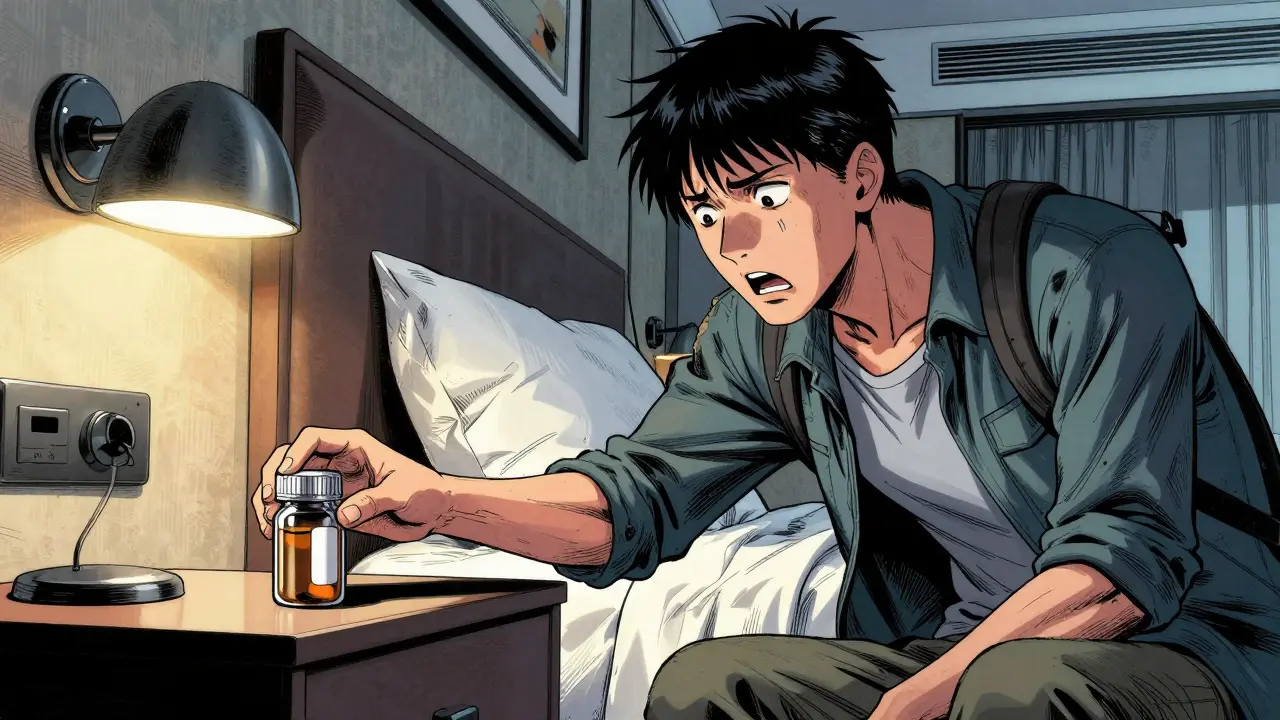
Imagine waking up in a strange city, reaching for your daily heart medication, and finding the bottle empty. Or worse, realizing someone has tampered with it. It sounds like a scene from a thriller, but for travelers, this is a real risk. According to data from the U.S. Department of Justice, over 17% of investigated cases involving stolen medications happen right inside traveler accommodations. Whether you are staying in a luxury suite or a budget hostel bunk, keeping your medication security tight isn't just about preventing theft-it's about saving your life.
We often pack our passports and phones with military precision, yet we toss our pills into a loose plastic bag or leave them on the nightstand. This article breaks down exactly how to protect your prescriptions, controlled substances, and emergency meds while away from home. We will look at what works, what fails, and how to stay compliant with laws that can get you in trouble if you aren't careful.
The Golden Rule: Keep Them in Original Containers
Before you even think about where to store your meds, you need to address how they are packed. The single biggest mistake travelers make is transferring pills into generic pill organizers or ziplock bags. While these seem convenient for organization, they strip away two critical layers of protection: identification and child resistance.
According to the American Pharmacists Association, all medications-especially controlled substances-must remain in their original pharmacy-labeled containers during travel. Why? Because if you lose them or if law enforcement needs to check them, a bag of loose white pills looks suspicious. In 2021 alone, there were over 200 documented cases where travelers faced legal issues simply because their meds weren't properly labeled.
Furthermore, child-resistant caps matter more than you might think. CDC data shows that children under five account for 45,000 emergency room visits annually due to unsupervised access to medications. If you are traveling with kids or staying in shared spaces like hostels, those easy-open plastic organizers are an invitation for accidental ingestion. Stick to the original bottles. They are designed to be secure, identifiable, and legally defensible.
Hotels vs. Hostels: Understanding the Risk Landscape
Not all temporary homes are created equal when it comes to security. There is a massive gap between the infrastructure of standard hotels and that of hostels, and knowing this difference helps you plan your defense strategy.
| Feature | Standard Hotels (U.S.) | Budget Hostels |
|---|---|---|
| In-Room Electronic Safes | Available in 92% of properties | Available in only 38% of private rooms |
| Theft Incident Rate | Low (with safe usage) | High (14.3 incidents per 1,000 stays in dorms) |
| Access Control | Electronic key cards / Biometric pilots | Often physical master keys (89% of budget spots) |
| Staff Training | Increasing (e.g., Marriott trained 750k staff) | Variable; often minimal in budget chains |
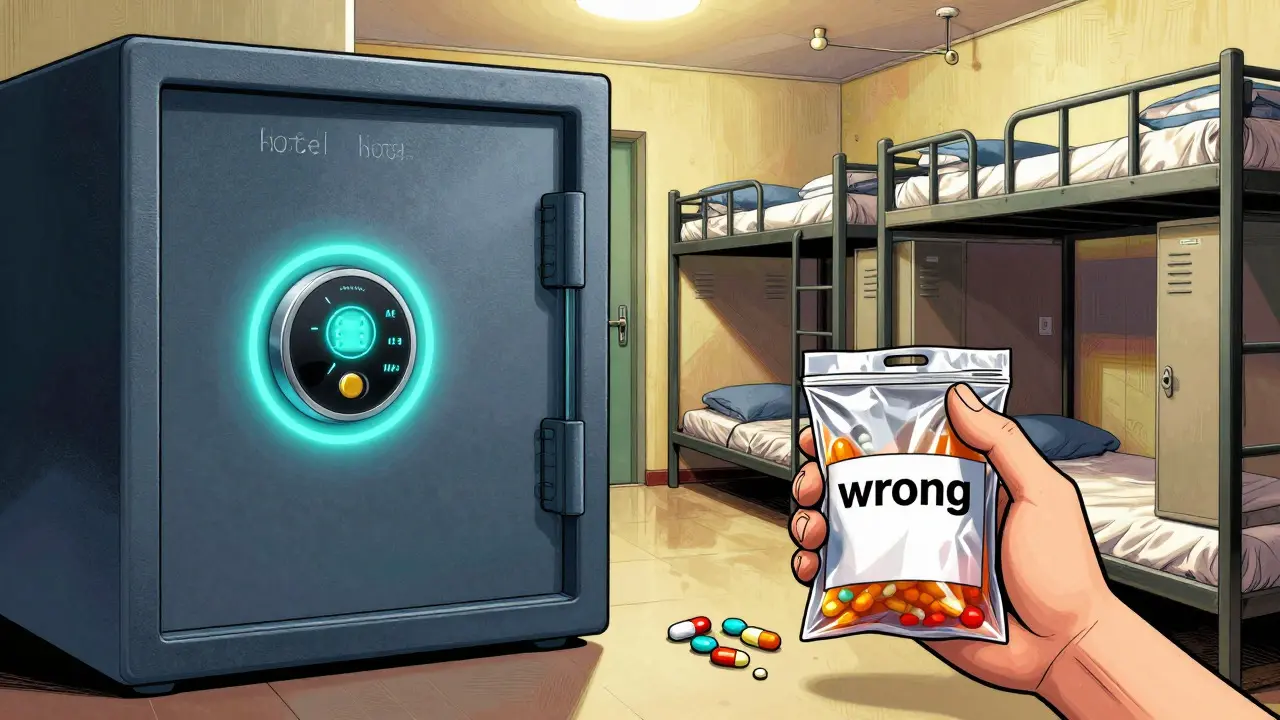
If you are booking a hotel, you likely have access to an electronic safe. These are generally reliable, with most models locking out after three failed attempts. However, don't assume they work. OmniLert’s 2023 report found that nearly 19% of hotel safes malfunction due to battery issues. Always test yours within 15 minutes of entering your room. Put something small inside, lock it, and open it. If it sticks, call the front desk immediately.
Hostels present a different challenge. Dormitory settings are high-risk zones. A study in the Journal of Travel Medicine noted that medication theft or tampering happens significantly more often in shared rooms. If you must stay in a hostel, prioritize a private room with an individual safe. If that isn't an option, you will need to rely on portable security solutions, which brings us to the next layer of defense.
Portable Solutions: Lock Boxes and Coolers
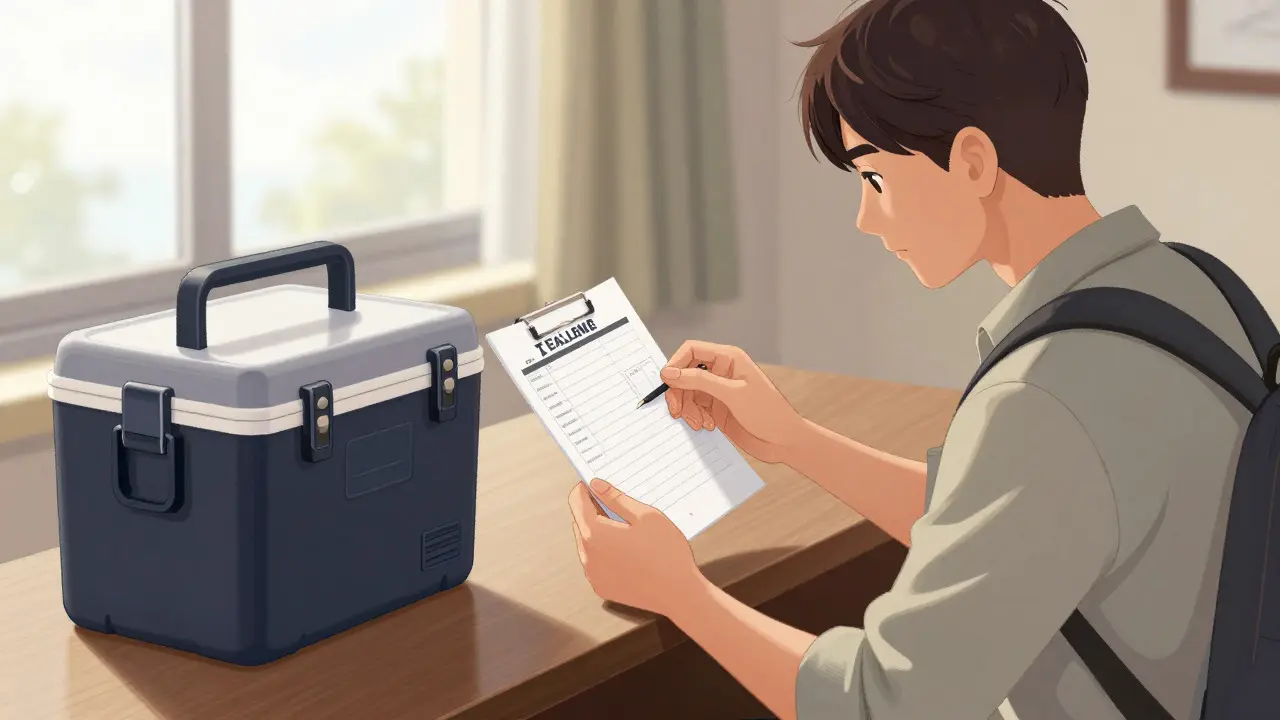
When the hotel safe is broken-or non-existent-you need a backup. Portable medication lock boxes are not just for show; they provide a tangible barrier against opportunistic thieves. Look for TSA-approved models, such as the Med-ico Secure Rx. Independent testing by Consumer Reports showed these units can withstand significant force, offering peace of mind that a simple suitcase zipper cannot match.
For temperature-sensitive medications like insulin, the stakes are even higher. You need a solution that protects both from theft and spoilage. Dr. Emily Rodriguez, a travel health specialist, documented a case where a diabetic traveler avoided a life-threatening situation by using a portable cooler with a biometric lock during a power outage. If you rely on cold-chain meds, invest in a hard-sided medical cooler that locks. Do not rely on ice packs alone; they offer zero security against theft.
However, remember the trade-off: accessibility. Hotel safes take about 47 seconds to open on average, while bedside storage takes 8 seconds. For routine meds, this delay is fine. But for emergency medications like epinephrine auto-injectors (EpiPens) or nitroglycerin, do not put them in the safe. Keep these on your person or in your immediate reach at all times. In a medical emergency, every second counts, and fumbling with a code lock could be fatal.
Navigating Legal and Regulatory Hurdles
Security isn't just about stopping thieves; it's about avoiding legal trouble. The rules around carrying medication change drastically depending on where you go. In the United States, the DEA requires controlled substances to be in original containers with clear labels. Violations can lead to fines up to $15,000 per incident.
When you cross borders, the stakes rise. The U.S. Department of State warns that many countries have strict regulations regarding prescription drugs. What is a standard painkiller in one nation might be a controlled narcotic in another. Improper storage or lack of documentation can lead to confiscation or even arrest. Always carry a copy of your prescription and a letter from your doctor explaining your condition and medication necessity. This paper trail is your best defense against regulatory misunderstandings.
If you are traveling with controlled substances, keep a personal medication log. Document the starting quantity, each dose taken, and the ending balance. This level of detail mirrors the requirements for professional facilities and proves to authorities that you are using the meds personally, not diverting them for sale.
Daily Habits That Prevent Disasters
Technology and hardware help, but human behavior is the final line of defense. Implementing a few simple daily habits can drastically reduce your risk.
- Perform Daily Inventory Checks: Don't wait until you are packing to leave to count your pills. Mark Johnson, a travel health expert, found that travelers who performed daily counts reduced medication discrepancies by 94%. Take thirty seconds each morning to verify your supply.
- Store High: If you must store meds outside a safe (e.g., in a drawer), place them at least 5 feet off the ground. Research from the University of Florida shows this height reduces accidental child access by 82%.
- Never Leave Unattended: Treat your medication like your passport. Never leave it unsecured in a bathroom while you shower, or on a table while you eat. Out of sight doesn't mean safe; it means vulnerable.
- Use Private Rooms in Hostels: If medication security is a priority, avoid dorms. The risk of theft in shared spaces is 3.7 times higher than in private rooms. The extra cost is worth the insurance.
Future Trends: What’s Coming Next?
The industry is finally catching up to traveler needs. By 2027, major hotel groups aim to have biometric safes in 75% of their U.S. properties, reducing unauthorized access attempts by nearly 99%. Additionally, the FDA is rolling out QR code verification systems for prescriptions, which will allow travelers to instantly prove the authenticity of their meds to customs officials.
For now, however, the burden remains on you. The technology is improving, but human vigilance is still the most effective tool. Pack smart, store securely, and never assume your accommodation is safer than it actually is.
Should I put my insulin in the hotel safe?
Generally, no. Hotel safes are not refrigerated. Unless your specific hotel offers a mini-fridge inside the safe (rare), storing insulin there risks spoilage if the ambient temperature is too warm. Instead, use a portable insulated medical cooler with a lock. Keep it with you or in a cool, dark place if a fridge is unavailable, but monitor the temperature closely.
Is it safe to carry controlled substances in checked luggage?
No. Always carry prescription medications, especially controlled substances, in your carry-on bag. Checked luggage can be lost, delayed, or accessed by baggage handlers without your knowledge. Keeping them in your possession ensures you have access to them and reduces the risk of theft or misplacement.
What should I do if my hotel safe is broken?
Request a room change immediately. If that is not possible, ask the front desk if they have a secure storage area at the reception desk. If neither is available, use a high-quality portable lock box and keep it with you or hidden securely in your luggage. Do not leave valuable medications unsecured in a drawer.
Do I need a doctor's note for international travel?
It is highly recommended, especially for controlled substances, injectables, or large quantities of medication. A letter from your doctor on official letterhead, detailing your diagnosis, medication names, dosages, and necessity, can prevent serious issues with customs and border control agents abroad.
Are hostel lockers secure enough for medication?
Most hostel lockers are basic metal cabinets with flimsy padlocks. They deter casual snooping but are easily compromised by determined thieves. For high-value or essential medications, bring your own heavy-duty cable lock or a portable lock box to place inside the locker for added security.