
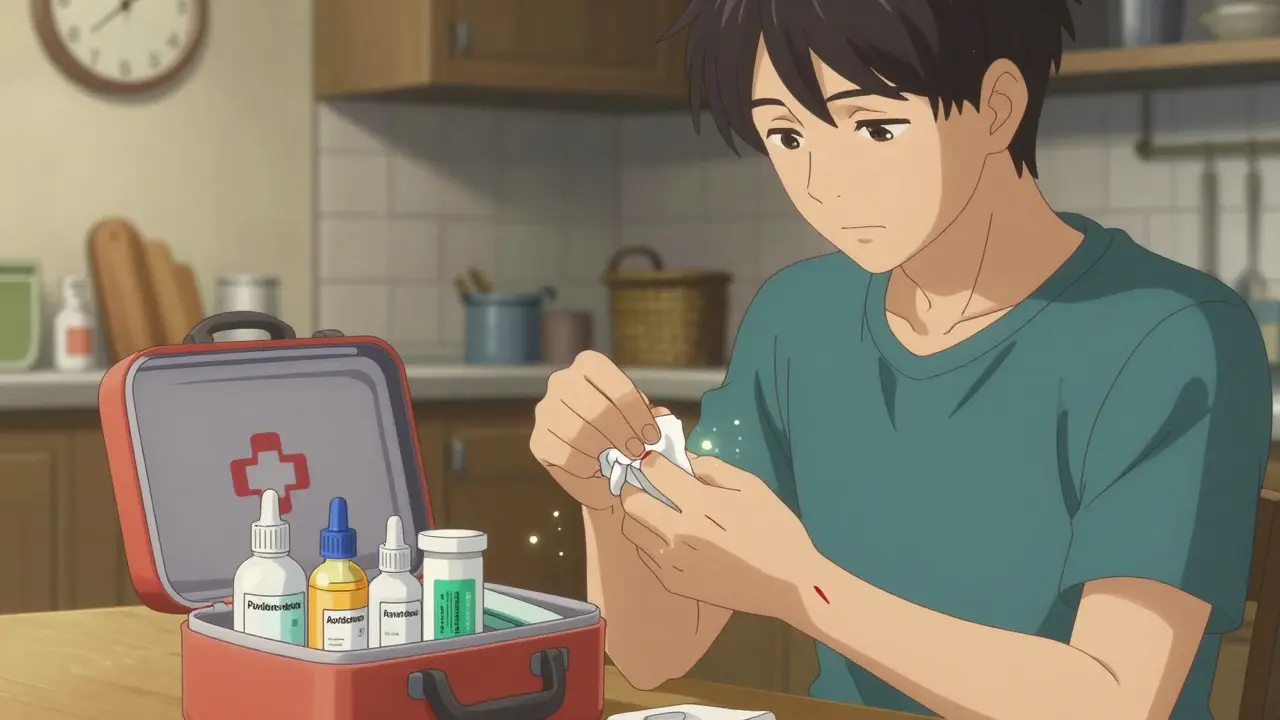
When you cut your finger on a can lid, burn your hand on the stove, or twist your ankle walking the dog, you don’t need to rush to the hospital. But you do need the right stuff on hand-and fast. The truth is, most minor injuries can be handled at home if you’ve got the right OTC first aid medications in your medicine cabinet. Antiseptics, antibiotic ointments, and pain relievers aren’t just nice to have-they’re the bare minimum for keeping small problems from turning into big ones.
Antiseptics: Clean the Wound, Not the Wound Itself
You’ve probably reached for hydrogen peroxide the moment you scraped your knee. But here’s the thing: pouring it directly on an open cut doesn’t help-it hurts. Hydrogen peroxide (3%) and isopropyl alcohol (60-70%) are great for cleaning the skin around a wound, but they can damage healthy tissue if applied inside. That slows healing, not speeds it up.Instead, rinse the cut with clean water or saline first. Then use a cotton pad soaked in antiseptic to gently wipe the skin surrounding the wound. This kills germs without wrecking the healing cells. Povidone-iodine (5-10%) is another solid option. It’s stronger than peroxide, kills more types of bacteria, and is often used in clinics. But it stains skin and clothing, so it’s not ideal for everyday scrapes.
Here’s what you need to know about storage: once you open a bottle of hydrogen peroxide, it starts losing power. After 30 days, it’s barely effective. Alcohol wipes dry out if the seal isn’t tight. Always keep antiseptics in a cool, dark place-sunlight and heat kill their punch. Check expiration dates every time you change your smoke detector batteries. About 73% of home first aid kits have at least one expired product, according to health surveys.
Antibiotic Ointments: Prevent Infection, Not Cure It
After cleaning, apply a thin layer of antibiotic ointment. The most common one you’ll find is triple antibiotic-bacitracin, neomycin, and polymyxin B. Brands like Neosporin are everywhere, and for good reason: a Mayo Clinic study showed it prevented infection in 92.7% of minor wounds. That’s better than single-ingredient ointments, which only worked 78% of the time.But here’s the catch: about 5% of people are allergic to neomycin. If your skin gets red, itchy, or swollen after using Neosporin, stop. Switch to a bacitracin-only ointment. It’s just as good at stopping infection, and way less likely to cause a reaction.
Apply the ointment after cleaning and drying the wound. Don’t smear it thickly-just a thin film. Then cover it with a bandage if it’s in a spot that might get dirty. Change the bandage daily. If the wound starts oozing yellow fluid, gets hotter, or swells up, it’s not healing. That’s when you call a doctor.
Also, don’t keep antibiotic ointments forever. Even if it looks fine, the potency drops about 15% every year after opening. Replace them every 12 months. No exceptions.
Pain Relief: Know Which One to Use
Not all pain relievers are the same. Picking the wrong one can mean you’re stuck with pain longer-or worse, hurting your insides.Acetaminophen (Tylenol) is your go-to for headaches, fevers, or sore muscles that aren’t inflamed. It’s gentle on the stomach, which is why doctors recommend it for people who can’t take NSAIDs. But here’s the danger: more than 3,000 mg a day can wreck your liver. And many people don’t realize that cold medicines, sleep aids, and even some prescription drugs contain acetaminophen. Always check the label.
Ibuprofen (Advil, Motrin) is the one to reach for when there’s swelling-sprained ankles, menstrual cramps, post-surgery soreness. It cuts inflammation, which means it tackles the root cause. But it can irritate your stomach. About 1.2% of regular users get bleeding ulcers. Don’t take it on an empty stomach. And never use it if you’re dehydrated or have kidney issues.
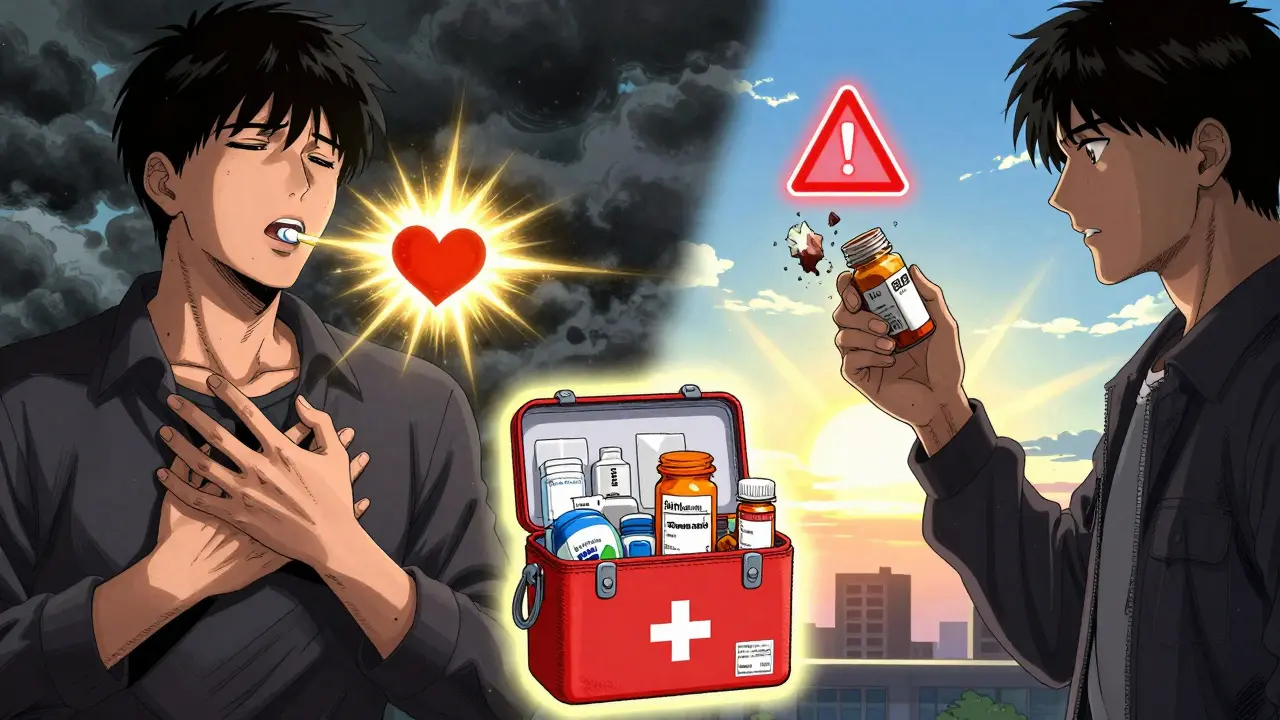
Aspirin isn’t just for headaches. Chewable aspirin (81-325 mg) can save your life during a heart attack. The American Heart Association says taking it within 30 minutes of chest pain can reduce death risk by 30%. But don’t give it to kids or teens-it can cause a rare but deadly condition called Reye’s syndrome.
Naproxen (Aleve) lasts longer-up to 12 hours-so it’s good for all-day pain. But it’s harder on your heart. If you have high blood pressure or a history of heart problems, skip it. Stick to ibuprofen or acetaminophen instead.
Use this quick guide:
- No swelling? Go with acetaminophen.
- Swelling, redness, heat? Use ibuprofen.
- Heart trouble? Skip NSAIDs-use acetaminophen.
- Need all-day relief? Naproxen, but only if your heart’s healthy.
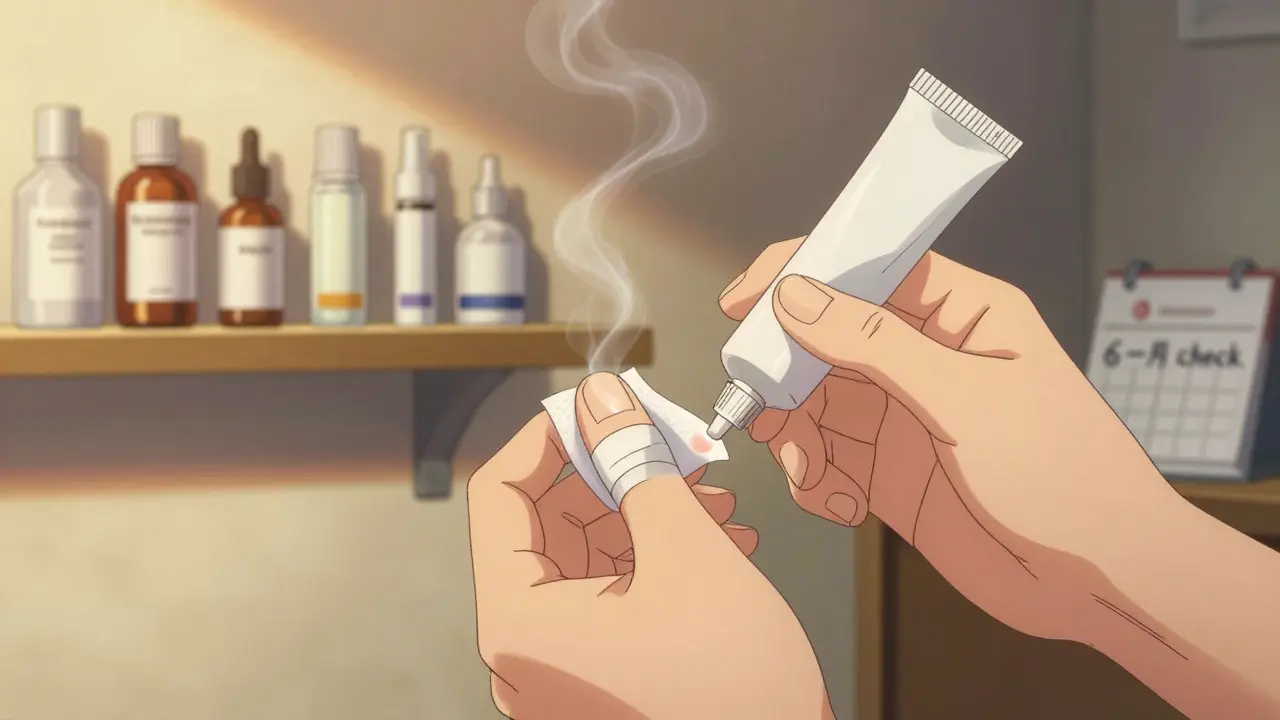
What to Keep in Your First Aid Kit
You don’t need a pharmacy. Just these essentials:- Hydrogen peroxide or alcohol wipes (unopened, check expiry)
- Povidone-iodine solution (for deeper cuts or when you need extra strength)
- Triple antibiotic ointment (and a bacitracin-only backup)
- Acetaminophen tablets (500 mg)
- Ibuprofen tablets (200 mg)
- Low-dose aspirin (81 mg chewables, sealed in foil)
- Calibrated dosing spoon or oral syringe (never use kitchen spoons)
- Adhesive bandages, gauze, medical tape
Store everything in a dry, cool place-not the bathroom. Heat and humidity ruin medicine. Keep it out of reach of kids. And update it every six months. Toss anything expired, discolored, or smells weird.
What Not to Do
People make the same mistakes over and over:- Don’t use hydrogen peroxide or alcohol on open wounds.
- Don’t apply antibiotic ointment without cleaning first.
- Don’t take more than the label says-even if you still hurt.
- Don’t mix pain relievers without checking ingredients.
- Don’t keep old meds just because "they might come in handy."
One Reddit user shared how using peroxide on a deep cut delayed healing by 10 days. Another said keeping ibuprofen in their work bag stopped a tiny cut from turning infected during a business trip. It’s not magic-it’s knowing what to use, and when.
When to Call a Doctor
These meds are for minor stuff. If you see any of these, get help:- Wound won’t stop bleeding after 10 minutes of pressure
- Red streaks spreading from the cut
- Fever over 100.4°F (38°C) after an injury
- Pain that gets worse instead of better after 2 days
- Need to take pain meds every day for more than 3 days
Dr. Sarah Johnson at Cleveland Clinic says it best: "OTC medicines are safe if you read the label and stick to it." Most errors aren’t from bad drugs-they’re from bad habits. Taking too much. Using the wrong one. Keeping expired stuff.
If you find yourself reaching for painkillers regularly, that’s not a sign you need stronger medicine. It’s a sign you need to see a doctor. OTC meds are a bridge-not a long-term fix.
Can I use hydrogen peroxide on a deep cut?
No. Hydrogen peroxide damages healthy tissue and slows healing. Clean the wound with water or saline first, then use antiseptic only on the skin around it-not inside. For deep cuts, seek medical care.
Is Neosporin better than plain bacitracin?
Neosporin (triple antibiotic) works slightly better at preventing infection-92.7% effective vs. 85% for bacitracin alone. But 5% of people are allergic to neomycin, one of its ingredients. If your skin gets red or itchy, switch to bacitracin-only ointment. It’s just as effective for most minor cuts.
Which pain reliever is safest for long-term use?
None. OTC pain relievers aren’t meant for daily use. Acetaminophen can harm your liver if taken over 3,000 mg/day. Ibuprofen and naproxen can cause stomach bleeding or raise blood pressure. If you need pain relief every day for more than 3 days, talk to a doctor. You’re treating a symptom, not the cause.
How often should I replace my first aid medications?
Replace antibiotic ointments every 12 months after opening. Liquid pain relievers lose potency after 1 year. Solid tablets like acetaminophen or ibuprofen can last 2-3 years past expiration if stored properly, but check for discoloration or odd smells. Always update your kit every six months-especially when you change your smoke detector batteries.
Can I give aspirin to a child with a fever?
No. Aspirin can cause Reye’s syndrome, a rare but life-threatening condition in children and teens. Use acetaminophen or ibuprofen instead. Aspirin is only recommended for adults, and even then, only for heart attack symptoms under medical guidance.
Is it okay to keep OTC meds in my car?
Only if it’s winter. In summer, temperatures inside a car can hit 120°F (49°C). That degrades acetaminophen by 35% in just two weeks. Heat, sunlight, and moisture ruin medicine. Keep your first aid kit in a cool, dry place-like a bedroom drawer, not the glovebox.
Next Steps
Start simple. Buy one of each: antiseptic wipe, antibiotic ointment, acetaminophen, and ibuprofen. Put them in a small box with bandages. Check it every six months. Toss expired stuff. Replace what’s used. Keep it where you can find it-kitchen, bathroom, car, work bag.Minor injuries happen. But they don’t have to ruin your day. With the right OTC meds and a little knowledge, you’re not just prepared-you’re in control.

shubham rathee January 21, 2026
Why do they always say hydrogen peroxide is bad but never mention that it kills good bacteria too? Like bro the whole point of a cut is to let the immune system do its job not sterilize everything into oblivion
Ben McKibbin January 23, 2026
Finally someone who gets it. The myth that antiseptics = healing is pure snake oil peddled by Big Pharma and overzealous moms with cotton balls. Clean water + gentle drying + thin ointment = actual science. Also side note: if you're still using Neosporin because it 'feels soothing' you're probably allergic and just too lazy to switch. Bacitracin is the unsung hero of wound care.
Rod Wheatley January 24, 2026
Oh my gosh, YES! I just want to hug this post! I used to pour hydrogen peroxide on every little scrape until my cousin, who’s a nurse, sat me down and said, ‘You’re basically pouring bleach on your skin.’ I switched to saline rinse and a dab of bacitracin-and wow, my cuts healed faster and didn’t burn like hell! Also, I keep my first aid kit in my bedroom drawer now, not the bathroom-humidity is the enemy! And I replace everything every six months, right after I change my smoke detector batteries-so easy to remember now! Thank you for making this so clear and practical!
Jarrod Flesch January 24, 2026
Living in Australia, I’ve seen too many people use alcohol wipes like they’re magic fairy dust 🤦♂️. Water rinse + light antiseptic swipe = done. Also, I keep a tiny first aid kit in my bike bag-saved me after a fall last summer. And yeah, aspirin in the car? Only if you want a paperweight that used to be painkillers. Heat kills meds faster than my ex killed my motivation 😅
Barbara Mahone January 26, 2026
I’ve been using acetaminophen for years because I have a sensitive stomach. But I never realized how many cold meds contain it too. Learned that the hard way after a weekend of back-to-back NyQuil and Tylenol. Liver scare. Never again. Always check the label. Always.
Kelly McRainey Moore January 28, 2026
My grandma always said, ‘If it smells weird, throw it out.’ She was right. I tossed a bottle of ibuprofen last year that looked fine but smelled like old plastic. Never looked back.
Stephen Rock January 28, 2026
So you’re telling me the entire medical-industrial complex is just selling us fear and expired ointments? Wow. Groundbreaking. I’ll just use my spit and a rock.
Amber Lane January 29, 2026
Aspirin for heart attacks is life-saving. But never for kids. Ever.
Ashok Sakra January 30, 2026
Bro I used peroxide on my son's cut and he cried for 3 hours and now he hates bandaids and I feel bad and also I think I ruined his immune system