
Serotonin Syndrome Risk Calculator
Risk Assessment
What is Serotonin Syndrome?
Symptoms to Watch For:
- High body temperature (over 102°F)
- Shaking, muscle rigidity, or twitching
- Rapid heart rate (over 120 bpm)
- Confusion, agitation, or hallucinations
- Nausea, vomiting, or diarrhea
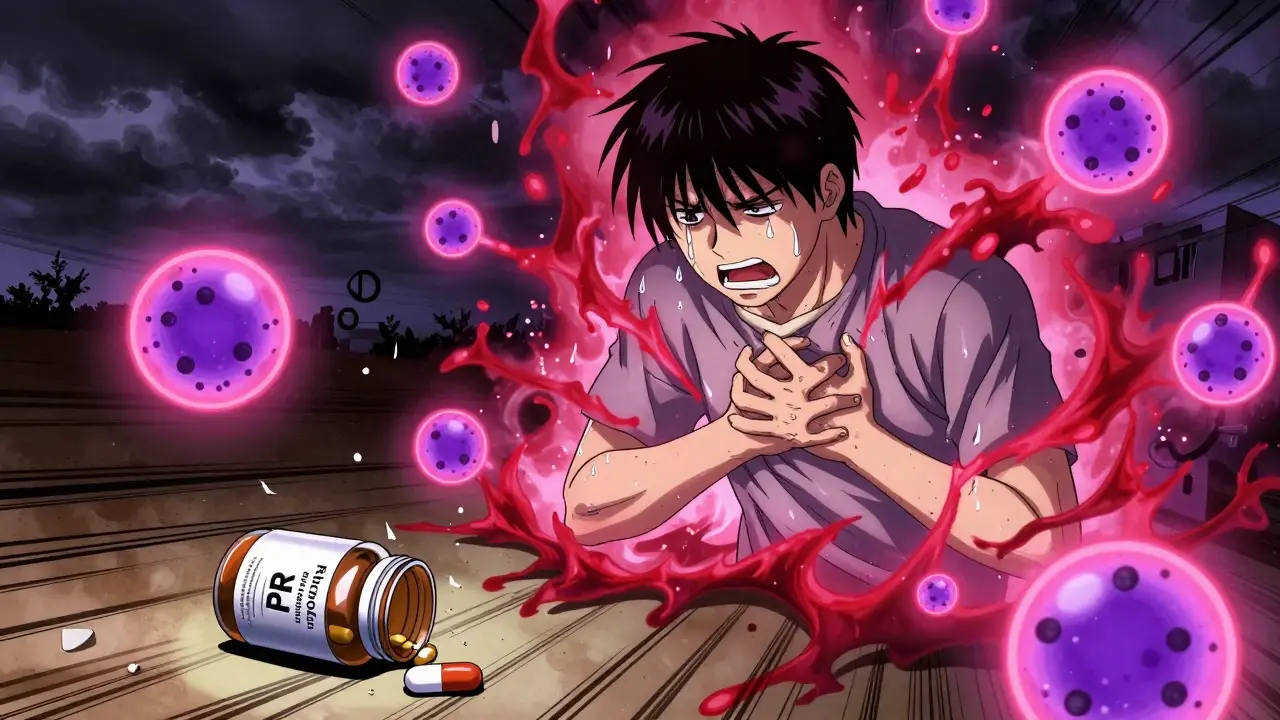
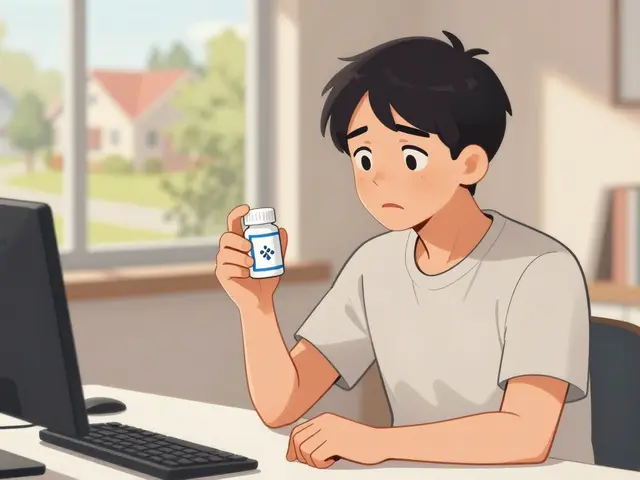
Combining Rhodiola with antidepressants isn’t just a gray area-it’s a dangerous gamble. If you’re taking an SSRI like Lexapro or Zoloft and thinking about adding Rhodiola rosea for stress or low mood, stop. This isn’t about being cautious. It’s about avoiding a life-threatening reaction called serotonin syndrome.
What Rhodiola Actually Does in Your Body
Rhodiola rosea is an herb that grows in cold, mountainous regions. People use it to fight fatigue, ease stress, and lift mild depression. It’s sold as a supplement in capsules, powders, and teas. But what most users don’t realize is that Rhodiola doesn’t just gently nudge your mood-it actively changes how your brain handles serotonin, the same chemical that antidepressants target.
Its main active compounds, salidroside and rosavin, inhibit two key enzymes: monoamine oxidase A (MAO-A) and COMT. These enzymes normally break down serotonin and norepinephrine. When they’re blocked, those neurotransmitters build up in your brain. That’s why some people feel more alert or less anxious after taking Rhodiola. But here’s the problem: if you’re already on an SSRI or SNRI, your body is already preventing serotonin from being reabsorbed. Add Rhodiola on top, and serotonin levels can spike dangerously high.
The Real Risk: Serotonin Syndrome
Serotonin syndrome isn’t a vague side effect. It’s a medical emergency. Symptoms include:
- High body temperature (over 102°F)
- Shaking, muscle rigidity, or twitching
- Rapid heart rate (over 120 bpm)
- Confusion, agitation, or hallucinations
- Nausea, vomiting, or diarrhea
A 2014 case report in PubMed described a 69-year-old woman who developed full-blown serotonin syndrome after taking Rhodiola with paroxetine (Paxil). She was hospitalized for three days. Another case in 2023, shared on Reddit by a user taking fluoxetine, led to a fever of 103.1°F and muscle spasms-enough to send them to the ER.
According to the FDA’s 2023 adverse event data, there were 127 reported cases of serotonin syndrome linked to Rhodiola-antidepressant combos-up from just 43 in 2020. That’s a 195% increase in three years. And these are just the cases that got reported.
Why Supplements Are So Risky
Unlike prescription drugs, supplements don’t have to prove safety before they hit the market. Rhodiola products vary wildly in quality. A 2018 study by the US Pharmacopeia tested 42 supplements and found that only 13.2% contained the amount of salidroside listed on the label. Some had none at all. Others had way too much.
That means you can’t trust the dose. A bottle labeled "360 mg" might contain 200 mg-or 550 mg. And since Rhodiola’s active ingredients aren’t fully understood, there’s no way to predict how each person will react. Even if you take the same dose as someone else, your body might process it differently.
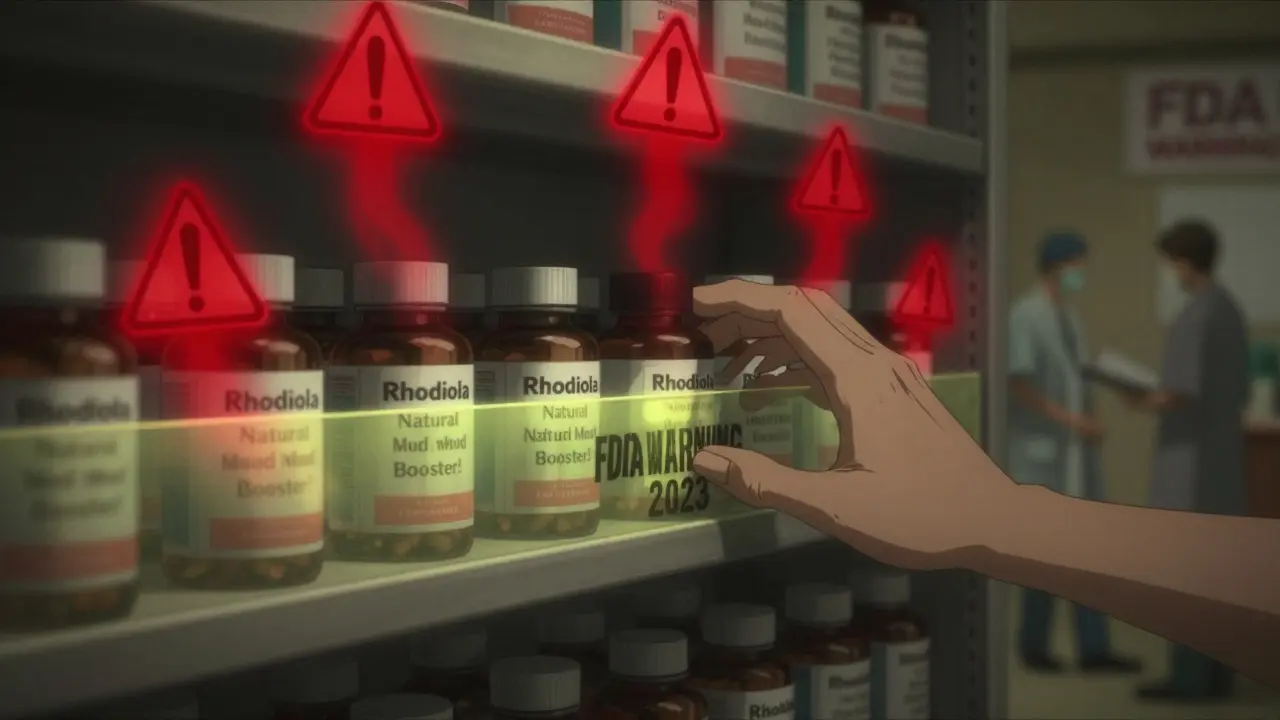
And here’s the kicker: only 22% of Rhodiola products in a 2021 FDA review even mentioned the risk of combining with antidepressants. No warning. No caution. Just a label saying "natural mood support."

Who’s Most at Risk
You’re not just at risk if you’re on SSRIs. SNRIs like Cymbalta or Effexor are just as dangerous. Even if you’re on a low dose, Rhodiola can push serotonin levels into the danger zone. The University of Toronto’s Drug Interaction Database predicts a 7.2-fold increase in serotonin accumulation risk when Rhodiola is taken with escitalopram.
It’s not just about antidepressants. Rhodiola can also:
- Lower blood pressure-making it risky if you take lisinopril or other blood pressure meds
- Reduce blood sugar-dangerous for diabetics on insulin or metformin
- Boost immune activity-potentially worsening autoimmune conditions like rheumatoid arthritis
A 2023 survey found that 31% of Rhodiola users are also taking prescription antidepressants. And 89% of them do it without telling their doctor. That’s not self-care. That’s a ticking time bomb.
What Experts Say
Dr. Jun J. Mao from Memorial Sloan Kettering Cancer Center includes Rhodiola in their official herb-drug interaction database as "high-risk." The American Psychiatric Association’s 2022 supplement database flags it as "Category X: Avoid Combination" with all serotonergic antidepressants. The European Medicines Agency added it to their monitoring list in January 2023, requiring warning labels by 2025.
Dr. Oracle’s clinical advisory in July 2022 was blunt: "I strongly advise against taking escitalopram and Rhodiola rosea together without medical supervision." And they’re not alone. No major medical group supports this combination. Not the FDA. Not the American Medical Association. Not even the American Botanical Council.
What About the "Positive" Stories?
You’ll find people online saying Rhodiola "fixed their depression" without side effects. That’s true-for some, it works as a standalone. ConsumerLab.com’s data shows 82% of positive reviews come from people using Rhodiola alone. One user said it ended their burnout without the dry mouth they got from Zoloft.
But those stories are misleading. They’re not comparing Rhodiola to antidepressants. They’re comparing Rhodiola to nothing. The real danger isn’t that Rhodiola doesn’t work-it’s that people assume it’s safe to mix.
On Amazon, 68% of negative reviews mention antidepressant interactions. One top review says: "Developed severe tremors and panic attacks after taking Rhodiola with Lexapro-ER visit confirmed serotonin toxicity." That’s not an outlier. That’s a pattern.
What Should You Do?
If you’re on an antidepressant and considering Rhodiola:
- Don’t start it. Period. There’s no safe dose when combined with SSRIs or SNRIs.
- If you’re already taking it, stop immediately and talk to your doctor.
- Don’t rely on supplement labels-they’re not required to warn you.
- If your doctor suggests trying Rhodiola for treatment-resistant depression, insist on being monitored in a clinical setting. Even then, it’s experimental.
There’s a 2-week washout period recommended between stopping SSRIs and starting Rhodiola, because some antidepressants like paroxetine stay in your system for weeks. But even that’s not foolproof. No one should attempt this without a doctor who understands pharmacokinetics.
The Bigger Problem
The Rhodiola market hit $287 million in 2022, and sales are still climbing. Companies market it as a "natural antidepressant," even though the FDA has issued 14 warning letters to manufacturers for making false claims. Meanwhile, the science is lagging. There’s no long-term safety data. No standardized dosing. No reliable way to test what’s in your bottle.
The NIH is now funding a $4.2 million trial to measure serotonin levels in people taking Rhodiola with escitalopram. The results won’t be out until 2027. Until then, we’re guessing.
By 2026, the Institute for Safe Medication Practices projects 214-300 emergency room visits per year in the U.S. alone because of this combo. That’s preventable. But only if people stop assuming supplements are harmless just because they’re "natural."
Can I take Rhodiola with Zoloft?
No. Combining Rhodiola with Zoloft (sertraline) significantly increases the risk of serotonin syndrome. Both substances raise serotonin levels, and together they can cause dangerous, potentially fatal reactions like high fever, muscle rigidity, and rapid heartbeat. There is no safe dosage combination. Stop taking Rhodiola if you’re on Zoloft, and talk to your doctor before making any changes.
Does Rhodiola work as well as antidepressants?
In short-term studies, Rhodiola has shown mild antidepressant effects, similar to low-dose SSRIs, but without the same level of clinical evidence. It may help with fatigue and mild mood dips, but it’s not a replacement for prescribed antidepressants in moderate to severe depression. Its main advantage is fewer side effects like weight gain or sexual dysfunction-but only when used alone. Never use it to replace your medication without medical supervision.
How long does it take for Rhodiola to leave your system?
There’s no definitive answer because Rhodiola’s active compounds aren’t fully studied in humans. However, since it inhibits enzymes that break down serotonin, its effects can linger for days. For safety, experts recommend waiting at least two weeks after stopping an SSRI before starting Rhodiola, and vice versa. This is based on how long drugs like paroxetine stay in the body-up to 21 days. Don’t guess. Wait.
Are there any supplements safer than Rhodiola for depression?
St. John’s Wort has been studied more extensively and is sometimes used for mild depression, but it also carries serotonin syndrome risk and interacts with many medications. Omega-3 fatty acids and vitamin D have shown modest mood benefits with fewer interactions. However, no supplement is proven to replace antidepressants for moderate or severe depression. Always talk to your doctor before starting any supplement, especially if you’re on medication.
Why don’t supplement labels warn about antidepressant interactions?
Under U.S. law (DSHEA of 1994), supplement manufacturers aren’t required to prove safety or list drug interactions before selling their products. Only about 22% of Rhodiola products include warnings, even though the FDA has known about the risks for years. In contrast, prescription MAOIs always carry black box warnings. The lack of regulation means consumers are left to guess-and too many pay the price.


Adam M March 13, 2026
Stop mixing herbs with SSRIs. Period.
It’s not "natural" if it kills you.
Rosemary Chude-Sokei March 13, 2026
I appreciate the thorough breakdown of the pharmacological risks. As someone who works in clinical care, I’ve seen too many patients assume "natural" means "safe." This post should be required reading for anyone considering supplement use alongside psychotropics.
Noluthando Devour Mamabolo March 13, 2026
The MAO-A + COMT inhibition profile of salidroside + rosavin creates a pharmacokinetic perfect storm with SSRI/SNRI co-administration.
Pharmacodynamic synergy > additive risk.
And the FDA’s 195% spike in AE reports? That’s not noise-that’s a signal.
Also, 89% of users don’t disclose? That’s not noncompliance. That’s systemic failure of clinician-patient dialogue.
Leah Dobbin March 14, 2026
Honestly, it’s almost laughable that people think a $12 Amazon bottle of powdered root can outsmart a decade of psychiatric research.
It’s not just dangerous-it’s embarrassing.
And yet, here we are.
Ali Hughey March 15, 2026
THEY KNOW. THEY’VE KNOWN FOR YEARS.
Why no warning labels? 💀
Because the supplement industry is a $50 BILLION front for Big Pharma’s silent partners.
They want you to take Rhodiola → get serotonin syndrome → then buy THEIR prescription antidotes.
It’s a trap. 🕵️♂️📉💉
They’re not selling supplements. They’re selling ER visits.
Alex MC March 17, 2026
I’ve been on sertraline for 8 years. Was tempted by Rhodiola after a rough patch.
Read this post. Changed my mind.
Thank you for the clarity.
It’s okay to need help. It’s smarter to ask a doctor than Google.
rakesh sabharwal March 17, 2026
This is why Western medicine is broken.
Instead of fixing root causes, we just pump more chemicals into people.
Rhodiola is ancient. SSRIs are corporate.
Why are we listening to the lab coat instead of the herbalist?
Dylan Patrick March 18, 2026
I used to think "natural" = safe.
Then I saw my cousin in the ICU.
She took Rhodiola with her Zoloft.
Didn’t even tell her doctor.
She’s fine now.
But she won’t touch herbs again.
Neither will I.
Amisha Patel March 18, 2026
I’m curious-what about St. John’s Wort? I’ve heard it’s even riskier.
Elsa Rodriguez March 19, 2026
I took Rhodiola with Lexapro for 3 weeks.
Started shaking at 3am.
Thought I was having a stroke.
Called 911.
They said serotonin syndrome.
Woke up in a hospital gown.
My therapist cried when I told her.
My mom hasn’t stopped texting me since.
Don’t do it.
Don’t.
Don’t.
Serena Petrie March 21, 2026
Just don’t.