Levodopa & Protein Interaction Calculator
Meal Details
Interaction Analysis
Enter your meal details to see how protein might affect your levodopa absorption.
Imagine taking your medication exactly as prescribed, only to find that your tremors return or your movements stiffen up an hour later. For many people with Parkinson’s disease (PD), this isn’t just bad luck-it’s biology. The culprit is often a simple glass of milk or a chicken breast eaten too close to a dose of levodopa, the gold-standard drug for managing PD symptoms. This phenomenon, known as the protein-levodopa interaction, creates a biological traffic jam that can render life-changing medication less effective. Understanding how dietary proteins compete with levodopa for entry into your brain is one of the most powerful tools you have for regaining control over your daily mobility.
This isn't a new discovery. Scientists first identified this competitive inhibition in the late 1970s, but it remains a primary driver of "motor fluctuations"-those unpredictable periods where medication wears off prematurely. If you are experiencing these "off" periods, your diet might be the missing variable. Let’s break down why this happens and what you can actually do about it without starving yourself.
The Biological Traffic Jam: Why Protein Blocks Levodopa
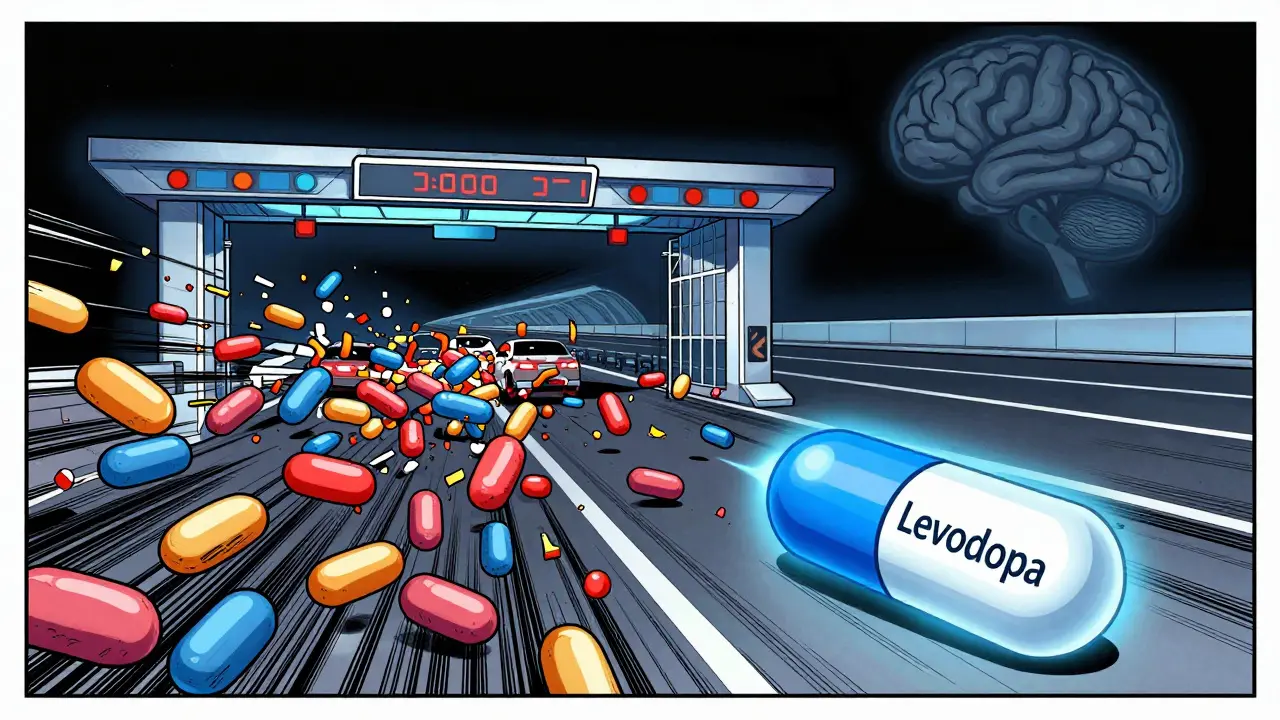
To understand the conflict, we need to look at how levodopa travels through your body. Levodopa cannot enter the brain on its own; it needs a ride. It uses a specific transporter system called the Large Neutral Amino Acid (LNAA) transporter. Think of this transporter like a toll booth on a highway leading into the brain. It has limited lanes and can only process so much traffic at once.
Dietary proteins, when digested, break down into amino acids. Several of these-specifically leucine, isoleucine, valine, phenylalanine, tyrosine, tryptophan, and methionine-are also Large Neutral Amino Acids. When you eat a high-protein meal, these amino acids flood your bloodstream. They rush to the same toll booth that levodopa uses. Because there are far more amino acid molecules than levodopa molecules, they crowd out the medication. The result? Less levodopa crosses the blood-brain barrier, and your brain doesn't get the dopamine boost it needs to keep you moving smoothly.
Research by Pardridge and Oldendorf in 1977 established this mechanism clearly. Plasma concentrations of LNAAs can spike by 30-50% within an hour of eating protein. This surge reduces levodopa absorption by 25-40% and delays its peak effectiveness by 45 to 90 minutes. The threshold for this effect is surprisingly low. Studies suggest that consuming just 10 grams of protein in a single sitting can significantly impact absorption, while meals exceeding 20 grams cause substantial reductions in bioavailability.
Who Is Affected and When Does It Start?
Not everyone with Parkinson’s experiences this interaction immediately. In fact, it is rarely a problem in the early stages of the disease. According to data from Wang et al. (2017), this protein interference typically manifests about 8 years after starting levodopa therapy or roughly 13 years after motor symptoms first appear. This timeline correlates strongly with the progression of the disease and the severity of motor fluctuations.
Approximately 40-50% of patients on long-term levodopa therapy experience motor fluctuations directly linked to dietary protein. If you are in Hoehn & Yahr stages 3-4 (moderate to severe disability), you are statistically more likely to feel this effect. However, individual tolerance varies wildly. Some patients can eat a steak dinner right after their pill with no issues, while others notice stiffness after a single egg. This variability is why a "one-size-fits-all" diet plan fails so often.
| Strategy | Protein Intake | Effectiveness | Long-Term Adherence |
|---|---|---|---|
| Low Protein Diet (LPD) | Restricted total daily intake (0.6-0.8g/kg) | Moderate reduction in "off" time | Poor (High risk of malnutrition) |
| Protein Redistribution Diet (PRD) | Normal daily amount, shifted to evening | High (Reduces "off" time by ~107 mins/day) | Moderate (Better than LPD, but socially challenging) |
| Timing Adjustment Only | No restriction, take med 30-60 min before food | Inconsistent (30-65% success rate) | Good (Easiest to implement) |
The Gold Standard: Protein Redistribution Diet (PRD)
If you determine that protein is interfering with your medication, the most clinically supported approach is the Protein Redistribution Diet (PRD). Unlike restrictive diets that cut calories or essential nutrients, PRD simply moves *when* you eat your protein.
The logic is straightforward: You don't need maximum mobility while you sleep. Therefore, you save your protein-rich meals for dinner. During the day, when you need to walk, talk, and function, you keep protein intake very low (under 7 grams per meal). By concentrating 80-85% of your daily protein into the evening meal, you ensure that your daytime levodopa doses face minimal competition from amino acids.
Clinical trials have shown impressive results. Research by Barichella et al. found that PRD reduced "off" time by approximately 107 minutes per day compared to balanced diets, while increasing "on" time by 30 minutes. Responsiveness rates range from 60% to 100% among patients who struggle with motor fluctuations. The effectiveness tends to correlate with how long you’ve had Parkinson’s; the longer you’ve been on levodopa, the more likely PRD will help stabilize your levels.

Practical Implementation: What Does a Low-Protein Day Look Like?
Shifting to PRD sounds simple, but executing it requires planning. For a person weighing 60-70 kg, the goal is roughly 45-53 grams of protein total per day, but mostly consumed after 6 PM. Here is how you might structure a typical day:
- Breakfast: Focus on carbohydrates and fats. Oatmeal made with water or almond milk, topped with berries. Toast with butter or jam. Avoid eggs, yogurt, or protein bars. Keep protein under 5-7 grams.
- Lunch: A sandwich with turkey or ham is risky because even thin slices add up. Instead, try a vegetable soup with croutons, a pasta salad with olive oil and veggies (no cheese or meat), or rice with steamed broccoli. Aim for under 7 grams of protein.
- Snacks: Fruit, gelatin, honey, sugar-free jelly beans, or specialized low-protein crackers. Avoid nuts, seeds, or cheese sticks.
- Dinner: This is your main protein window. Enjoy a 4-6 oz portion of chicken, fish, or beef, along with a side of quinoa or brown rice and vegetables. You can also include dairy here if tolerated.
Many users report success by using apps like MyFitnessPal to track hidden proteins. Things like bread, pasta, and vegetables contain small amounts of protein that add up quickly during the day. Without tracking, it’s easy to accidentally consume 15 grams at lunch, which defeats the purpose of the diet.
Common Pitfalls and Social Challenges
The biggest hurdle isn’t the science; it’s the lifestyle. Dining out becomes complicated. Family gatherings require explanation. According to Parkinson’s UK, 63% of patients try protein restriction initially, but only 28% stick with it long-term. The reasons are social isolation and dietary monotony.
You might feel left out when everyone else orders burgers. You might worry about unintentional weight loss. Indeed, 31% of patients on strict low-protein diets lose more than 5% of their body weight within six months. To mitigate this, focus on calorie-dense, low-protein foods. Avocados, olive oil, full-fat coconut milk, and dried fruits provide energy without triggering the LNAA transporter competition.
Another critical pitfall is nutritional deficiency. Long-term protein restriction can lead to low levels of Vitamin B12 and iron. If you adopt PRD, monitor your blood work regularly. Your healthcare team may recommend supplements to prevent anemia or neuropathy, which would compound your mobility issues.

When Not to Restrict Protein
Protein restriction is not appropriate for everyone. If you are underweight (BMI < 20), frail, or have signs of sarcopenia (muscle wasting), cutting protein can be dangerous. Muscle mass is crucial for balance and fall prevention in Parkinson’s. In these cases, the priority shifts to maintaining muscle strength, even if it means slightly less predictable medication response.
Additionally, some patients find that timing adjustments alone solve the problem. Taking levodopa 45-60 minutes before any meal allows the drug to absorb before the amino acid flood arrives. About 72% of users report success with this strategy alone. It’s worth trying before committing to a complex dietary overhaul.
Future Directions and Emerging Solutions
Science is working on ways to bypass this biological bottleneck entirely. Researchers are investigating medications that use different transport mechanisms to enter the brain, avoiding the LNAA competition altogether. There is also promising research into "protein pacing," a Phase II trial approach that involves timed micro-dosing of protein throughout the day to maintain stable amino acid levels without spiking them enough to block levodopa. Early data shows improved adherence compared to traditional PRD.
Until those treatments become standard, education remains your best defense. Discussing this interaction with your neurologist and a registered dietitian specializing in neurological diseases is essential. Customized plans that respect your cultural food preferences show 40% higher adherence rates than generic advice sheets.
How much protein should I avoid before taking levodopa?
Research suggests that consuming more than 10 grams of protein in a single meal can significantly interfere with levodopa absorption. Meals exceeding 20 grams of protein cause substantial reductions in bioavailability. For optimal effect, keep daytime meals under 7 grams of protein if you are following a Protein Redistribution Diet.
Can I drink milk with my levodopa?
It is generally recommended to avoid dairy products around the time of your levodopa dose. Milk contains casein and whey proteins, which break down into large neutral amino acids that compete with levodopa. If you crave calcium, consider fortified plant-based milks like almond or oat milk, which have negligible protein content, or take calcium supplements away from your medication time.
Does the protein-levodopa interaction happen immediately after diagnosis?
Usually, no. This interaction typically manifests 8 years after starting levodopa therapy or about 13 years after motor symptoms begin. In the early stages of Parkinson's, the brain has enough healthy dopamine-producing cells to compensate, making dietary protein less impactful. As the disease progresses and dopamine reserves deplete, the competition at the blood-brain barrier becomes clinically significant.
Is the Protein Redistribution Diet safe for long-term use?
Yes, provided it is managed correctly. The key is to maintain adequate total daily protein intake to prevent muscle loss, rather than restricting total protein. Shift the majority of your protein to dinner. However, you must monitor for nutritional deficiencies, particularly Vitamin B12 and iron, which are common in long-term protein-restricted diets. Regular blood tests and consultation with a dietitian are essential.
What are good low-protein snack options?
Safe low-protein snacks include fresh fruits (apples, bananas, berries), fruit juices, gelatin, honey, sugar-free jelly beans, and specialized low-protein crackers. Foods to avoid include nuts, seeds, cheese, yogurt, protein bars, and whole-grain breads, which often contain higher protein counts than expected.
Should I stop eating protein if I have Parkinson's?
No, you should not eliminate protein. Protein is vital for muscle maintenance, immune function, and overall health. The goal is not restriction but redistribution. By shifting protein intake to the evening, you minimize its interference with daytime medication while still meeting your body's nutritional needs. Severely restricting protein can lead to dangerous muscle wasting and weight loss.