

When a patient switches from a brand-name drug to a generic version, they don’t just change the label-they might change how their body responds. Even though the active ingredient is identical, many patients report new or worsening side effects after the switch. This isn’t a failure of the medication. It’s the nocebo effect in action.
What Is the Nocebo Effect?
The nocebo effect happens when negative expectations about a treatment cause real, physical symptoms. It’s the dark twin of the placebo effect. Where placebo makes you feel better because you believe you’re getting help, nocebo makes you feel worse because you believe you’re going to suffer. In clinical trials, about 20% of people taking a sugar pill report side effects like headaches, nausea, or fatigue. Nearly 10% quit the trial altogether because they think the treatment is harming them-even though there’s nothing in the pill to cause harm.
This isn’t just theoretical. A 2025 study tested this with fake oxytocin sprays. Healthy volunteers were told they were getting either a brand-name product (simple name, high price) or a generic (complex name, low price). Both sprays were identical-no active ingredients at all. But those told they were using the generic reported significantly more side effects. The difference wasn’t in the drug. It was in the label.
Why Do Generics Trigger This?
Generics aren’t just cheaper-they look different. The pills might be a different color, shape, or size. The packaging is simpler. The name is harder to pronounce. And patients notice. A 2024 study showed that people using a fake anti-itch cream labeled "Solestan® Creme" in a sleek blue box reported more pain sensitivity than those using "Imotadil-LeniPharma Creme" in a plain orange box. The cream was the same. The box made the difference.
It’s not just packaging. It’s price. People assume expensive = better. When a $120 brand-name drug becomes a $12 generic, the brain interprets the drop in cost as a drop in quality. This isn’t logical-but it’s human. In the U.S., 89.7% of prescriptions are for generics, yet 38% of patients still worry they won’t work as well as the brand. That gap between reality and perception is where the nocebo effect thrives.
What Happens When You Switch?
Switching from brand to generic is common. Doctors do it to save money. Pharmacies do it by law in many places. But patients often don’t know it’s happening. They pick up a pill that looks unfamiliar and panic. Suddenly, that mild headache they’ve had for weeks? It’s the generic. That tired feeling? Definitely the generic. Even if blood tests show identical drug levels, the mind overrides the science.
One real-world example: New Zealand switched patients from a brand-name antidepressant to a generic version. At first, reports of side effects didn’t change. Then, local media ran stories questioning the switch. Within weeks, reports to the national drug monitoring center tripled. The medication didn’t change. The fear did.
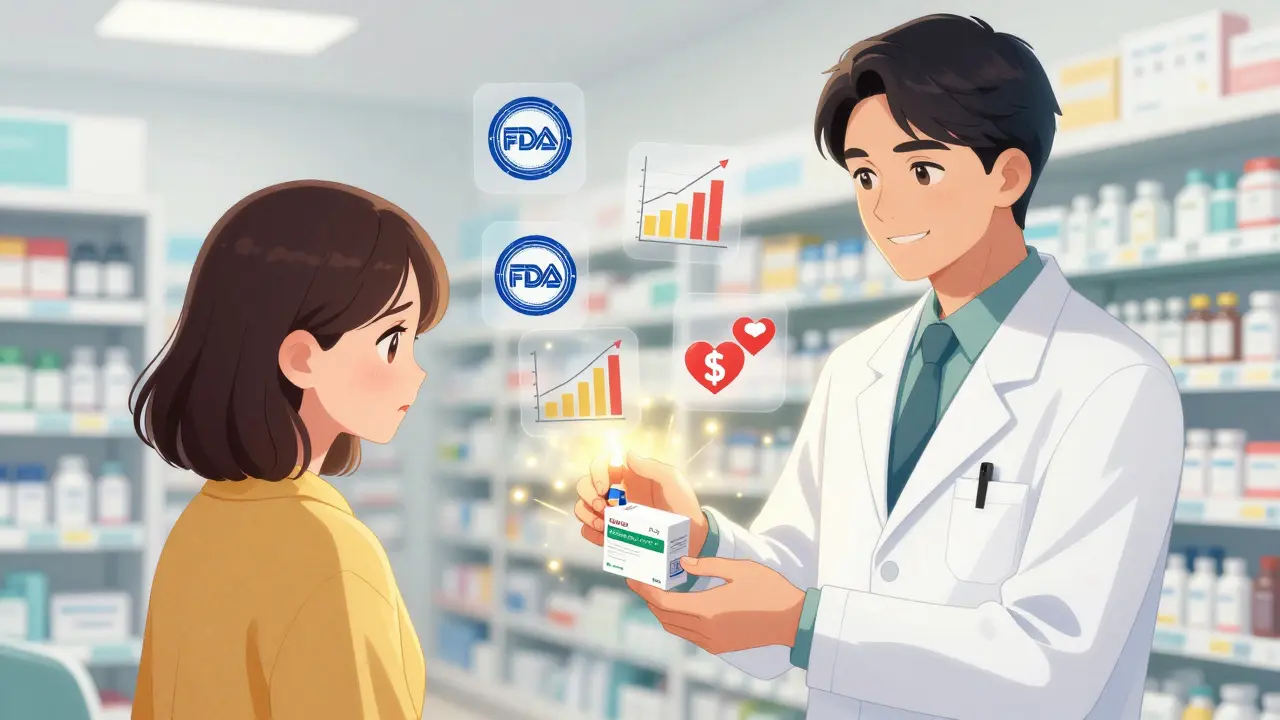
How to Fight the Nocebo Effect
You can’t fix the nocebo effect by telling patients they’re wrong. You can’t say, "It’s all in your head." That just makes things worse. Instead, you need to reframe the narrative.
- Explain bioequivalence clearly. Say: "This generic has the exact same active ingredient, in the same amount, delivered the same way as your old pill. The FDA requires it to perform just as well. Studies show patients do just as well on generics."
- Use positive framing. Instead of saying, "Possible side effects include dizziness, nausea, and fatigue," say, "Most people tolerate this medication well. If you feel any changes, we’ll adjust it together."
- Don’t hide the switch. If you’re changing a patient’s medication, tell them ahead of time. Say: "I’m switching you to a generic version to save you money. It’s the same drug, just less expensive. Some people worry about the change, but studies show it works just as well. Let me know if anything feels off."
- Use trusted sources. Mention that the FDA, the European Medicines Agency, and major health systems like Kaiser Permanente all confirm generics are safe and effective.
Cost Can Help-If You Frame It Right
Here’s a surprising twist: talking about money can reduce the nocebo effect. A 2022 study found that when patients were told switching to a generic could save them over $3,000 a year-and then shown data proving it worked just as well-their reports of side effects dropped by 37%. People didn’t just accept the switch. They felt good about it.
It’s not about the price. It’s about the story. When patients understand that saving money doesn’t mean cutting corners, they’re more likely to trust the process.
What Healthcare Providers Can Do
Doctors and pharmacists are the most trusted sources of health information. When they speak confidently about generics, patients listen. Training programs now teach providers to:
- Anticipate concerns before the switch
- Use consistent language across clinics and pharmacies
- Avoid phrases like "It’s just a generic"-which sounds dismissive
- Offer to monitor symptoms closely after the switch
Some clinics even use scripted conversations: "I know switching medications can feel unsettling. But this version has been tested in thousands of people. It’s not a downgrade-it’s a smart choice. We’ll keep an eye on how you feel."
What Patients Can Do
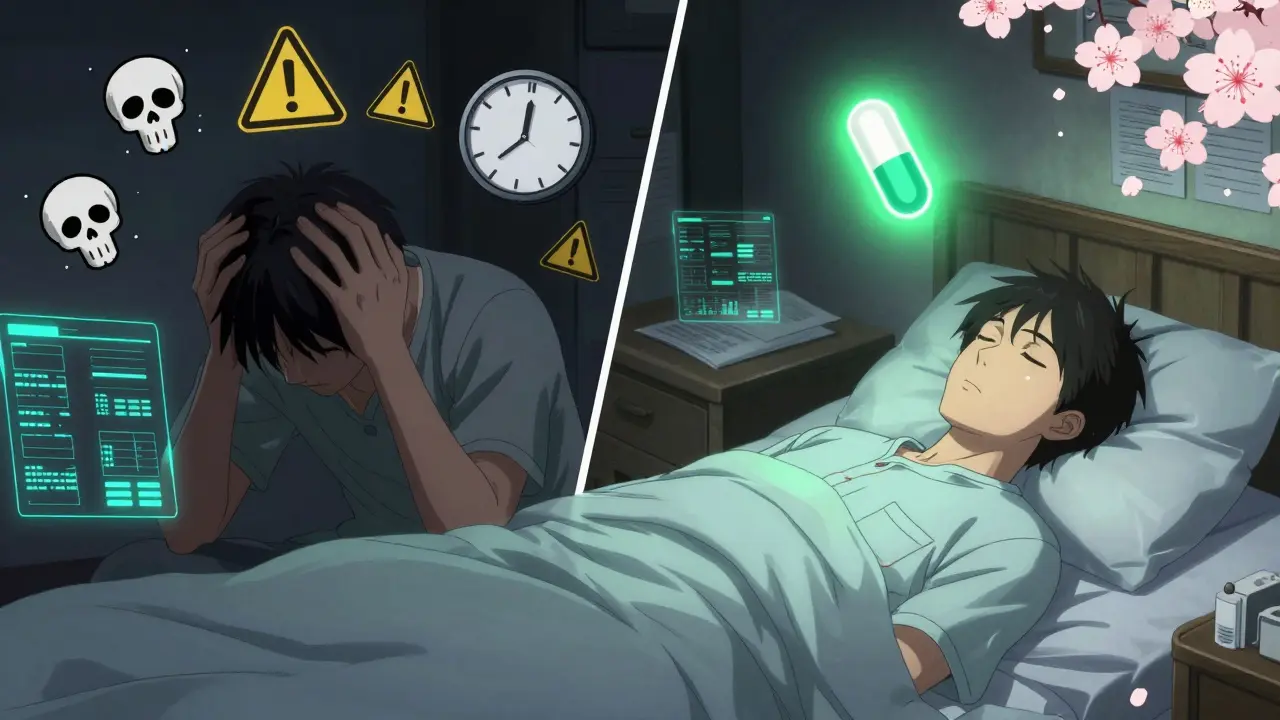
Patients aren’t powerless. If you’ve had a bad experience after switching, here’s what to try:
- Don’t assume the generic is the problem. Track symptoms for a few weeks. Some side effects fade as your body adjusts.
- Ask your provider: "Is this really the medication, or could it be my expectations?"
- Check the pill’s appearance against the brand. If it’s different, ask why. Sometimes, the generic is made by the same company that makes the brand.
- Search for real data. Look up studies on bioequivalence. You’ll find that 90% of prescriptions in the U.S. are generics-and most people use them without issue.
The Bigger Picture
This isn’t just about pills. It’s about trust. When patients feel misled, they lose confidence in the whole system. That’s why public education matters. Campaigns that explain how generics are tested-how they must match brand-name drugs within 80-125% of absorption-help rebuild trust.
Some companies now make "branded generics"-packaging that looks more like the original brand. It’s not deception. It’s reducing fear. The European Medicines Agency says packaging differences shouldn’t alarm patients. But they also say they shouldn’t be designed to look inferior. That’s the balance.
And here’s the truth: generics aren’t second-rate. They’re the standard. They’re what most people take. They’re what most doctors prescribe. And when the nocebo effect is managed right, they work just as well as the brand.
What’s Next?
Research is moving fast. Scientists are using brain scans to see how expectations change neural activity when people take placebos or generics. They’re testing new ways to talk about medication switches that reduce fear without hiding information. One idea: pre-switch counseling videos, shown right before the refill, explaining exactly what to expect.
For now, the best tool we have is honest, calm, confident communication. Patients don’t need more science. They need to feel heard. And when they do, their bodies follow.





Suchi G. March 18, 2026
So let me get this straight - we’re telling people their body is tricking them because they’re scared of a different-colored pill? I’ve been on generics my whole life in India, and no one ever batted an eye. But here? People act like switching from Brand-X to Generic-Y is equivalent to swapping their kidney for a toaster. The real issue isn’t the medication - it’s the way we’ve turned healthcare into a luxury brand. You don’t see this in countries where medicine isn’t marketed like a sneaker line. We’ve conditioned people to equate price with power. And now we’re shocked when their minds turn against them? We’re the problem.
And don’t even get me started on the way pharmacists just hand over a new pill like it’s a coupon. No context. No conversation. Just a silent swap and a shrug. That’s not healthcare. That’s retail with a stethoscope.
I’ve seen patients cry because they thought the generic was ‘weak.’ Not because it didn’t work - because they were told it was ‘just a generic.’ That phrase alone is a death sentence to trust. We need to stop treating patients like customers and start treating them like humans who’ve been sold a lie for decades.
And yes - I know it’s not the pharmacist’s fault. But they’re the last touchpoint. If they’re not trained to talk about this like it’s normal - like it’s biology, not branding - then we’re all just spinning our wheels. The science is solid. The psychology is clear. But the delivery? Disaster.
Maybe we should start labeling generics with a little note: ‘This is the same drug your doctor prescribed. The company just stopped spending $20 million on ads.’
Until then? We’re just moving the nocebo from the pill to the packaging - and calling it progress.
Also - that study where people felt more side effects from the ‘generic’ spray? I’m not surprised. We’ve been trained to distrust anything that doesn’t have a logo. Even if it’s doing the exact same job.
It’s not about the pill. It’s about the story we’ve been told. And we’re all still reading it.
Time to rewrite the manual.
- Suchi, Mumbai
becca roberts March 19, 2026
Oh sweet baby Jesus, I’m so tired of this. I work in a pharmacy in Ohio and every week some old lady comes in asking if her ‘new’ Zoloft is ‘real’ because it’s not blue anymore. I swear to god I’ve had someone ask me if the generic version of levothyroxine was ‘made in a garage.’
And yes, I’ve had patients cry because their pill changed shape. Not because they felt worse - because they were convinced the government swapped it out for something ‘lesser.’
Meanwhile, I’m over here checking the FDA database on my phone while they’re sobbing into their CVS bag. It’s like trying to explain quantum physics to someone who thinks the moon is a giant cheese wheel.
And don’t even get me started on the ‘branded generics’ - like, we’re now marketing generics with fake luxury packaging? That’s not fixing the problem. That’s doubling down on the delusion.
Also - the $3,000 savings stat? My favorite. People get emotional about saving money - but only if they think they’re ‘winning.’ If they think they’re ‘settling’? Nope. They’ll pay $120 for a pill that does the same thing. Because the brain doesn’t care about bioequivalence. It cares about status.
So yeah. We’re not fighting a drug problem. We’re fighting a capitalism problem.
- Becca, Columbus
Andrew Muchmore March 20, 2026
Doctors need to stop being passive about this. If you’re switching a patient, say it clearly. Not ‘oh by the way’ - say ‘I’m switching you to a generic. It’s the same. We’re doing this to save you money. Let me know if anything changes.’
That’s it. No fluff. No sugarcoating. Just facts with care.
And stop saying ‘just a generic.’ That phrase kills trust.
Done.
- Andrew
Paul Ratliff March 21, 2026
lol i had a friend who swore the generic adderall made her 'feel spaced out' but the brand name one 'felt sharp'... turned out she got the wrong pill one time and the brand one was actually the generic. her brain just needed to believe it was the 'real' one. wild.
also why do we keep calling it 'generic' like it's a bad word? it's not 'cheap' - it's 'identical.'
- paul
SNEHA GUPTA March 22, 2026
The nocebo effect is not merely a psychological phenomenon - it is a sociological one. We live in an age where authenticity is commodified, where trust is transactional, and where the body is treated as a machine that must be calibrated by branded tools. The pill is not the issue. The narrative is.
When we reduce medicine to packaging, pricing, and perception, we remove its sacredness - and then wonder why people fear it.
Generics are not inferior. They are unadorned. And in a culture obsessed with spectacle, the unadorned is mistaken for the inadequate.
Perhaps the real question is not whether generics work - but why we need to be convinced they do.
- Sneha, Delhi
Gaurav Kumar March 23, 2026
India has been using generics for 50 years. No one here is crying about pill color. Why? Because we don’t worship American corporate branding like it’s religion. Here, medicine is medicine. If it works, you take it. If it doesn’t, you switch. No drama.
Meanwhile, Americans turn a $12 pill into a conspiracy. You think your body can’t tell the difference? No - your mind is the problem. You’ve been sold fear as a product.
Stop watching American TV. Stop believing ads. Stop thinking expensive = better. You’re not special. Your body isn’t fragile. And your brain? It’s just easily manipulated.
- Gaurav, Bangalore
David Robinson March 25, 2026
Okay so I read the whole thing. Honestly? This is just a fancy way of saying ‘people are dumb.’
We’ve known for decades that expectations shape biology. That’s not news. That’s psych 101.
So why are we writing 3,000-word essays about it? Because someone wants to sell you a training program for doctors. Or a consulting gig. Or a TED Talk.
Just tell patients the truth. Don’t over-explain. Don’t make it a ‘campaign.’
And stop pretending this is a new problem. It’s been happening since the first aspirin.
- David
Jeremy Van Veelen March 26, 2026
I can’t believe we’re still having this conversation. The nocebo effect isn’t just about pills - it’s about the collapse of trust in institutions. When people feel abandoned by the system, they cling to the smallest details - pill color, packaging, price - as if those are the only things left that have meaning.
This isn’t about bioequivalence. It’s about grief. Grief for a healthcare system that used to feel like a promise - and now feels like a transaction.
When you tell someone, ‘It’s just a generic,’ you’re not just talking about a pill. You’re saying, ‘Your pain doesn’t matter. Your fear is irrational. Your body is wrong.’
And that’s not medicine. That’s abandonment dressed in white coats.
- Jeremy
Laura Gabel March 27, 2026
Ugh I hate when people act like this is some new discovery. I’ve been on generics since 2007. No issues. Everyone I know who’s on them has no issues. This whole thing is just media hype wrapped in science-speak.
Stop making patients feel crazy. Just give them the pill and move on.
- Laura
jerome Reverdy March 28, 2026
Let’s zoom out a little. The nocebo effect here is a symptom of a larger systemic issue: the medicalization of fear. We’ve turned every physiological sensation into a potential pathology - and then monetized the solution.
When a patient switches to a generic and reports a headache, we don’t ask: ‘Did anything else change in your life?’ ‘Are you stressed?’ ‘Are you sleeping?’ We assume it’s the pill. Because the pill is easier to blame than the system.
Also - the $3,000 savings stat? That’s the key. People don’t resist generics because they’re afraid of side effects. They resist because they’re afraid of being ‘cheated.’ But when you frame the savings as empowerment - not deprivation - the narrative flips.
That’s not psychology. That’s storytelling. And we’re terrible at it.
- Jerome
Andrew Mamone March 30, 2026
One sentence: The pill doesn’t change. The story does. And stories shape biology. 🧠💊
- Andrew
MALYN RICABLANCA April 1, 2026
OH MY GOD. I JUST HAD THE MOST INTENSE EXPERIENCE WITH THIS. My psychiatrist switched me from brand-name Lexapro to generic - no warning. I woke up at 3 a.m. feeling like my skin was crawling. My heart was racing. I thought I was having a stroke. I called my doctor. I cried. I Googled. I screamed. I thought I was dying.
Turns out? It was the nocebo. My brain had been primed by every horror story on Reddit. Every YouTube video. Every ‘I switched and it ruined my life’ comment.
It took three weeks of therapy, journaling, and a dumbass video from Kaiser Permanente explaining bioequivalence to calm me down.
And now? I’m the person who tells EVERYONE: ‘If you switch, DON’T panic. It’s the same drug. Your brain is lying to you.’
But here’s the thing - I almost quit my medication because of a COLOR CHANGE.
So yes. This is real. And yes. We need to fix it. Not with science. With compassion.
- Malyn, Portland