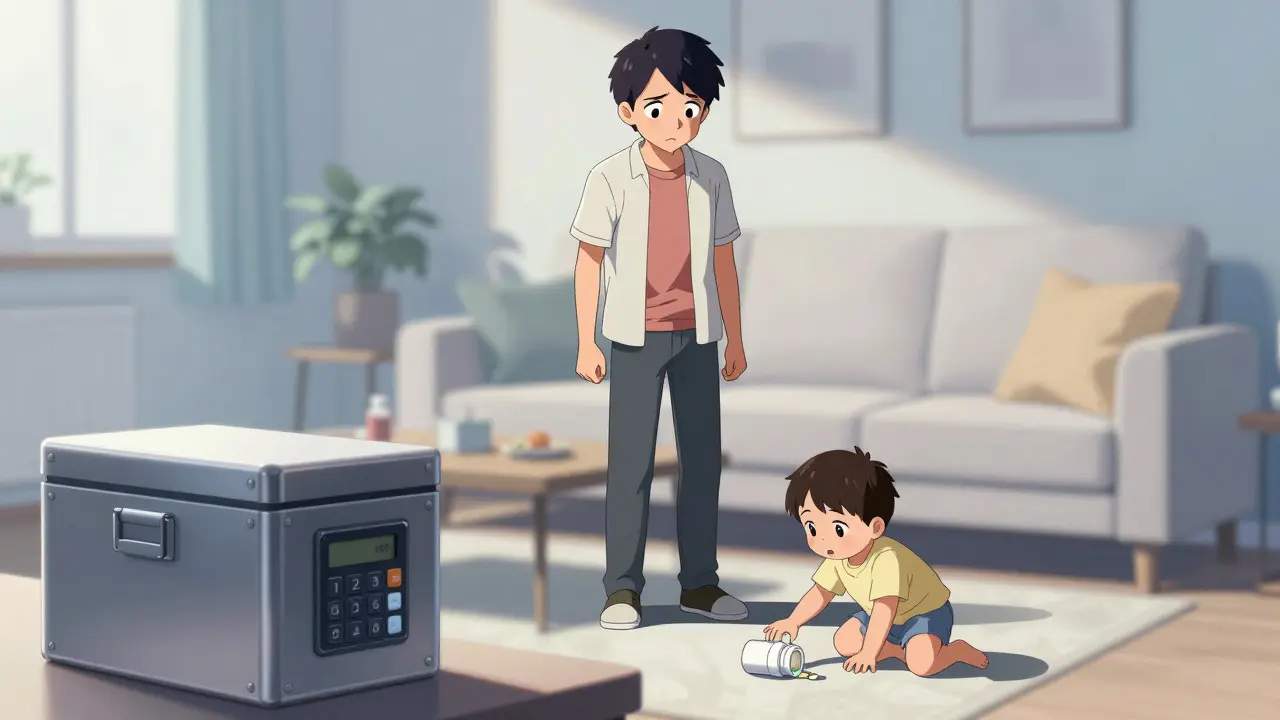
Imagine the panic of finding an empty pill bottle on the floor next to your toddler. For many parents and caregivers, this isn't a hypothetical scenario but a daily anxiety when managing prescriptions like opioids or benzodiazepines. While child-resistant caps are standard, they often fail against determined young children or curious pets. This is where a medication lockbox becomes essential. It’s not just a container; it’s a physical barrier that significantly reduces the risk of accidental poisoning and misuse in your home.
You don’t need to be a security expert to set one up. However, choosing the right type and placing it correctly makes all the difference between a safe household and a potential hazard zone. Here is how to implement a secure storage system that actually works for your family’s needs.
Why Child-Resistant Caps Aren't Enough
We’ve all been told to keep the cap tight. But data from the Centers for Disease Control and Prevention (CDC) reveals a stark reality: about 60,000 emergency department visits occur annually due to children accessing medications. Why? Because "child-resistant" doesn't mean "child-proof." Studies show that half of children aged 4 to 5 can open safety-capped containers within just one minute. If you have a toddler who loves to climb shelves or explore drawers, relying solely on the cap is a gamble.
A medication lockbox provides a definitive answer. Unlike hidden spots on high shelves-which 72% of children can locate within 30 minutes-lockboxes use mechanical or electronic barriers. Whether it’s a key, a combination, or a fingerprint, the access control is explicit. This removes the guesswork and ensures that only authorized adults can reach drugs like hydrocodone, oxycodone, or alprazolam.
Choosing the Right Lockbox Type
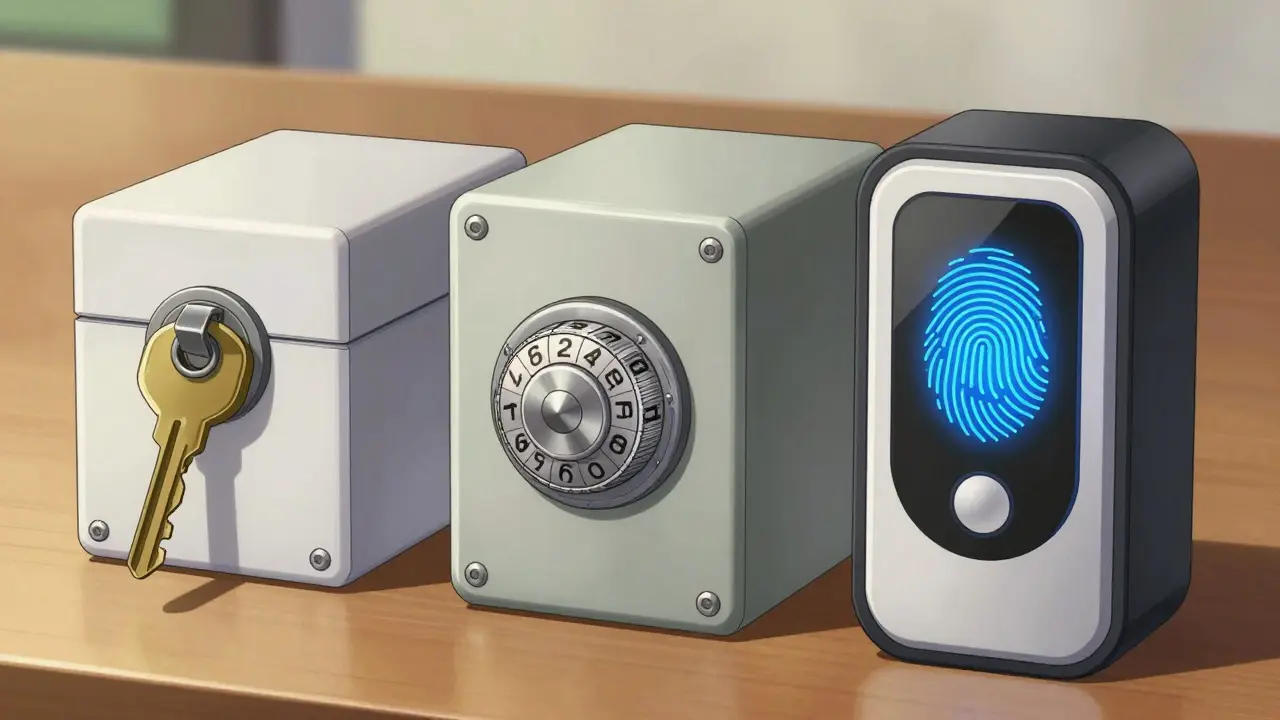
Not all lockboxes are created equal. The right choice depends on who lives in your home and what specific medications you’re storing. You generally have three main options:
- Key Locks: The most affordable option. Great for general use, but you must store the key somewhere separate yet accessible to you. If you lose the key, you’re locked out.
- Combination Locks: Typically 3-4 digit codes. These eliminate the risk of losing a physical key. However, if you have elderly family members with dexterity issues, turning small dials can be frustrating.
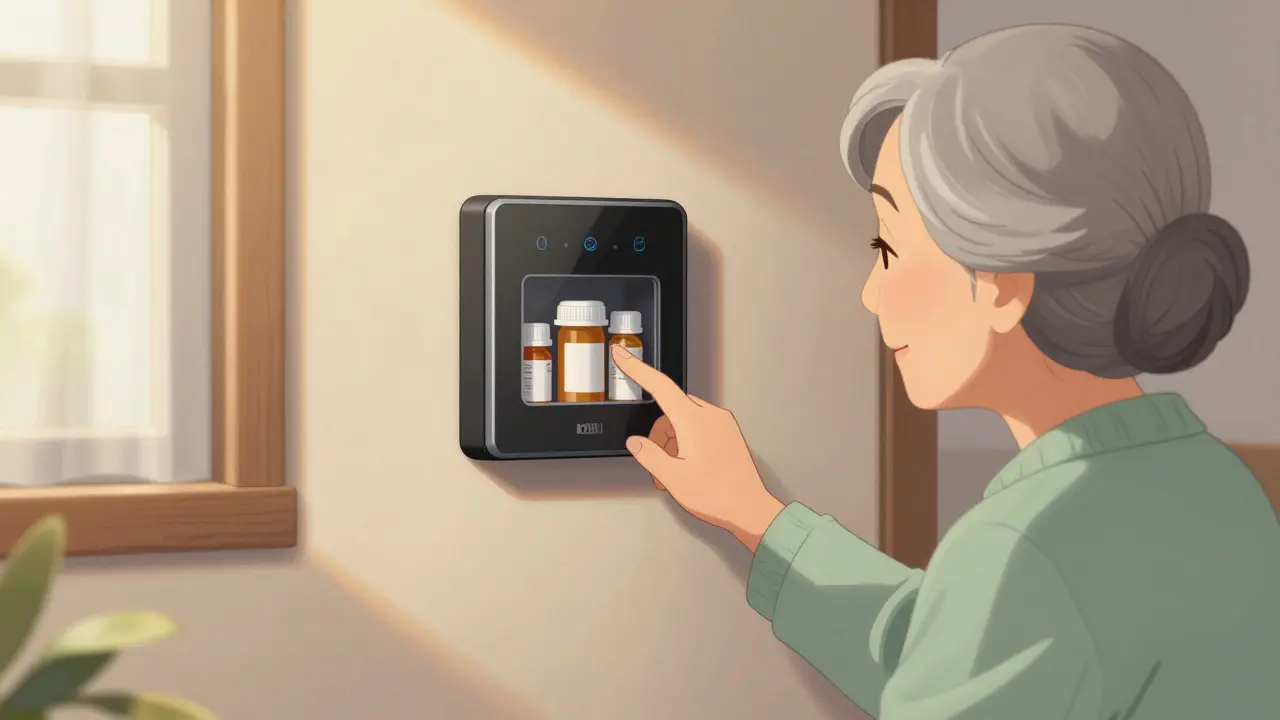
- Biometric Scanners: The premium choice. Fingerprint access is fast and requires no memory of codes. This is ideal for households with multiple authorized users or seniors who struggle with manual locks. Prices are higher, but the convenience often outweighs the cost.
Consider the size too. A small 6x4x3 inch box might hold a few bottles, but if you manage insulin or multiple prescriptions, look for larger models up to 12x8x6 inches. Also, check the material. Reinforced steel or high-grade ABS plastic offers better durability and fire resistance, which is crucial if you live in an area prone to extreme temperatures.
| Type | Pros | Cons | Best For |
|---|---|---|---|
| Key Lock | Inexpensive, simple | Risk of lost keys | Budget-conscious households |
| Combination | No keys to lose | Hard for those with dexterity issues | Standard families |
| Biometric | Fast, secure, user-friendly | Higher cost, battery dependent | Elderly users, multi-user homes |
Identifying High-Risk Medications
Do you need a lockbox for every single pill? Not necessarily. Reserve your highest-security storage for medications that pose significant risks in small doses. According to guidelines from the American Academy of Pediatrics (AAP), these categories require mandatory locked storage in homes with children:
- Opioids: Including hydrocodone (Vicodin), oxycodone (Percocet), and fentanyl patches. Even a single adult dose can be fatal to a small child.
- Benzodiazepines: Such as alprazolam (Xanax) and diazepam (Valium). These carry risks of sedation and respiratory depression.
- Stimulants: Like Adderall and Ritalin. While less immediately lethal than opioids, they are highly sought after for diversion and misuse.
- Insulin and Anticoagulants: These require temperature control and careful dosing, making them prime candidates for secure, climate-controlled storage.
If you are unsure whether a medication fits this list, check the label for warnings about overdose or consult your pharmacist. When in doubt, lock it up. It’s easier to unlock a box than to rush to the ER.
Placement and Setup Best Practices
Where you put the lockbox matters just as much as the box itself. Many people make the mistake of hiding it under a bed or in a bathroom cabinet. Avoid bathrooms entirely; humidity can degrade paper labels and affect certain medications over time. Instead, choose a location that is dry, cool, and out of sight but easily accessible to you.
Here is a quick setup checklist to ensure maximum security:
- Wall-Mounted Options: If you have very young children, consider wall-mounted lockboxes. They prevent kids from simply moving the container to a lower shelf.
- Access Protocol: Limit who knows the code or has the key. Ideally, only 1-2 responsible adults should have access. This prevents siblings or other relatives from rummaging through meds.
- Emergency Access: Keep a backup key or note the combination in a secure place outside the house (like with a trusted neighbor) in case of a medical emergency where you can’t open the box quickly.
- Regular Checks: Set a monthly reminder to inspect the lock mechanism and check expiration dates inside.
For elderly users, biometric scanners solve the frustration of remembering combinations. One caregiver noted that switching from a combo lock to a fingerprint scanner eliminated daily struggles for her 80-year-old father. The extra cost was worth the peace of mind.
Maintenance and Disposal
Your job doesn’t end once the box is installed. Maintenance ensures the lock keeps working. Test the mechanism weekly for the first month to build muscle memory. If using batteries, replace them before they die completely-some smart lockboxes will alert you, but older models won’t.
When it’s time to dispose of old medications, don’t just throw them away. Many communities offer take-back programs, or you can mix pills with unpleasant substances like coffee grounds and seal them in a bag before binning. Always remove personal information from the prescription label before disposal to protect privacy.
By treating your medication storage as a critical part of home safety, you reduce stress and protect your loved ones. It’s a small investment of time and money that pays off in long-term security.
What is the best type of lockbox for elderly users?
Biometric fingerprint lockboxes are generally recommended for elderly users. They eliminate the need to remember complex combinations or manipulate small keys, reducing frustration and the risk of locking oneself out.
Where should I store my medication lockbox?
Store the lockbox in a cool, dry place away from humidity, such as a bedroom closet or hallway cabinet. Avoid bathrooms and kitchens. If you have toddlers, consider a wall-mounted unit to prevent it from being moved.
Are child-resistant caps necessary if I have a lockbox?
Yes, keep the caps on. The lockbox is the primary barrier, but the cap adds a second layer of security. If the box is ever opened accidentally or left unlocked, the cap still makes it harder for a child to access the pills directly.
How do I handle an emergency if I can't open the lockbox?
Have a backup plan. Store a spare key with a trusted neighbor or write down the combination in a secure spot outside your home. In a true life-threatening emergency, paramedics have tools to break into standard lockboxes if necessary.
Which medications absolutely need to be locked up?
Opioids (like oxycodone), benzodiazepines (like Xanax), stimulants (like Adderall), and insulin are high-priority. Any medication where a small amount could cause serious harm to a child or pet should be stored in a lockbox.