

Imagine being told you have emphysema at age 38. You don’t smoke. You’ve never worked in a dusty factory. Yet your lungs are failing faster than anyone expected. For thousands of people, this isn't a mystery-it’s a diagnosis they should have received years earlier. This is the reality of Alpha-1 Antitrypsin Deficiency, often called AATD. It is a hereditary genetic disorder that causes early-onset lung disease and liver damage due to missing protective proteins. Unlike typical chronic obstructive pulmonary disease (COPD), which is usually linked to decades of smoking or environmental exposure, AATD is inherited. It strikes younger people, progresses quickly, and is frequently misdiagnosed as asthma or standard COPD.
If you have been diagnosed with unexplained shortness of breath, or if you have a family history of early lung or liver issues, understanding AATD could change everything. This article breaks down what happens inside your body, how doctors identify the condition, and what treatments are available today-including new therapies that might spare you from weekly IV infusions.
What Is Alpha-1 Antitrypsin Deficiency?
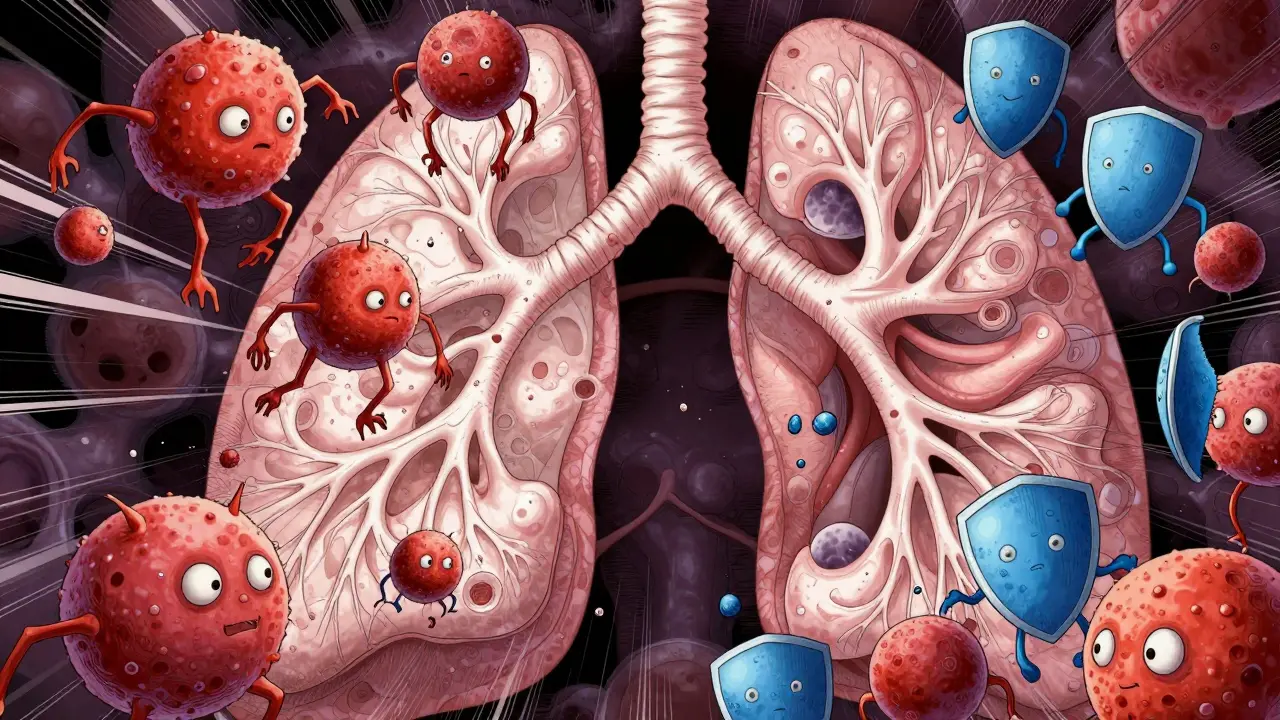
To understand AATD, we first need to look at the protein it namesake: alpha-1 antitrypsin (AAT). Think of AAT as a shield for your lungs. Your liver produces this protein, which travels through your bloodstream to your lungs. There, it neutralizes an enzyme called neutrophil elastase. Elastase is part of your immune system; it helps fight infection by breaking down harmful bacteria. But it also breaks down healthy tissue if left unchecked. In a healthy person, AAT keeps elastase in check. In someone with AATD, there isn't enough AAT to do the job. The result? Unchecked elastase destroys the air sacs (alveoli) in your lungs, leading to emphysema.
The root cause lies in your DNA. Specifically, mutations in the SERPINA1 gene, located on chromosome 14. This gene provides instructions for making the AAT protein. More than 120 different variants (alleles) of this gene exist, but two are most common in causing disease: the S allele and the Z allele. Most people inherit two normal copies, known as the MM genotype. If you inherit one Z allele and one M allele (MZ), you may have reduced levels but often no symptoms. However, inheriting two Z alleles (ZZ) leads to severe deficiency. People with the ZZ genotype produce only about 15% of the normal amount of AAT. This leaves their lungs vulnerable to destruction from a young age.
| Genotype | AAT Level (% of Normal) | Risk Profile |
|---|---|---|
| MM | 100% | Normal function; low risk |
| MZ | 60-80% | Carrier; increased risk if exposed to smoke/pollutants |
| ZZ | 10-20% | Severe deficiency; high risk for lung and liver disease |
Why Does It Take So Long to Get Diagnosed?
One of the biggest frustrations for patients is the delay in getting answers. Research shows it takes an average of eight years for someone with AATD to receive a correct diagnosis after symptoms begin. During that time, they typically see three different doctors. Why does this happen?
The symptoms of AATD mimic other common conditions. Chronic cough, wheezing, and shortness of breath are hallmarks of asthma and smoker’s COPD. Many patients are treated with inhalers for years without relief because the underlying issue isn't just inflammation-it's structural damage caused by protein deficiency. Additionally, AATD-related emphysema often affects the lower parts of the lungs first (basilar predominance), whereas smoking-related emphysema usually hits the upper lobes. Radiologists not familiar with AATD might miss this subtle difference on a CT scan.
Another reason for delayed diagnosis is lack of awareness. Only about 10% of the estimated 100,000 Americans with severe AATD (PiZZ genotype) are currently diagnosed. Guidelines from the American Thoracic Society (ATS) and European Respiratory Society (ERS) recommend testing anyone with COPD, asthma with fixed airflow obstruction, or unexplained liver disease. Yet, many primary care physicians and even some pulmonologists forget to order the simple blood test that checks AAT levels.
How Is AATD Diagnosed?
Diagnosing AATD involves a two-step process. First, your doctor orders a serum AAT level test. This measures how much of the protein is circulating in your blood. If your level is below 11 μM (approximately 50 mg/dL), it suggests a deficiency. However, AAT is an acute-phase reactant, meaning its levels can rise temporarily during infections or inflammation. So, a single borderline result doesn't confirm the disease.
If initial levels are low, the second step is confirmation via phenotyping or genotyping. Phenotyping uses a technique called isoelectric focusing to separate proteins based on their electrical charge, identifying the specific variant (like Z or S). Genotyping looks directly at the DNA sequence of the SERPINA1 gene. Both methods provide a definitive answer. Once confirmed, your doctor will likely order spirometry-a breathing test-to measure how well your lungs are working. They may also check liver enzymes to assess for any hepatic involvement, since the misfolded Z-protein accumulates in liver cells, potentially leading to cirrhosis or liver cancer over time.
Treatment Options: From Augmentation Therapy to New Hopes
There is no cure for AATD yet, but treatments can slow progression and manage symptoms. The cornerstone of lung protection is augmentation therapy. This involves receiving intravenous (IV) infusions of purified human AAT protein. The goal is to raise your blood levels above the protective threshold of 11 μM. Standard dosing is 60 mg/kg once a week. Approved products include Prolastin-C, Zemaira, and Aralast NP.
For many, this weekly infusion feels like a burden. It requires visiting a clinic or setting up home IV access, which can be painful and disruptive. That’s why the approval of Kedrab (alpha-1 proteinase inhibitor subcutaneous) in 2022 was a game-changer. Kedrab allows patients to self-inject under the skin rather than using veins. While still requiring frequent administration, it offers more flexibility and less discomfort for those who struggle with IV access.
Beyond replacement therapy, lifestyle changes are critical. Smoking cessation is non-negotiable. If you have the ZZ genotype and continue to smoke, your risk of developing severe emphysema skyrockets. Quitting can reduce this risk by up to 60%. Avoiding occupational dusts and chemical fumes is equally important. Regular vaccinations against flu and pneumonia help prevent respiratory infections that could further damage fragile lungs.
Liver disease management differs. Augmentation therapy does not help the liver because the problem there is toxic buildup of misfolded protein, not a lack of circulating protein. Patients with liver involvement need monitoring by a hepatologist. In advanced cases, liver transplantation may be necessary. Interestingly, a liver transplant cures the AATD because the new liver starts producing normal AAT protein.

Living With AATD: Practical Steps and Support
Receiving an AATD diagnosis can feel overwhelming, but knowledge empowers action. Here is what you should prioritize:
- Get tested early: If you have COPD before age 45, or if a close relative has AATD, ask for testing immediately. Don’t wait for symptoms to worsen.
- Find a specialist: Look for a pulmonologist experienced in AATD. Organizations like the Alpha-1 Foundation maintain directories of knowledgeable providers.
- Consider genetic counseling: Since AATD is inherited, your children may carry the gene. Genetic counselors can explain inheritance patterns and discuss screening options for family members.
- Join a support community: Connecting with others who understand the "diagnostic odyssey" provides emotional relief. Online forums and local chapters offer practical tips on managing infusions and navigating insurance.
- Monitor regularly: Schedule spirometry every 6-12 months to track lung function. Report any changes in breathing or liver health promptly.
Insurance hurdles are another reality. Augmentation therapy costs between $70,000 and $100,000 annually. About 42% of initial claims face denial, requiring appeals. Work closely with your healthcare team to document medical necessity clearly. Persistence pays off-many insurers cover the therapy once they recognize the long-term cost savings of preventing hospitalizations and transplants.
The Future of AATD Care
Research is moving fast. Scientists are developing small molecule correctors designed to stop the Z-protein from clumping in the liver, potentially treating both lung and liver disease simultaneously. Gene therapy trials aim to insert a functional copy of the SERPINA1 gene into cells, offering a potential one-time cure. RNA interference therapies are also in Phase II trials, targeting the production of mutant AAT in the liver.
Newborn screening is expanding too. Twelve U.S. states now screen babies for AATD as part of routine metabolic panels. Early detection means starting prevention strategies before any lung damage occurs. As these innovations mature, the outlook for AATD continues to improve. What was once a mysterious, rapidly progressive disease is becoming a manageable chronic condition with targeted therapies.
Is Alpha-1 Antitrypsin Deficiency contagious?
No, AATD is not contagious. It is a genetic condition passed down from parents to children through the SERPINA1 gene. You cannot catch it from someone else.
Can I live a normal life with AATD?
Yes, many people with AATD live full, active lives. With early diagnosis, smoking cessation, and appropriate treatment like augmentation therapy, you can slow disease progression and maintain good quality of life. Regular monitoring is key.
Does augmentation therapy work for everyone?
Augmentation therapy is most effective for patients with severe deficiency (like ZZ genotype) and established lung disease. It raises AAT levels in the blood to protect lungs but does not reverse existing damage or treat liver disease. Results vary by individual response and adherence.
Should my family get tested?
Absolutely. Since AATD is inherited, your siblings, children, and grandchildren may carry the gene. Testing is simple and can lead to early intervention. The Alpha-1 Foundation recommends cascade screening for all first-degree relatives.
What foods should I avoid if I have AATD?
There is no specific "AATD diet," but a heart-healthy, anti-inflammatory diet supports overall lung and liver health. Focus on fruits, vegetables, whole grains, and lean proteins. Limit processed foods and excess salt, especially if you have liver involvement. Stay hydrated to help thin mucus.
How much does augmentation therapy cost?
Annual costs range from $70,000 to $100,000. Most insurance plans cover it after prior authorization, though initial denials are common. Patient assistance programs from manufacturers like Takeda and CSL Behring may help reduce out-of-pocket expenses.
Can exercise help with AATD symptoms?
Yes, regular aerobic exercise improves lung efficiency and muscle strength. Pulmonary rehabilitation programs are highly recommended. Start slowly and consult your doctor to design a safe routine tailored to your lung capacity.
Is there a cure for AATD?
Currently, there is no cure. However, research into gene therapy and molecular correctors is promising. These future treatments aim to fix the underlying genetic defect rather than just replacing the missing protein.






MiMi Stanley July 11, 2026
My cousin was diagnosed with this at 35. She never smoked a day in her life but had to use an inhaler constantly. It took her doctors forever to figure it out because they kept blaming stress or allergies. Seeing the part about the 8-year average delay really hits home. We need more awareness so people don't suffer in silence for nearly a decade.
Earl Oleary July 12, 2026
You are completely missing the point here if you think this is just another rare disease blog post. The real issue is that insurance companies are deliberately denying coverage for augmentation therapy to save money while patients die. I have seen the internal memos. They know exactly what they are doing. Stop pretending this is a medical mystery and start calling out the corporate greed that kills these people. The data on denial rates is not accidental, it is policy.
Tad Cronn July 12, 2026
Let me tell you something about your liver function tests. You probably aren't checking them often enough. Most people ignore their ALT levels until it's too late. If you have the ZZ genotype, your liver is basically storing toxic protein clumps like a warehouse of garbage. You need to get a hepatologist involved immediately, not just a pulmonologist. Don't wait for cirrhosis to set in. I see too many people focus only on the lungs and miss the silent killer in the abdomen.
Crystal Tadlock July 13, 2026
This is scary stuff. Like really scary. I mean who wants to find out their body is literally eating itself from the inside? And the fact that you can pass it to your kids? That is terrifying. I am going to make sure my husband gets tested before we try for a baby. No way am I taking any chances. This needs to be common knowledge like testing for cystic fibrosis. Everyone should know this exists.
Katie Caruthers July 15, 2026
I feel so angry reading this. How can doctors be so blind? To let someone walk around for eight years thinking they just have asthma when their lungs are collapsing? It makes me sick to my stomach. These doctors are negligent. They are playing god with people's lives and failing miserably. We need lawsuits. We need accountability. Why is no one holding the medical establishment responsible for this mass failure of care?
Sean Allwurden July 16, 2026
Great breakdown of the SERPINA1 gene mutations. For those in the healthcare space, it is crucial to note that phenotyping via isoelectric focusing remains the gold standard for confirmation after initial serum level screening. The distinction between MZ carriers and ZZ homozygotes is vital for risk stratification. Also, keep an eye on the subcutaneous administration options like Kedrab; the pharmacokinetics profile offers better steady-state concentrations compared to traditional IV bolus dosing. Collaboration between pulmonologists and hepatologists is key for holistic management.
Laura Odom July 17, 2026
i dunno man. seems like big pharma is just trying to sell us more expensive shots. like yeah the weekly iv thing sucks but now we gotta inject ourselves under the skin? sounds painful as hell. and the cost?? 100k a year? thats insane. i bet there are natural ways to boost this protein if u eat right. why do we always need drugs? maybe its all a scam to keep us dependent on hospitals. just food for thought lol
ANINDA GHOSH July 17, 2026
In our culture, we often view health as a balance of elements, yet here we see a profound imbalance at the genetic level. The concept of the 'shield' failing is deeply philosophical. It reminds us that protection is not guaranteed by nature alone. We must actively seek knowledge to restore harmony within our bodies. The delay in diagnosis speaks to a societal lack of attention to subtle signs. We must listen to the whispers of our health before they become screams. Embracing this knowledge is the first step toward healing. 🙏✨
Najmunisa Govender July 19, 2026
Oh my goodness!!! This is absolutely heartbreaking!! 😢😢😢 I cannot imagine the fear and frustration these patients must feel!!! Eight years!!! EIGHT YEARS!!! 😱😱😱 How can anyone live with that uncertainty??? And the liver damage!!! That is so serious!!! 💔💔💔 We need to spread this information everywhere!!! Everyone needs to know!!! Please share this!!! 🙏🙏🙏
Vineet Hawelia July 19, 2026
It is imperative that individuals with a family history of unexplained respiratory issues undergo genetic counseling promptly. The information provided regarding the SERPINA1 gene variants is accurate and aligns with current clinical guidelines. Early detection through newborn screening programs, as mentioned, represents a significant advancement in preventive medicine. Patients should adhere strictly to smoking cessation protocols and maintain regular follow-ups with specialized pulmonary care providers.