
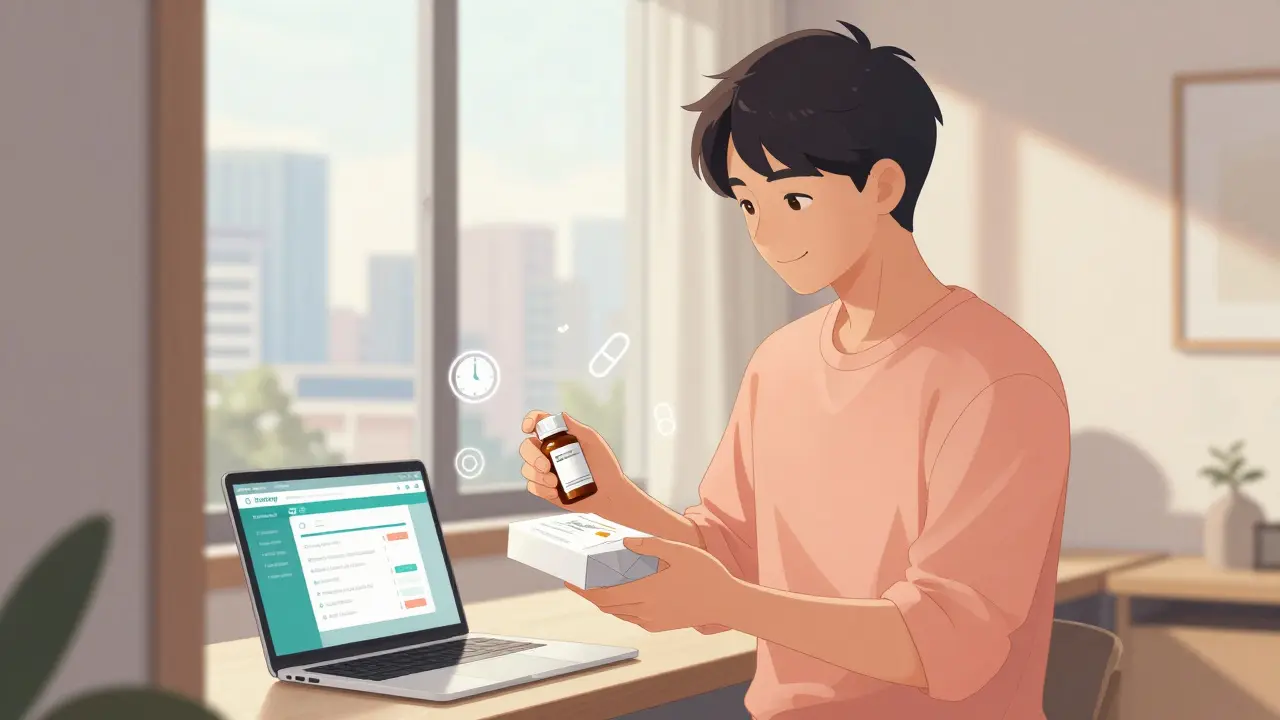
For years, getting your generic medication meant driving to a pharmacy, waiting in line, and paying whatever price your insurance or PBM decided to charge. But that’s changing. Starting in 2024 and accelerating through 2025, a wave of direct-to-consumer generic pharmacies is cutting out the middlemen-pharmacy benefit managers, wholesalers, and even retail chains-to deliver prescriptions straight to your door. This isn’t just convenience. It’s a fundamental shift in how Americans access affordable medicine.
What Exactly Is a Direct-to-Consumer Generic Pharmacy?
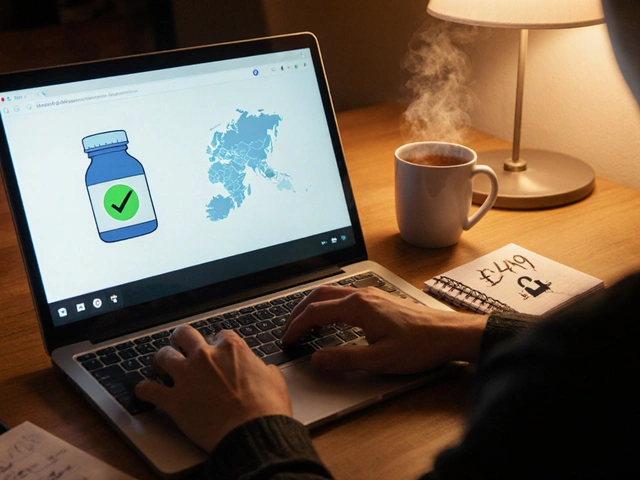
A direct-to-consumer (DTC) generic pharmacy is a platform-usually an app or website-that lets you order FDA-approved generic drugs directly from the manufacturer or a licensed pharmacy partner. You skip the traditional chain: drugmaker → wholesaler → PBM → retail pharmacy → patient. Instead, you go from manufacturer or digital pharmacy → you.
Companies like Ro, Hims & Hers, and Honeybee Health built these models first, focusing on common chronic conditions: blood pressure meds like lisinopril, cholesterol drugs like atorvastatin, antidepressants like sertraline, and diabetes treatments like metformin. By 2025, these platforms were processing over 2 million prescriptions per quarter. What made them work? Transparent pricing. If your generic lisinopril costs $15 at Walgreens, you might pay $4.99 through Ro. No hidden fees. No surprise co-pays.
But it’s not just startups. Big pharma is jumping in. Eli Lilly’s LillyDirect, Pfizer’s PfizerForAll, and Novo Nordisk’s NovoCare now offer DTC options for both brand and generic drugs. While their early focus was on high-cost brand-name treatments, they’ve started adding generics to their platforms-especially when those generics are part of a bundled care program. For example, if you’re on a diabetes management plan through LillyDirect, you might get metformin, insulin, and glucose strips all delivered together at a fixed monthly rate.
How These Platforms Actually Work
It’s simpler than you think. Here’s the typical flow:
- You visit the platform’s website or app (like Ro or Honeybee Health).
- You answer a short health questionnaire-no doctor visit needed if you already have a prescription.
- If you don’t have one, you connect with a licensed telehealth provider who reviews your history and issues an e-prescription.
- You choose your medication, dosage, and delivery schedule (monthly, quarterly).
- You pay upfront-usually with a credit card or HSA/FSA.
- Your meds ship in discreet packaging within 1-3 business days.
Behind the scenes, it’s a complex system. These platforms integrate with Surescripts for e-prescribing, sync with Epic and Cerner EHRs for patient records, and use AI chatbots to remind you to take your pills. They also have 24/7 pharmacist hotlines-typically one pharmacist for every 5,000 active users-as required by the National Association of Boards of Pharmacy.
Most platforms require iOS 14+ or Android 10+, and all data is encrypted under HIPAA rules. No one’s selling your health info. The goal is to make medication access as smooth as ordering coffee.
Why This Model Is Cheaper
The savings come from removing layers. Traditional drug distribution involves at least five middlemen, each adding cost. PBMs alone made $28 billion in gross profit in 2024-not from helping patients, but from negotiating secret rebates with drugmakers and passing little of it on.
DTC generic pharmacies cut those layers. They buy generics directly from manufacturers at wholesale prices, then sell them at cost plus a small service fee. No rebates. No markups. No hidden fees. That’s why a 30-day supply of generic sertraline that costs $50 at CVS can be $12 on Ro.
According to Drug Channels’ March 2025 report, DTC generic platforms offer 30-50% discounts compared to traditional pharmacies. Brand-name DTC programs? Only 10-15% savings. That’s because brand drugs still rely on complex pricing games. Generics? No patents. No marketing. Just pure cost efficiency.
And it’s not just price. Delivery is faster. Refills are automatic. You don’t have to call your doctor for a renewal-most platforms auto-schedule refills based on your usage. In a Drug Channels survey, 73% of patients using DTC services for chronic conditions said they took their meds more consistently.
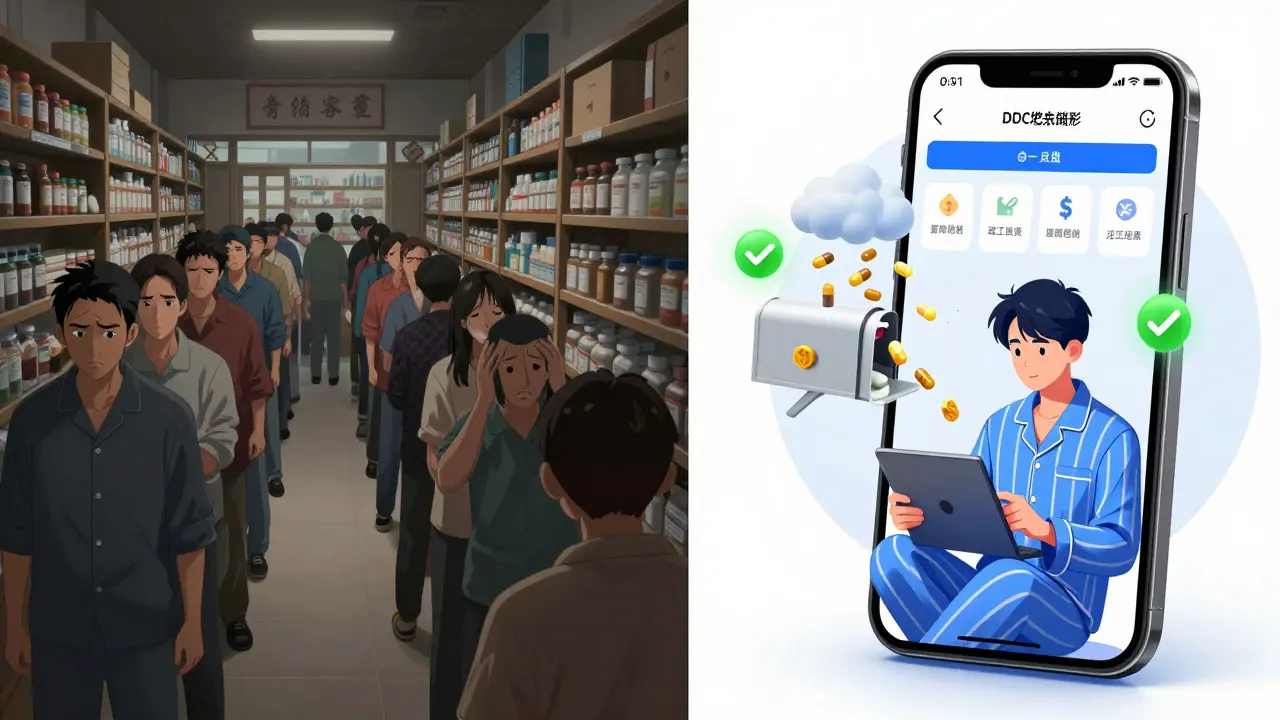
Who’s Using These Services?
It’s not just the uninsured. The biggest users are people with high-deductible health plans. If your deductible is $6,000, you’re paying out-of-pocket for everything until you hit it. A $4.99 generic is way better than a $45 co-pay.
According to IQVIA’s Q3 2025 data, 27% of commercially insured Americans have used a DTC pharmacy at least once. Among those with chronic conditions, it’s 41%. And among people with HDHPs? 38%.
Users on Reddit and Trustpilot consistently praise two things: price transparency and convenience. One user wrote: “Saved $417 a year on my blood pressure meds. No more driving across town on lunch break.”
But it’s not perfect. Complaints? Delivery delays (especially during flu season), limited medication selection (not every generic is available), and slow customer service. One Yelp reviewer waited five days for their antidepressant, while their local Walgreens had it in an hour.
The Big Risks
There’s no sugarcoating this: DTC pharmacies are legally and medically tricky.
First, regulatory chaos. To operate legally, a DTC pharmacy needs a license in all 50 states and Washington D.C. That takes 14-18 months and costs over $2 million in legal fees alone. Many startups cut corners. The FDA and state boards have cracked down on unlicensed sellers.
Second, pharmacist oversight. Critics like Dr. Sarah Chen from Johns Hopkins warn that bypassing in-person pharmacists means missing out on crucial safety checks. In 2025, Drug Topics documented 17 cases where patients on multiple medications had dangerous interactions that a pharmacist might have caught.
Third, legal gray zones. The Department of Justice is investigating whether some DTC programs violate the Anti-Kickback Statute by offering free shipping or discounts tied to specific drugs. No charges yet-but the threat is real.
And then there’s the supply chain. While big pharma like Pfizer can ring-fence factory lots just for DTC orders, smaller platforms rely on third-party distributors. If there’s a shortage, you’re last in line.
What’s Next?
The trend isn’t slowing. Roche announced in July 2025 it’s exploring a U.S. DTC platform. Bristol Myers Squibb and Pfizer are already selling DTC generics under their alliance. And startups like MedAdvantage are blending DTC drug pricing with lower insurance premiums-offering plans where your monthly premium is lower, but you pay cash for meds at DTC rates.
Most experts agree: DTC won’t replace traditional pharmacies. Instead, it’ll become another option. Think of it like streaming vs. cable. You still have the old way, but now you’ve got a faster, cheaper, simpler alternative.
By 2026, we’ll likely see:
- More generics added to pharma-owned DTC platforms
- Integration with Medicare Part D for seniors
- AI-driven adherence programs that adjust dosages based on lab results
- State-level laws requiring DTC platforms to offer pharmacist video consults
For now, if you’re paying cash for generics, it’s worth checking a DTC platform. Compare the price. See how fast they ship. Read reviews. You might save hundreds a year.
How to Choose a DTC Generic Pharmacy
Not all platforms are equal. Here’s what to look for:
- Licensed in your state: Check their website for a list of state licenses.
- Pharmacist support: Do they offer live chat or phone access to a pharmacist?
- Medication selection: Do they carry the exact generic you need? (Not all do.)
- Delivery speed: Average is 1-3 days. Anything longer? Be wary.
- Transparency: Do they show the list price, your price, and the savings? If not, walk away.
Top performers in 2025: Ro (best usability), Honeybee Health (best pricing), Blink Health (best for bulk refills).
Are DTC generic pharmacies safe?
Yes-if you use licensed platforms. Companies like Ro, Honeybee Health, and those backed by major pharma (LillyDirect, PfizerForAll) are fully licensed, use FDA-approved generics, and follow HIPAA and state pharmacy laws. Avoid websites that don’t require a prescription or don’t list their pharmacy licenses. Always check the National Association of Boards of Pharmacy’s Verified Internet Pharmacy Practice Sites (VIPPS) directory.
Can I use insurance with DTC pharmacies?
Most DTC generic pharmacies operate on a cash-pay model. They don’t bill insurance directly. But you can use your HSA or FSA card to pay. Some platforms are starting to integrate with Medicare Part D and private insurers, but it’s still rare. If you have good insurance coverage, your retail pharmacy might still be cheaper. But if you’re paying out-of-pocket, DTC is almost always cheaper.
Do DTC pharmacies sell brand-name drugs too?
Yes, but only through big pharma platforms like LillyDirect and PfizerForAll. These are primarily focused on their own brand-name drugs. For generics, stick with companies like Ro or Honeybee Health. Brand-name DTC offers smaller savings-usually 10-15%-because the drugmaker still has to cover R&D and marketing costs. Generics? No patents. No ads. Just lower prices.
What if I need to talk to a pharmacist?
Top DTC platforms offer 24/7 pharmacist access via phone or secure chat. Ro and Honeybee Health both include this in their service. You can ask about side effects, drug interactions, or how to take your meds correctly. It’s not the same as walking into a local pharmacy, but it’s available when you need it. If a platform doesn’t offer pharmacist support, avoid it.
How long does delivery take?
Most orders arrive in 1-3 business days after approval. Some platforms offer same-day delivery in major cities, but that’s rare. If you need medication urgently, a local pharmacy is still faster. DTC is best for ongoing, chronic conditions-not emergencies.
Can I get any generic medication through DTC?
No. Platforms focus on high-demand generics: blood pressure, cholesterol, diabetes, depression, and birth control. Rare or specialty generics (like certain thyroid meds or autoimmune treatments) often aren’t available. Always check the platform’s medication list before signing up. If your drug isn’t listed, you’ll need to stick with a traditional pharmacy.
McCarthy Halverson January 10, 2026
Saved $300 last year on my lisinopril. No more lunchtime pharmacy runs. Just order, get it in 2 days. Done.
Simple.
Michael Marchio January 10, 2026
Let me break this down for you since nobody else will. These so-called 'DTC pharmacies' are just PBMs with a new logo. The FDA doesn't have the bandwidth to monitor every single one. You think they're checking every batch? They're not. And those 'licensed' ones? Half of them have licenses in 2 states and operate nationwide. That's not compliance, that's exploitation. And don't get me started on the AI chatbots giving medical advice. If you're on 5 meds and your pharmacist is stretched thin across 5,000 users, you're not getting care-you're getting a script with a shipping label. This isn't innovation. It's a loophole with a mobile app.
Jake Kelly January 10, 2026
I've been using Honeybee for my metformin since last spring. It's not perfect, but it's reliable. I appreciate that I can see exactly what I'm paying. No mystery fees. No insurance maze. Just price, delivery, and a pharmacist I can text if I'm worried about side effects. It's not magic, but it's better than what we had before.
Ashlee Montgomery January 12, 2026
What does it mean when access to basic medication becomes a competitive service instead of a right? We've optimized delivery, not dignity. The fact that we celebrate $4.99 pills as progress suggests we've accepted a broken system as normal. The real question isn't whether DTC works-it's why we needed it to begin with. Why did the system fail so badly that a startup delivering pills from a warehouse is now seen as heroic?
neeraj maor January 13, 2026
Big Pharma is behind this. They know they can't keep charging $500 for insulin forever. So they spin off DTC arms to sell generics at $5 while keeping their brand-name drugs at $1,200. It's a smokescreen. They're not lowering prices-they're redirecting demand. And the government? They're letting it happen because they're paid off. You think the DOJ investigation is serious? It's theater. Watch how fast it vanishes when election season hits. This isn't consumer empowerment. It's corporate rebranding with a shipping box.
Ritwik Bose January 14, 2026
I am from India, and I must say, this model is truly inspiring. 🌟 In our country, generic medicines are already affordable, but the logistics are a nightmare. Seeing how efficiently this system works in the US gives me hope. I wish more countries could adopt this with proper regulation. Thank you for sharing such a thoughtful analysis. 🙏
Paul Bear January 15, 2026
The structural inefficiencies in traditional pharmacy distribution are well-documented. PBMs extract rent via spread pricing and secret rebates, creating artificial inflation. DTC platforms operate under a unit-economics model that eliminates intermediaries, thereby aligning incentives with patient outcomes. The 30–50% cost reduction isn't marketing-it's marginal cost accounting. However, regulatory arbitrage remains a concern, particularly regarding interstate licensure under the Ryan Haight Act and state-specific dispensing laws. Ensure your chosen platform is VIPPS-certified and maintains real-time EHR integration to mitigate liability exposure.
Jaqueline santos bau January 16, 2026
I waited 6 days for my antidepressant. SIX DAYS. My local pharmacy had it in 20 minutes. And when I called customer service? They sent me a link to a FAQ page. I cried. Not because of the cost-because I felt like a number. This isn't healthcare. It's Amazon with pills. And now my doctor won't even refill my script unless I use their 'preferred' DTC site. I'm trapped between a rock and a hard place. Who do I even complain to?
Kunal Majumder January 16, 2026
Bro, I switched to Ro for my cholesterol med. Paid $12 instead of $50. No drama. No calls. Just got it in my mailbox. If you're paying out of pocket, just do it. No one’s forcing you to use insurance. Life’s too short for pharmacy lines.
Aurora Memo January 17, 2026
I appreciate the convenience, but I worry about the erosion of human connection in care. That pharmacist who remembers your name, asks how your grandkid is doing, or notices you're taking your meds inconsistently-that’s irreplaceable. DTC is great for efficiency, but we can’t lose the part of healthcare that’s about trust, not just transaction.
chandra tan January 17, 2026
In India, we call this 'direct pharmacy'-but we've had it for decades. Local chemists buy straight from manufacturers, sell at cost, no middlemen. No apps, no AI, just a guy behind the counter who knows your family. The tech is new, but the idea? Not at all. Maybe the US just needs to stop overcomplicating things.