
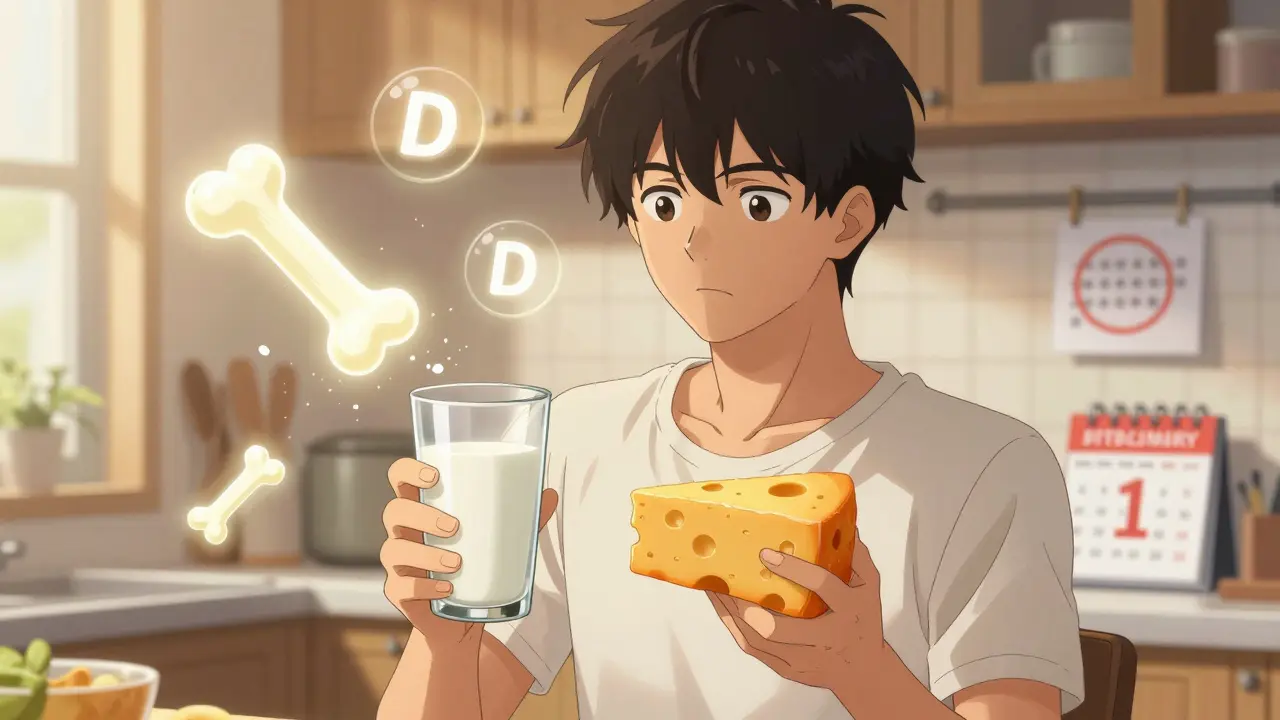
Steroid-Induced Osteoporosis Risk Calculator
This calculator estimates your risk of bone density loss from long-term corticosteroid use based on current medical guidelines.
Why Long-Term Steroids Can Break Your Bones
If you’re taking corticosteroids like prednisone for months or years-maybe for rheumatoid arthritis, lupus, asthma, or another autoimmune condition-you’re not just managing inflammation. You’re also putting your bones at serious risk. This isn’t a rare side effect. It’s the most common form of secondary osteoporosis, affecting up to half of all long-term users. And it doesn’t wait years to happen. Bone loss starts within weeks, with the steepest drop in the first 3 to 6 months. By the end of the first year, you could lose 5% to 15% of your bone density, especially in your spine. That’s not just a number-it means your spine, hip, or wrist could break with a simple fall, a stumble, or even a sneeze.
Here’s the hard truth: steroids don’t just weaken bones. They actively shut down the cells that build bone (osteoblasts) and keep the cells that break bone down (osteoclasts) running longer than they should. At the same time, your body absorbs less calcium from food, loses more through urine, and becomes less responsive to the bone-strengthening effects of walking or lifting weights. It’s a perfect storm for fractures-and it happens faster than most people realize.
When Does the Risk Start?
You don’t need to be on high doses for years to be in danger. The moment you hit 2.5 mg of prednisone-or its equivalent-daily for three months or longer, you enter the high-risk zone. That’s the threshold set by the Royal Osteoporosis Society and the American College of Rheumatology. At 7.5 mg or more, your fracture risk doubles. And it’s not linear. Every extra milligram of prednisone per day means another 1.4% drop in spine bone density each year. So even if you’re on 5 mg, you’re still losing bone faster than someone your age who isn’t on steroids.
And here’s what most patients don’t know: half of all steroid-related fractures happen within the first year. That’s why waiting for symptoms-or for a bone scan to show damage-is too late. Prevention has to start on day one of long-term therapy. If you’ve been on steroids for six months and haven’t had a bone density test or a conversation about bone health, you’re behind.
The Non-Negotiables: Diet, Movement, and Lifestyle
Medication isn’t the first line of defense. The foundation is simple, but it’s often ignored: calcium, vitamin D, movement, and quitting smoking.
- Calcium: Aim for 1,000 to 1,200 mg per day. Try to get most of it from food-yogurt, cheese, fortified plant milks, canned salmon with bones, leafy greens. If you can’t hit the target through diet alone, supplement the rest. Don’t take more than 500 mg at once; your body can’t absorb it all.
- Vitamin D: 600 to 800 IU daily is the minimum. Many people need 800 to 1,000 IU to keep blood levels above 20 ng/mL, which is the level linked to lower fracture risk. If you live in the UK, where sunlight is limited for half the year, you’re already at a disadvantage. Supplementing isn’t optional-it’s essential.
- Weight-bearing exercise: Walk 30 minutes most days. Climb stairs. Do standing squats. Even gardening counts. The goal is to load your bones. But steroids blunt the bone’s response to movement by about 25%. That means you have to be more consistent, not less. Skipping days makes the damage worse.
- Quit smoking: Smokers on steroids have up to 30% higher fracture risk. Smoking interferes with estrogen, reduces blood flow to bones, and kills bone-forming cells. Quitting doesn’t just help your lungs-it rebuilds your skeleton over time.
- Limit alcohol: More than three units a day (about two pints of beer or two glasses of wine) increases fall risk and slows bone repair. Stick to one or two units max.
These aren’t suggestions. They’re the bare minimum. Skip them, and even the best medication won’t fully protect you.

Medications That Actually Work
If you’re on steroids long-term and have other risk factors-like being over 50, having had a fracture before, or having a family history of osteoporosis-you need more than diet and exercise. You need drugs.
The first-line choice? Bisphosphonates. Risedronate (5 mg daily or 35 mg weekly) cuts vertebral fracture risk by 70% in steroid users. Alendronate works too. They’re cheap, widely available, and backed by decades of data. But they’re not perfect. About 30% of people get stomach upset and stop taking them. If that happens, talk to your doctor about switching to something else.
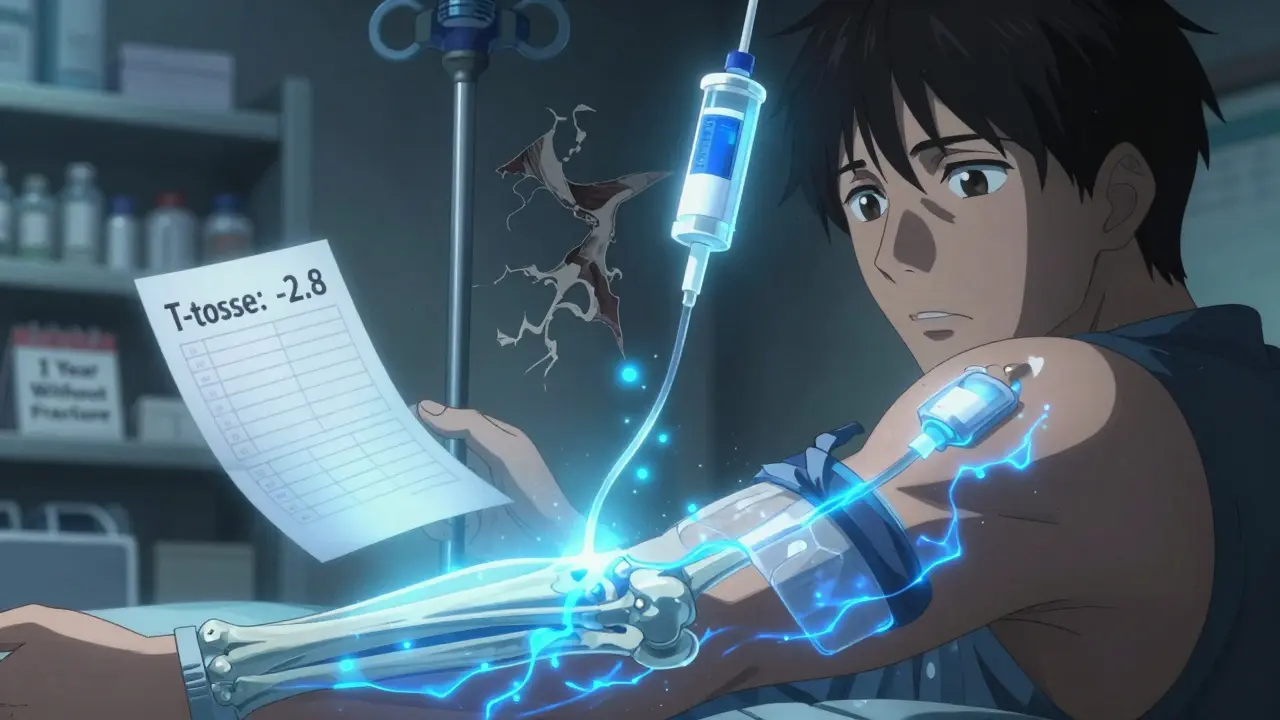
Another option: zoledronic acid, an annual IV infusion. It boosts spine bone density by 4.5% in a year-nearly 10 times more than placebo. No pills. No daily routine. Just one visit to the clinic. It’s ideal for people who struggle with adherence.
If your bones are already very weak (T-score of -2.5 or lower) or you’ve had a fracture on steroids, teriparatide is the strongest tool in the box. It’s a daily injection that actually rebuilds bone, not just slows loss. Studies show it increases spine density by 9.1% in 12 months-more than double what bisphosphonates achieve. It’s not first-line for everyone, but for severe cases, it’s life-changing.
And then there’s denosumab, a shot every six months that blocks bone breakdown. It raises spine density by 7% in a year. But if you stop it without switching to another drug, you can lose all those gains fast. That’s why it’s not always the best choice unless you’re committed to long-term care.
Why So Few People Get Help
Here’s the shocking part: only about 15% of people on long-term steroids get the full package of care they need. That means 85% are flying blind.
Why? For starters, doctors don’t always connect the dots. A rheumatologist might prescribe the steroid, but the GP doesn’t get the memo about bone protection. Only 22% of primary care providers feel confident managing steroid-induced osteoporosis. Patients don’t know they’re at risk-45% think bone loss is just part of taking steroids. And even when they’re told, only 55% remember their actual risk level.
Testing rates are even worse. Only 31% of steroid users get a bone density scan (DXA) when they start treatment. Calcium supplements? Documented in just 40% of cases. Vitamin D? 37%. And yet, every major guideline says: test at start, supplement daily, move often, and treat if needed.
The good news? Systems can fix this. In the U.S. Veterans Affairs system, when clinics added automatic alerts in their electronic records-triggering a bone test and prevention order whenever a steroid prescription hits 2.5 mg/day for 3 months-intervention rates jumped from 40% to 92%. Pharmacist-led education programs in the UK and U.S. have done the same. It’s not about blaming doctors or patients. It’s about building systems that don’t let people fall through the cracks.
What You Should Do Right Now
If you’re on long-term steroids, here’s your action plan:
- Ask for a DXA scan-right now. Don’t wait for symptoms. If you’ve been on steroids for 3+ months, you need one.
- Get your vitamin D level checked. If it’s below 30 ng/mL, you need more than 800 IU daily.
- Calculate your daily prednisone dose. If it’s over 2.5 mg, you’re at risk. If it’s over 7.5 mg, you’re in high-risk territory.
- Start calcium and vitamin D if you’re not already. No excuses.
- Walk every day. Even 20 minutes counts. If you can’t walk, do seated leg lifts or standing calf raises.
- Quit smoking if you smoke. Talk to your doctor about support programs.
- Ask about medication. If your scan shows low bone density or you’ve had a fracture, ask if bisphosphonates, zoledronic acid, or teriparatide are right for you.
- Get a care plan. Ask your GP or rheumatologist to write one down. Include your dose, your scan results, your supplements, and your next appointment.
This isn’t about fear. It’s about control. You didn’t choose to need steroids. But you can choose how to protect your bones. The tools are there. The evidence is clear. The time to act is now.
Can I stop my steroids to protect my bones?
No-not without medical supervision. Stopping steroids suddenly can be life-threatening if you have an autoimmune or inflammatory condition. The goal isn’t to stop them, but to use the lowest effective dose for the shortest time possible. Work with your doctor to reduce your dose gradually if it’s safe, but never quit cold turkey.
Is a bone density scan safe and covered by the NHS?
Yes. A DXA scan is a low-dose X-ray that takes about 10 to 15 minutes. It’s painless and involves less radiation than a chest X-ray. In the UK, it’s routinely covered by the NHS for patients on long-term steroids, especially if they’re over 50, have had a fracture, or have other risk factors. If your doctor refuses, ask for a referral to a rheumatology or endocrinology service.
Do I need to take bisphosphonates forever?
Not necessarily. Many people take bisphosphonates for 3 to 5 years, then take a break if their bone density has improved and their steroid dose is low. Your doctor will monitor your bone health with repeat scans and decide if you need to restart. This is called a "drug holiday," and it’s common in people whose risk has decreased.
Can I get enough calcium from my diet alone?
It’s possible, but hard. One cup of yogurt has about 300 mg. A slice of cheddar has 200 mg. A cup of fortified almond milk has 300 mg. To hit 1,200 mg, you’d need to eat dairy or fortified foods at every meal-plus leafy greens and canned fish. Most people can’t do that consistently. Supplements fill the gap. Don’t feel guilty about using them.
What if I can’t swallow pills?
There are alternatives. Zoledronic acid is an annual IV infusion. Denosumab is a shot every six months. Teriparatide is a daily injection. If swallowing pills is a problem, talk to your doctor about these options. You don’t have to struggle with pills if there’s a better way.
Does alcohol really affect bone health on steroids?
Yes. Alcohol interferes with calcium balance, reduces bone cell activity, and increases your chance of falling. Three units a day (about two small glasses of wine) is the limit for steroid users. Less is better. If you drink more, cutting back is one of the easiest ways to protect your bones.
Are there any foods I should avoid?
Not exactly. But high-sodium foods (like processed snacks and canned soups) make your body lose more calcium through urine. Excess caffeine (more than 3 cups of coffee a day) can also interfere with calcium absorption. Focus on whole foods, limit salt, and keep caffeine moderate.
Can exercise help if I have joint pain from arthritis?
Yes-but choose wisely. Walking, swimming, tai chi, and resistance bands are low-impact and safe. Avoid high-impact activities like running or jumping if your joints are painful. Even seated exercises that work your legs and back can stimulate bone growth. A physiotherapist can design a program that protects your joints while strengthening your bones.
How often should I get my bones checked?
Get your first DXA scan when you start long-term steroids. Then every 1 to 2 years if you’re on treatment. If your bone density improves after starting medication, your doctor might extend the interval. If it’s still dropping, you may need more frequent checks or a stronger drug.
What if I’m young and on steroids? Do I still need to worry?
Absolutely. Bone density peaks in your late 20s. If you’re on steroids during your 30s or 40s, you’re losing bone you’ll never fully regain. The younger you are, the more important it is to act now. Preventing loss is easier than trying to rebuild later.
Final Thought: Your Bones Are Worth Protecting
Steroids save lives. But they don’t have to steal your mobility. You don’t have to accept broken bones as the price of staying healthy. The science is clear. The tools are available. The only thing missing is action. Start with one step: ask for your bone density scan today. Then take the next one. And the next. Your future self will thank you.

Jigar shah December 18, 2025
Interesting breakdown. I’ve been on 5mg prednisone for 18 months for polymyalgia, and no one ever mentioned bone density until I brought it up myself. Got my DXA scan last month-T-score of -2.1. Started calcium + D3 immediately and began walking 40 mins daily. It’s scary how little guidance patients get. Thanks for laying this out so clearly.
Kent Peterson December 19, 2025
Oh great-another fear-mongering medical article. You act like steroids are poison. I’ve been on 7.5mg for 8 years. I’ve never broken a bone. My bones are fine. The real problem? Doctors overprescribe and then panic about every side effect. Stop scaring people into supplements they don’t need!
Josh Potter December 20, 2025
Bro. I’m on 10mg and I just started walking every day after reading this. Also got my D3 levels checked-was at 18 ng/mL. Now taking 1000 IU daily. Also quit smoking last week. Feels like I’m finally taking control. If you’re on steroids and not doing this-you’re sleeping on your future self. DO IT. NOW. 🚀
Jody Patrick December 22, 2025
Just one sentence: If you’re on steroids longer than 3 months, get a bone scan. No excuses.
Radhika M December 22, 2025
Hi, I’m a nurse in Delhi. I see so many patients on steroids who don’t know about bone loss. Many think it’s normal to feel weak. I always tell them: calcium from curd, spinach, and sun for vitamin D. Walk 30 minutes. No need for fancy pills if you start early. Simple things save bones.
Philippa Skiadopoulou December 23, 2025
While the data presented is broadly accurate, the tone of this article verges on alarmist. The emphasis on immediate pharmacological intervention may inadvertently discourage patient autonomy. A more balanced approach would acknowledge individual risk profiles and the role of clinical judgment in determining the necessity of bisphosphonates or teriparatide.
Pawan Chaudhary December 24, 2025
This is exactly what I needed to hear. I’ve been on steroids for 2 years and felt guilty for not exercising. Now I’m doing chair yoga with my grandma every morning. We both feel stronger. And yes-I started taking calcium gummies. No shame. Your bones thank you. Keep going, everyone!
Linda Caldwell December 25, 2025
My mom’s on 7.5mg for lupus. She got her DXA scan after I nagged her. T-score -2.8. We started zoledronic acid and she’s now doing water aerobics. She says it’s the first time in years she’s felt hopeful about her body. This isn’t just medical advice-it’s a lifeline. Thank you for writing this.
Sam Clark December 25, 2025
Thank you for this comprehensive and evidence-based overview. As a primary care provider, I have long advocated for standardized bone health protocols for patients on chronic corticosteroid therapy. The VA system’s intervention model-automated alerts paired with pharmacist-led counseling-demonstrates a scalable, effective pathway. I now incorporate this into my practice and recommend it to colleagues. Patient outcomes improve significantly when systems support clinical action, rather than relying on memory or initiative alone.