
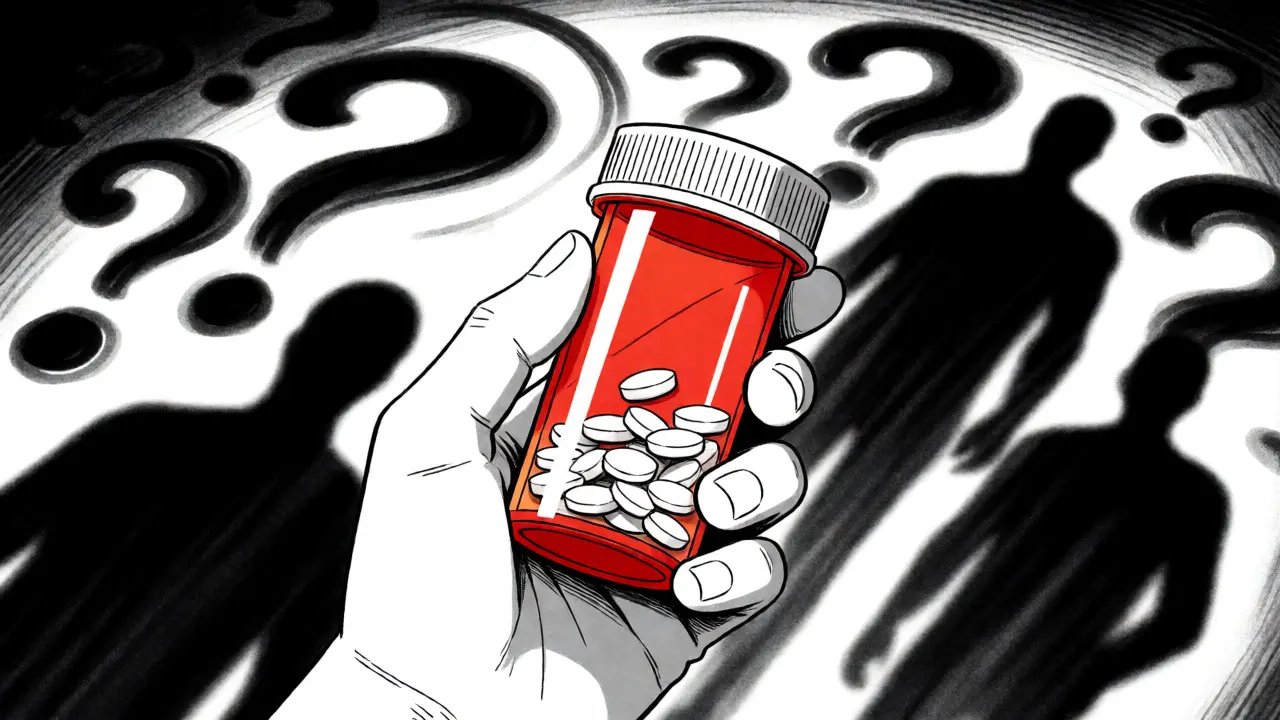
You pick up your prescription at the pharmacy. It’s a white pill in an orange bottle. You know it contains losartan, but do you know who made it? Probably not. And that small gap in knowledge creates a massive blind spot in how we track drug safety. While generic drugs make up roughly 90% of all prescriptions dispensed in the United States, they are disproportionately underreported when things go wrong. If you’re a healthcare provider or a patient advocate, understanding why this happens-and how to fix it-is critical for keeping people safe.
The Regulatory Myth: Same Rules, Different Reality
Here is the confusing part: on paper, the rules are identical. The U.S. Food and Drug Administration (FDA) treats serious adverse events (SAEs) for generics exactly like those for brand-name drugs. Under 21 CFR 312.64(b), investigators must report any adverse effect that might be caused by the drug, regardless of its origin. Sponsors-whether they make the original brand or a copycat version-are legally required to notify the FDA of any serious and unexpected reaction within specific timeframes. So, if the laws are the same, why does the data look so different? Research analyzing the FDA Adverse Event Reporting System (FAERS) database from 2004 to 2015 revealed a stark disparity. Brand manufacturers submitted about 68% of all serious adverse event reports, even though they accounted for only about 1% of dispensed prescriptions for widely used medications. This isn't just a statistical anomaly; it’s a systemic issue where the safety profile of generics remains incomplete because fewer eyes are watching them closely.
Why Generics Get Reported Less Often
It’s not that generic manufacturers don’t care. It’s often that they can’t see what’s happening. When a patient has a bad reaction to a brand-name drug, the doctor usually knows exactly which company made it. But with generics, multiple companies might produce the exact same active ingredient. A pharmacist might switch suppliers based on cost or availability, meaning the patient takes Teva one month and Amneal the next. This "manufacturer ambiguity" kills accurate reporting. A survey by the Institute for Safe Medication Practices (ISMP) found that 68% of healthcare providers struggle to identify the specific generic manufacturer when filing a report. Compare that to just 12% difficulty for brand-name drugs, and the problem becomes clear. If you don’t know who made the pill, you might skip the report entirely or default to listing the brand name, skewing the data further.
Dr. Daniel Korn, Director of the Division of Pharmacovigilance I at the FDA, has openly acknowledged that this underreporting creates significant gaps in post-marketing surveillance. Essentially, we are flying blind on potential side effects unique to specific generic formulations until enough cases pile up to trigger a signal.
The Clock Is Ticking: Strict Reporting Timelines
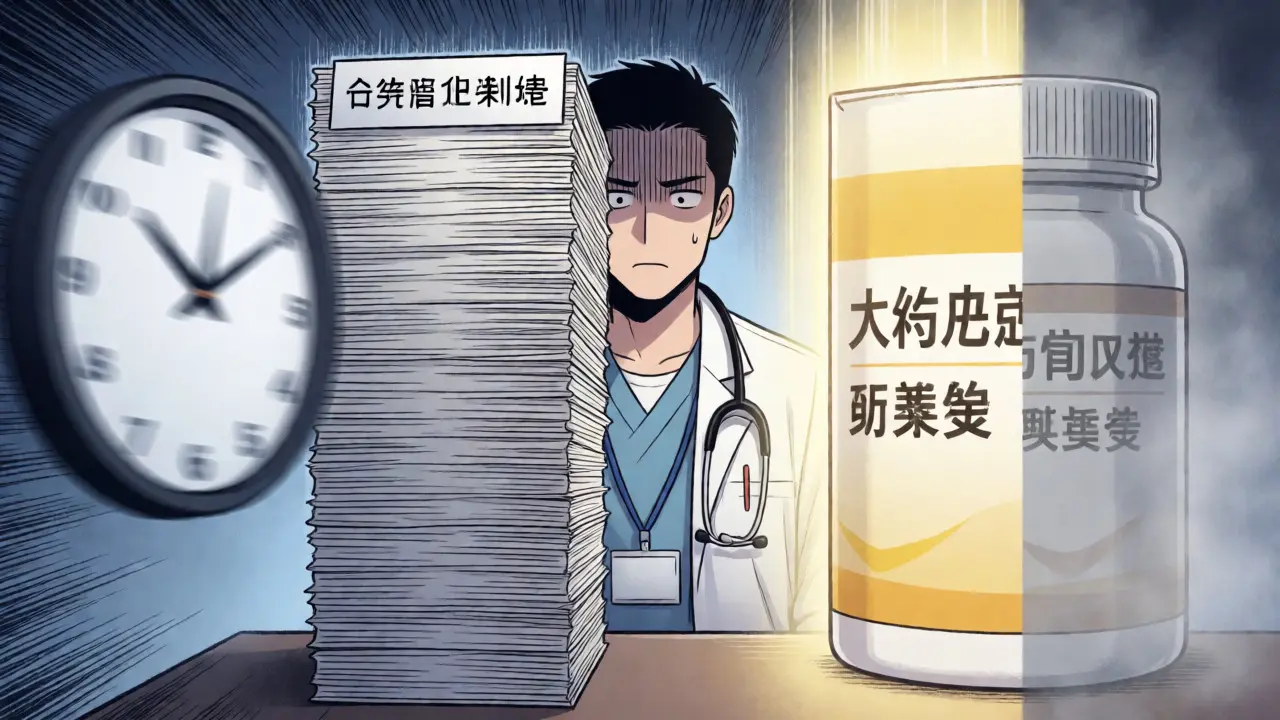
When a serious adverse event is identified, speed matters. For both brand and generic sponsors, the clock starts ticking the moment they receive information about the event. The FDA requires submission of serious and unexpected adverse drug reactions (ADRs) within 15 calendar days. This is a hard deadline. Missing it can lead to regulatory scrutiny. Across the Atlantic, the European Medicines Agency (EMA) is even stricter for the most severe cases. Fatal or life-threatening unexpected ADRs require notification within 7 calendar days, followed by a complete report within another 8 days. These timelines are non-negotiable. They exist to catch rare but dangerous patterns before they become public health crises.
| Regulatory Body | Event Type | Initial Notification Deadline | Complete Report Deadline |
|---|---|---|---|
| FDA (USA) | Serious & Unexpected ADR | 15 Calendar Days | N/A (Combined) |
| EMA (Europe) | Fatal/Life-Threatening | 7 Calendar Days | 8 Additional Days |
| EMA (Europe) | Other Serious ADRs | 15 Calendar Days | N/A |
Practical Hurdles for Healthcare Providers
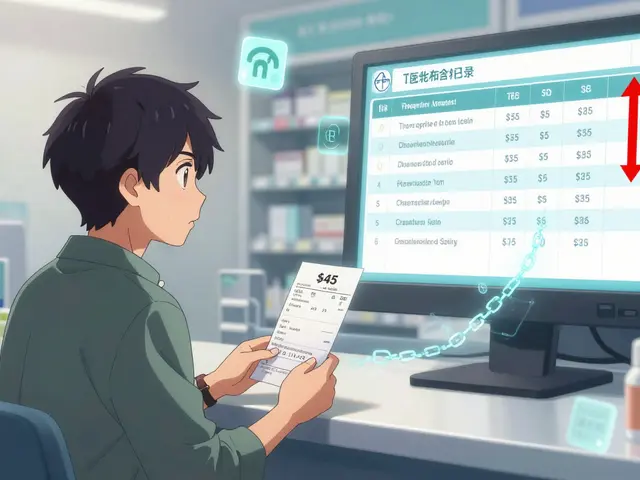
If you are a nurse, pharmacist, or physician, you know the frustration of filling out a MedWatch Form 3500. It’s not just paperwork; it’s detective work. Recent studies show that completing a standard MedWatch report takes 15-30 minutes. But for generics? That time balloons to 45 minutes or more. Why? Because you have to hunt down the manufacturer.
The National Library of Medicine’s DailyMed database can help link a National Drug Code (NDC) number to a specific maker, but that adds another 10 minutes to your workflow. Many providers simply give up. An FDA usability study found that 42% of healthcare providers abandoned adverse event reports for generics due to uncertainty about the manufacturer, compared to only 9% for brands. We lose valuable safety data because the process is too cumbersome.

Who Is Responsible? The Resource Gap
Not all generic manufacturers are created equal. The industry is top-heavy: the top 10 companies, including giants like Teva and Viatris, account for 65% of generic prescriptions. These large players often have dedicated pharmacovigilance departments similar to brand companies. But what about the smaller firms? Smaller generic manufacturers (those with fewer than 20 products) submit only 4.7% of all generic-related adverse event reports, despite handling 32% of the volume. Many of these smaller companies rely on third-party contractors rather than in-house specialists. Only 42% of generic manufacturers have dedicated pharmacovigilance teams, compared to 98% of brand manufacturers. This resource disparity means safety signals from smaller generics may take longer to detect and address.
Fixing the System: New Tech and Policies
The good news is that regulators and technologists are waking up to this problem. The FDA launched FAERS 2.0 in 2023, which improves the ability to link adverse events to specific manufacturers using NDC code tracking. There is also a push for pharmacies to print manufacturer names directly on prescription labels, removing the guesswork for patients and doctors. In hospitals, barcode scanning at the point of administration has shown promise. Pilot studies indicate that capturing manufacturer data via barcode increases generic AE reporting accuracy by 63%. Furthermore, the FDA’s Generic Drug User Fee Amendments (GDUFA III) program has allocated $15 million specifically to enhance post-market safety monitoring for generics. These steps aim to close the gap between the sheer volume of generic use and the quality of safety data collected.
What qualifies as a serious adverse event?
According to the FDA, a serious adverse event is any experience that results in death, is life-threatening, requires inpatient hospitalization or prolongation of existing hospitalization, results in persistent or significant disability/incapacity, or constitutes a congenital anomaly/birth defect. It also includes events that require intervention to prevent permanent impairment or damage.
How quickly must generic manufacturers report serious adverse events?
Generic manufacturers must submit reports of serious and unexpected adverse drug reactions to the FDA within 15 calendar days of receiving the information. In the EU, fatal or life-threatening unexpected reactions require initial notification within 7 days, with a full report following within 8 additional days.
Why are generic drugs underreported compared to brand-name drugs?
Underreporting stems largely from the difficulty in identifying the specific manufacturer. Pharmacies frequently switch generic suppliers, and patients rarely know who made their pills. This leads to incomplete forms or skipped reports. Additionally, many smaller generic manufacturers lack the dedicated pharmacovigilance resources that brand companies possess.
Can patients report adverse events for generic drugs?
Yes, patients can and should report adverse events through the FDA’s MedWatch program. While providing the specific manufacturer is ideal, it is not always mandatory to file a report. However, including the NDC number from the prescription label helps significantly in tracing the product back to the correct maker.
Does switching generic manufacturers change drug safety profiles?
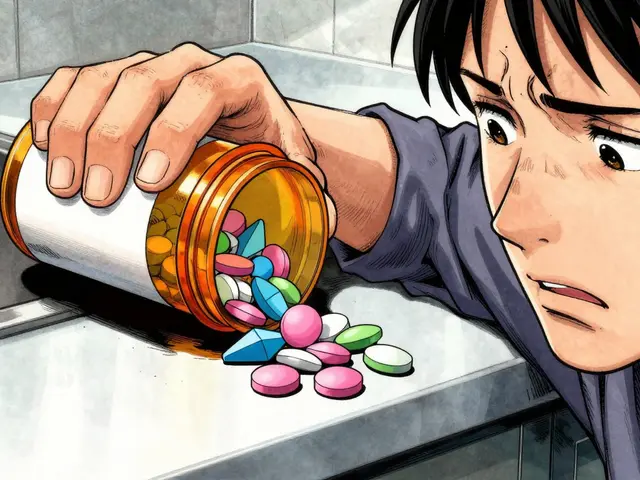
Generally, bioequivalence standards ensure that generics perform similarly to the brand. However, inactive ingredients (excipients) can vary between manufacturers. Rarely, these differences can cause allergic reactions or absorption issues in sensitive individuals. Accurate reporting helps identify if a specific manufacturer’s formulation causes unique problems.




Pearl Richardson September 2, 2026
It is with a heavy heart and a trembling hand that I must point out the glaring omission in this analysis: the pharmaceutical lobby. 🚩🚩🚩 We are told these rules are identical, but who writes the rules? The same entities that profit from the opacity of generic manufacturing. 💸 The data disparity you cite is not an accident; it is engineered obfuscation. When a patient cannot identify the manufacturer, they cannot hold them accountable, and when they cannot hold them accountable, the FDA remains blissfully ignorant until bodies pile up. 📉 This is not just a reporting issue; it is a systemic failure designed to protect capital over human life. I urge all readers to look beyond the surface-level statistics and question the incentives driving this lack of transparency. 🧐🔍
kishhore kumar September 4, 2026
this is so true i work in pharmacy and we face this daily 😟 the ndc lookup takes forever and half the time the label is worn off or the barcode scanner fails us. why cant they just print the company name on every single bottle like its 2024?? its insane how much safety data we lose because of bad labeling practices. we should be pushing for mandatory clear labels at the state level too if fda wont do it fast enough 👊
Sarah Kinch September 5, 2026
honestly most docs dont even care about the specific generic maker unless its a weird reaction. they just write 'generic' and move on. lazy. its easier to blame the system than admit nobody wants to spend 45 mins filling out medwatch for a headache pill. sad but true.
larry williams September 5, 2026
I appreciate the detailed breakdown here. It’s crucial for us as healthcare providers to remember that while the administrative burden is real, the potential impact on patient outcomes is far greater.
We often feel overwhelmed by the paperwork, yes, but consider the individual patient whose rare side effect goes unnoticed simply because the report was skipped due to uncertainty. Every single report contributes to the larger mosaic of drug safety. Let’s try to view these extra ten minutes not as a chore, but as an act of advocacy for our community. We have the power to make a difference, one form at a time. Stay strong, everyone. 💪🌟
Stephen Horn September 7, 2026
The notion that regulatory parity exists between brand-name and generic sponsors is a quaint fiction perpetuated by those who have never audited a pharmacovigilance department. One must acknowledge the profound asymmetry in resources. Brand manufacturers operate with deep pockets and dedicated teams; their smaller counterparts often rely on third-party contractors who view compliance as a checkbox rather than a mission. This is not merely a bureaucratic inefficiency; it is a structural flaw inherent in the current market dynamics. Until we enforce stricter liability frameworks that penalize non-compliance more severely than the cost of hiring staff, we will continue to fly blind. The FDA's recent initiatives are welcome, yet insufficient without teeth. 🦷
Tobi Oyewole September 7, 2026
This discourse highlights a fundamental tension between efficiency and safety in modern medicine. While the economic rationale for generics is sound-providing affordable access to essential medications-the trade-off in post-market surveillance visibility is a concern that demands philosophical consideration. Are we prioritizing quantity of access over quality of oversight?
I believe the solution lies in collaborative technology integration. If pharmacies can automate the capture of manufacturer data via existing barcode systems, we reduce the human error factor significantly. It is not about blaming providers for skipping reports; it is about designing systems that make doing the right thing the easiest option. We must approach this with empathy for the workload pressures faced by clinicians while maintaining rigorous standards for public health. A balanced perspective acknowledges both the systemic flaws and the practical limitations of those working within them.
Vivek Chaturvedi September 9, 2026
it is morally wrong to prioritize speed over accuracy in reporting. patients deserve to know exactly what they are taking. if a company cannot afford proper reporting then they should not be selling drugs. simple as that. no excuses.
fred eden September 9, 2026
This hits home for me. My mom had a severe reaction to a generic statin last year and we spent weeks trying to figure out which batch it was from. The stress was overwhelming 😰. Seeing articles like this validates that feeling of helplessness. It’s comforting to know there are efforts underway to fix this, even if progress feels slow. Thank you for shedding light on such an important but overlooked aspect of healthcare. 🙏❤️
Lolo Del September 11, 2026
Hey folks, great discussion here! Just wanted to add a friendly note: don't forget that switching manufacturers is actually quite common and usually totally safe. Bioequivalence studies are pretty robust. That said, yeah, the reporting gap is annoying. But let's not panic every time the pill color changes. Most of the time, it's just supply chain logistics, not a conspiracy. Keep your heads up and keep reporting those weird reactions though! You're doing good work. 😊👍
Harry Falk September 12, 2026
Understood. The resource gap is significant. Respectful nod to the smaller firms struggling with compliance. We need better tools for everyone involved.
Gurjit Singh September 13, 2026
The moral obligation falls squarely on the shoulders of the regulators to ensure that the cheapest option does not become the least safe option. It is unacceptable that financial constraints excuse ethical lapses in safety monitoring. We must demand higher standards. Period.