
Drug Safety Update Time Calculator
Compare Safety Update Times
See how much time is saved when drug safety updates are delivered via QR codes instead of traditional paper labels.
Time Savings Summary
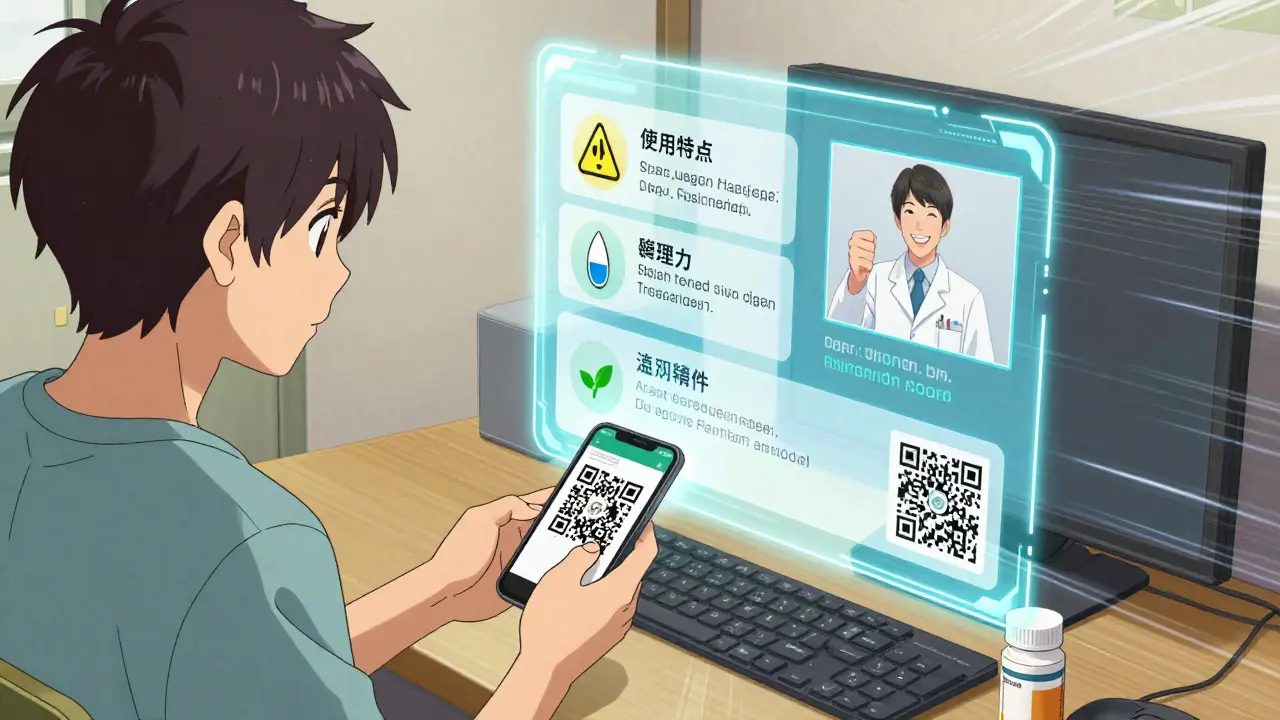
Imagine this: you pick up a new prescription, scan a tiny square on the bottle, and instantly see a video explaining exactly how to take it - including warnings you never knew were there. No flipping through tiny print. No waiting for a pamphlet to arrive in the mail. Just instant, accurate, up-to-date safety info. That’s not science fiction. It’s happening now.
Why QR Codes on Drug Labels? The Problem with Paper
For decades, drug labels have been static. Once printed, they’re stuck. If a new safety warning pops up - say, a rare but deadly side effect tied to a specific batch - the label doesn’t change. Pharmacies, hospitals, and patients keep using outdated info. That’s dangerous. In the last decade, regulators issued over 225 black box warnings worldwide. These are the highest-level safety alerts: "This drug can cause liver failure." "Do not use if pregnant." "Risk of sudden cardiac arrest." But updating printed labels? It can take months, even years, to roll out changes globally. By then, hundreds or thousands of people might have taken the drug without knowing the risk. QR codes fix this. Instead of printing a new label every time a warning changes, manufacturers link the code to a secure, cloud-based page. When a safety update is approved, the content behind the QR code updates automatically. No reprinting. No delays. Patients and providers get the latest info the moment it’s official.How It Works: More Than Just a Scan
Not all QR codes are created equal. Static QR codes just point to one fixed web page. If the info changes, you have to print a new label. That defeats the whole purpose. Pharmaceutical QR codes are dynamic. They’re connected to a central system that logs every update. When a new warning is issued, the manufacturer pushes the change to the cloud. The QR code itself doesn’t change - but what it links to does. It’s like updating a website, not a poster. The system also tracks who scans it. That’s not for spying. It’s for safety. If a pharmacist scans a code before counseling a patient, that action is logged. If a hospital nurse checks the info before administering a drug, it’s recorded. These logs help regulators trace how safety info is being used - and prove compliance during audits. Security is built in. The links are encrypted. The QR code can verify the drug’s lot number and expiration date. That helps fight counterfeits. If a fake pill has a fake QR code, it won’t connect to the manufacturer’s database. Real pills? They’ll pull up the correct, verified info.Real Benefits: Less Errors, Faster Responses
Hospitals that have tested this report real improvements. One facility in the UK saw patient understanding of complex drug regimens jump by 40% after switching to QR-linked instructions. Why? Because the info is clearer, more visual, and always current. Emergency responders benefit too. If a patient collapses and their meds are in the car, a paramedic can scan the label on the bottle and instantly see: "This drug interacts with blood thinners," or "Avoid alcohol completely." No more guessing. No more delays. Pharmacists love it. A 2024 survey found 85% prefer digital reporting for adverse reactions. Instead of filling out paper forms, they scan the code, click a button, and submit the issue directly to the manufacturer’s pharmacovigilance system. It’s faster, more accurate, and reduces human error. The European Federation of Pharmaceutical Industries and Associations (EFPIA) and the UK’s Association of the British Pharmaceutical Industry (ABPI) both updated their guidelines in 2024 to officially allow QR codes on drug labels. Spain led the way in 2021. Now, countries across Europe are following. Even U.S. military pharmacies started using them in 2022.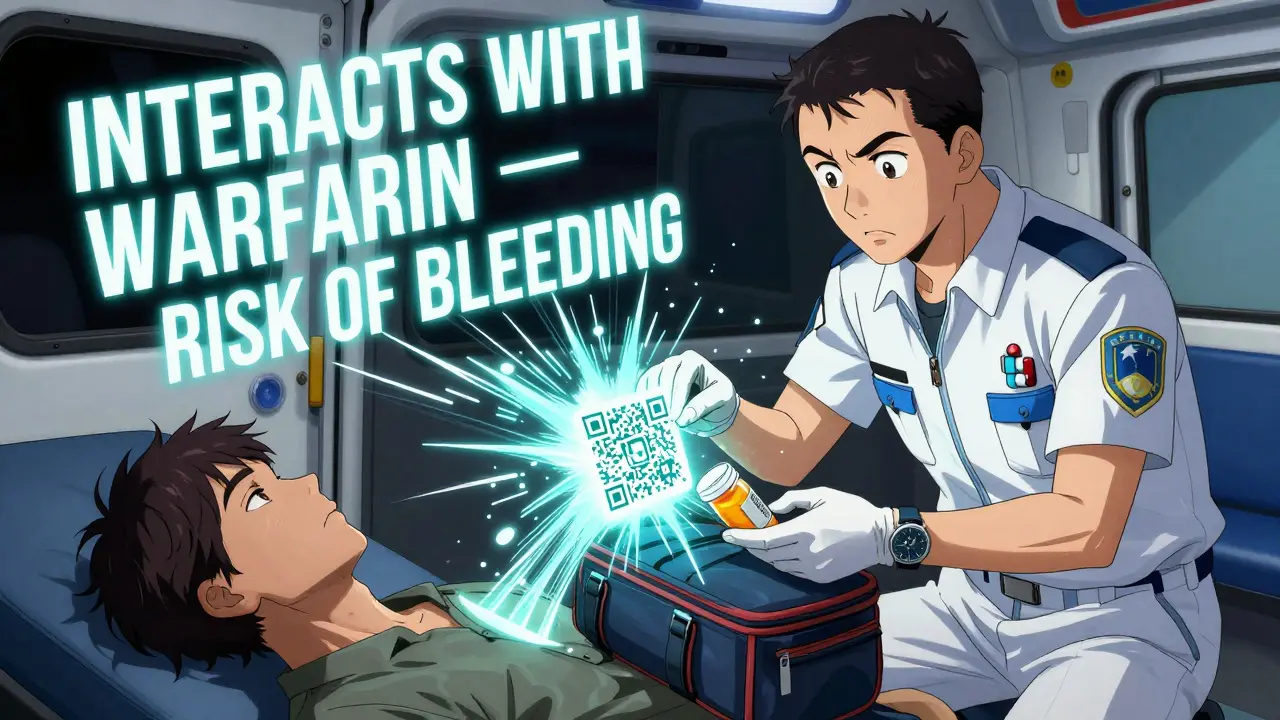
The Flip Side: Who Gets Left Behind?
It’s not perfect. Not everyone has a smartphone. Not everyone can use one. Elderly patients. Rural communities. People without reliable internet. In a March 2024 survey of three rural clinics, 60% of older patients couldn’t access the QR info because their phones didn’t work well or they didn’t know how to scan. This isn’t a tech problem. It’s an equity problem. If only digital users get full safety info, we’re creating a two-tier system. Those with smartphones get live updates. Those without? They’re stuck with outdated paper. The solution? Hybrid models. Leading companies like DosePacker include printed instructions alongside the QR code. Pharmacies offer scanning help at the counter. Some even have kiosks in waiting rooms. The goal isn’t to remove paper - it’s to enhance it. Regulators are aware. The FDA and EMA both stress that printed materials must remain available. QR codes are a supplement, not a replacement.What’s Next? AI, Global Sync, and the Future
This isn’t the end. It’s the beginning. By 2025, we’ll see QR codes linked to AI-powered tools that detect drug interactions in real time. Imagine scanning your pill, and your phone says: "You’re on warfarin - this new antibiotic increases your bleeding risk. Talk to your doctor." Global pharmacovigilance networks are already syncing. A safety alert in Germany can trigger an automatic update in Canada, Australia, and Japan - all within 90 days. That’s a huge leap from the old 18-month rollout. Apps like DosePacker’s MyDoses are connecting QR codes to medication trackers. Scan your pill, and it logs your dose. Miss a dose? Get a reminder. Need refills? The app auto-generates a request to your pharmacy. The market is growing fast. By 2025, e-labeling is expected to become standard across Europe and North America. Asia and Africa are slower, mostly due to infrastructure gaps. But the trend is clear: static labels are becoming obsolete.Who’s Making This Happen?
You won’t find QR codes on your meds because the drug maker suddenly got tech-savvy. It’s a team effort. Companies like sQR.me a specialized platform for dynamic pharmaceutical QR code management build the backend systems. Vodori a digital compliance partner helping pharma navigate global labeling regulations helps companies stay within legal boundaries. Freyr Solutions a regulatory consulting firm that advises on QR code implementation for patient safety trains staff and tests scanning reliability. It takes regulatory experts, IT teams, patient safety officers, and even UX designers to make sure the QR experience is simple, secure, and accessible.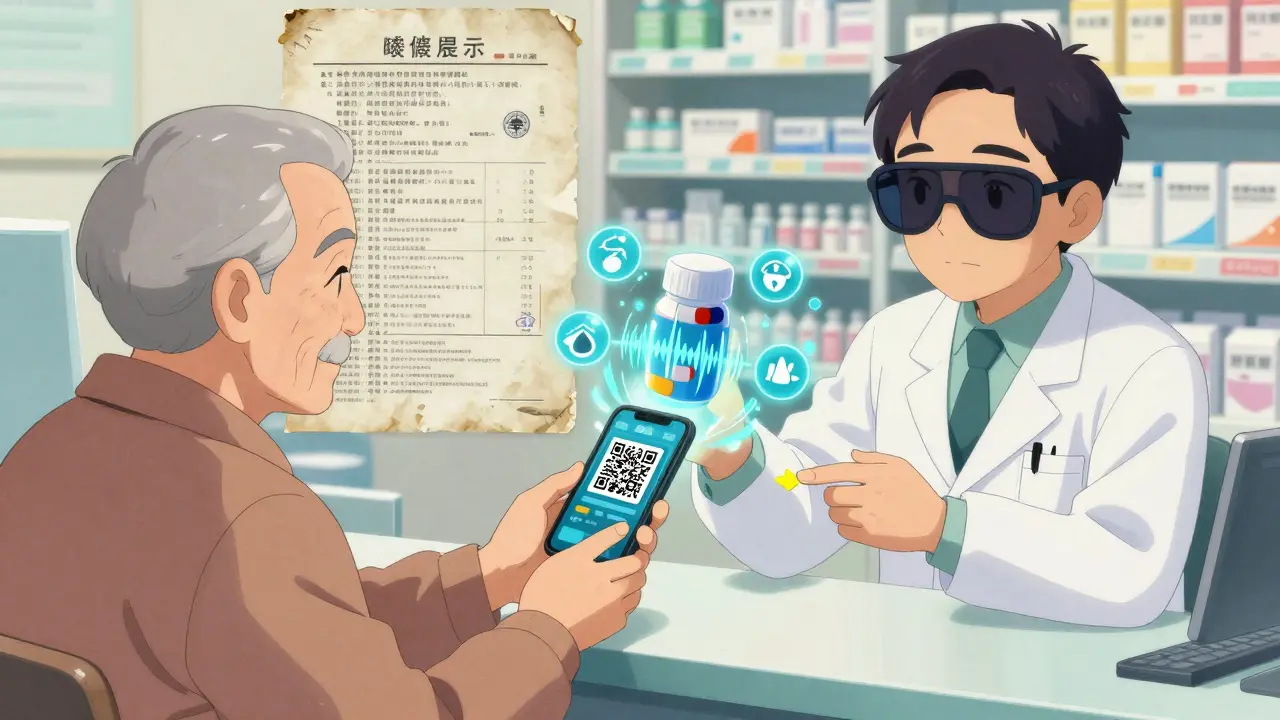
What Patients and Providers Should Do Now
If your prescription has a QR code, scan it. Use your phone’s camera - no app needed. You’ll land on a secure page with:- Full prescribing info
- Updated warnings and contraindications
- Instructions for storage and handling
- How to report side effects
- Video or audio explanations (in some cases)
FAQ
Are QR codes on drug labels safe to scan?
Yes. The links are encrypted and hosted on secure, manufacturer-controlled servers. They don’t collect personal data unless you choose to log in to a patient portal. Scanning a QR code on your medication is like visiting a secure website - it’s designed to protect your privacy.
Can QR codes be faked or hacked?
It’s very hard. Real pharmaceutical QR codes are tied to unique product identifiers - like lot numbers and batch codes. A fake code won’t connect to the manufacturer’s database. If you scan and get an error, or the page looks suspicious, don’t use the drug. Contact your pharmacist immediately.
Do I need an app to scan QR codes on my meds?
No. Modern smartphones can scan QR codes using the built-in camera app. Just open your camera, point it at the code, and wait for the link to appear. No download needed.
What if I don’t have a smartphone?
You’ll still get printed information with your prescription. Regulations require that printed leaflets remain available. Pharmacies also offer scanning assistance - just ask a staff member. The goal is to make digital access optional, not mandatory.
How often are the QR code updates made?
Updates happen as soon as regulators approve them - often within hours. The system is designed for speed. A critical safety alert can be live on the QR code within 24 hours, compared to months for printed changes.
Are QR codes used only in Europe?
No. While Europe led adoption, the U.S. military began using them in 2022. Canada, Australia, and parts of Asia are testing pilots. The trend is global, though adoption speed depends on local regulations and infrastructure.


Sarah Barrett February 15, 2026
It’s wild how something as simple as a QR code can flip the script on patient safety. I scanned my new anticoagulant label last week and got a 3-minute animated video showing exactly how alcohol and NSAIDs interact with it - stuff the pamphlet never mentioned. No jargon, no tiny print, just clear visuals. It felt like the pharmaceutical industry finally remembered that humans, not robots, take these pills.
And honestly? It’s the quietest revolution. No fanfare, no press releases. Just a little square on a bottle that quietly prevents mistakes. I’ve started scanning every new script, even if I’ve taken it before. You never know what’s been updated since your last refill.
Pharmacists should be trained to demo this too. Not just hand you the bottle and say ‘read the leaflet.’ Show them. Let them see the difference. It’s not tech for tech’s sake - it’s empathy encoded in a matrix.
Erica Banatao Darilag February 15, 2026
i just scanned my blood pressure med qr code and it showed a warning about grapefruit that i didnt know about… i’ve been taking this for 3 years. this is huge. i dont even know how to use qr codes properly but my phone just auto-detected it and opened the page. no app needed. thank god. i think this could save so many people. my mom cant use smartphones but the paper copy is still there so its okay. i hope more countries do this. its not perfect but its a step forward. i’m not techy but even i get it.
Michael Page February 17, 2026
The underlying assumption here is that safety is a problem of information dissemination, rather than systemic fragility. QR codes don’t fix the fact that drug approval processes are reactive, not predictive. They don’t address the profit-driven incentives that delay safety updates in the first place. They merely make the delay less visible.
It’s a digital bandage on a hemorrhaging system. The real innovation would be mandatory real-time adverse event reporting from all prescribers, integrated with AI-driven risk modeling - not a static QR link that updates only after regulatory bureaucracy grinds to a halt.
Also, ‘no app needed’ is a lie. If your phone’s OS doesn’t auto-detect QR codes - and many budget devices don’t - you’re out of luck. This isn’t universal access. It’s convenience for the digitally privileged.
Charlotte Dacre February 18, 2026
Oh wow, so now my medicine has a QR code instead of a warning label that says ‘this might kill you’? How revolutionary. Next they’ll put a TikTok link on my insulin bottle so I can watch a 15-second video on how to not die from hypoglycemia.
Let’s be real - if your life depends on reading a tiny label and you don’t have a smartphone, you’re already one step from the morgue. This isn’t innovation. It’s a luxury feature disguised as public health. Bravo, pharma. You’ve turned medical safety into a premium subscription service.
Kapil Verma February 19, 2026
India has been doing this for decades - we have barcodes on every medicine that link to central databases. You think this is some Western miracle? No. This is just the rest of the world catching up. We have over 100,000 pharmacies scanning and verifying drug authenticity daily. Our government mandates it. No QR code? No sale. No exceptions.
Why is America so slow? Because they love paperwork. Because they love profit over people. This isn’t tech - it’s governance. And the U.S. is still stuck in the 1980s while countries like India and Brazil are already ahead. Stop pretending innovation came from Silicon Valley. It came from necessity - and we had it first.
Mandeep Singh February 20, 2026
Let me break this down for you because clearly, most people here don’t understand how complex this really is. QR codes on drug labels are not just about scanning - they’re about building a real-time pharmacovigilance network that integrates with EHRs, pharmacy dispensing systems, and global regulatory databases. The infrastructure required? It’s massive. Every lot number, every batch, every expiration date, every adverse event report - all synchronized across continents. This isn’t a gimmick. This is the backbone of 21st-century clinical safety.
And don’t even get me started on the fact that the FDA and EMA are now legally requiring manufacturers to maintain these dynamic links. That’s not optional. That’s regulatory compliance at scale. The fact that you think this is ‘just a QR code’ shows you have no idea how pharmaceutical regulation actually works. This is the future, and you’re still stuck on paper leaflets from 1997.
Also - the claim that elderly patients can’t use it? That’s not a flaw in the system. That’s a failure of social support. Pharmacies should have kiosks. Community centers should offer scanning help. This isn’t about tech literacy - it’s about equity, and if you can’t see that, you’re part of the problem.
Betty Kirby February 20, 2026
Let’s be honest - this whole QR code push is just pharma’s way of dodging liability. If a patient dies and they scanned the code and didn’t read the warning? ‘We provided it.’ If they didn’t scan? ‘It was printed on the label.’ Either way, they’re covered.
And let’s not pretend the ‘secure, encrypted’ links aren’t vulnerable. Hackers don’t need to break into the database - they just need to spoof a QR code on a counterfeit pill. One fake batch, one cleverly designed link, and you’ve got people taking lethal combinations because the system looked legit.
This isn’t safety. It’s theater. Beautiful, shiny, digital theater. And we’re all supposed to clap because it’s ‘innovative.’ Meanwhile, real people are still dying because the system prioritizes optics over outcomes.
Josiah Demara February 21, 2026
You’re all missing the point. This isn’t about safety. It’s about control. QR codes create a digital trail. Every scan. Every location. Every time a nurse or pharmacist accesses the info - logged. Who’s owning that data? The manufacturer. The distributor. The pharmacy chain. Not you. Not the patient.
This isn’t transparency. It’s surveillance dressed in white coats. And don’t tell me ‘it’s encrypted’ - encryption doesn’t stop data aggregation. It doesn’t stop profiling. It doesn’t stop insurance companies from seeing that you scanned a psychiatric med three times last month.
The FDA says printed materials must remain - great. Then why is every new label smaller? Why is the QR code bigger? Why are pharmacies training staff to ‘guide’ patients to scan instead of read? Because they want you dependent on the system.
This isn’t progress. It’s a quiet power grab. And you’re all too busy being impressed by the tech to notice the cage being built.