
Linezolid & Tyramine Interaction Calculator
Estimate your tyramine intake and check for hypertensive crisis risk while taking Linezolid. The danger threshold is generally considered to be 100mg.
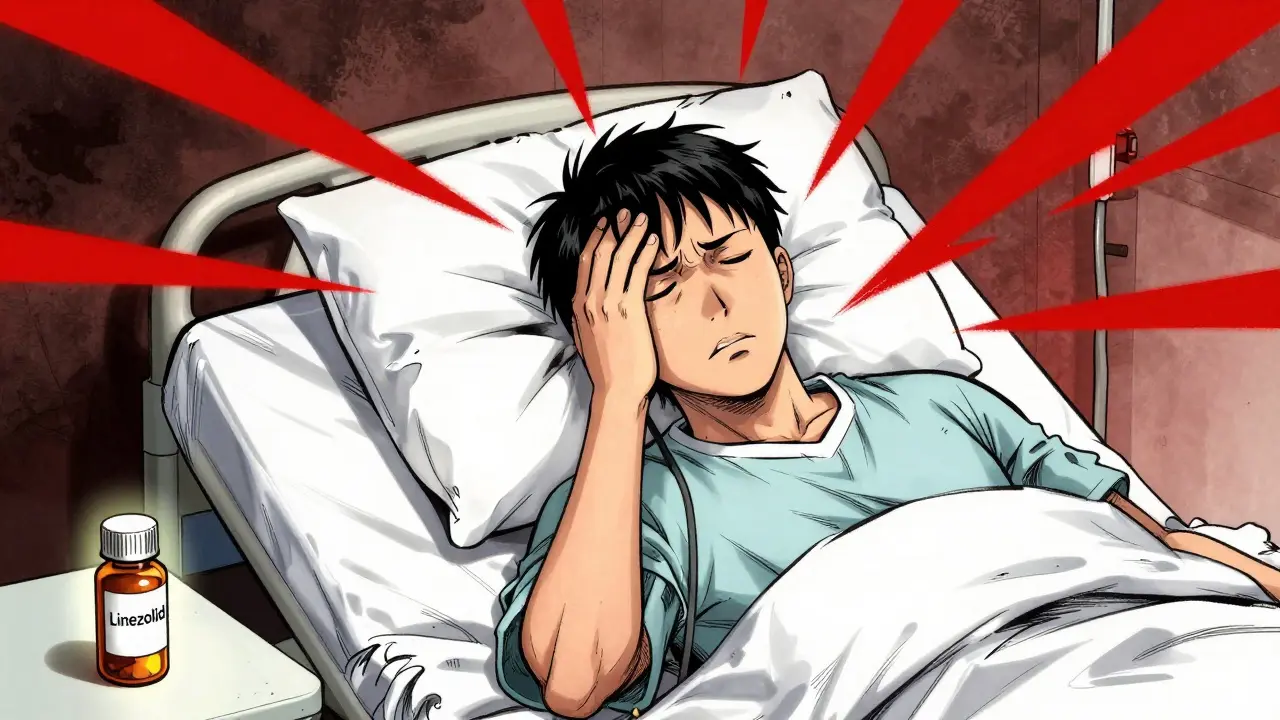
Imagine you are finally recovering from a stubborn bacterial infection. You have been taking Linezolid, a powerful antibiotic used for serious Gram-positive infections like MRSA and VRE. It is working. But then, without warning, your head pounds, your vision blurs, and your heart hammers against your ribs like it wants to escape. Your blood pressure has skyrocketed. This is not just a bad headache; it could be a hypertensive crisis, a life-threatening spike in blood pressure triggered by the interaction between linezolid and certain foods.
This scary scenario happens because linezolid does more than kill bacteria. It also acts as a weak monoamine oxidase inhibitor (MAOI). If you eat foods high in tyramine, a naturally occurring compound found in aged, fermented, or spoiled protein-rich foods. while on this medication, your body cannot break it down properly. The result is a dangerous release of norepinephrine that constricts your blood vessels rapidly. Understanding exactly what to avoid, how long to wait after treatment, and when you might be safe eating normally is critical for staying out of the emergency room.
Why Linezolid Reacts with Tyramine
To understand the risk, we need to look at how your body handles chemicals. Normally, an enzyme called monoamine oxidase (MAO) breaks down tyramine in your gut before it can cause trouble. Think of MAO as a cleanup crew. Linezolid temporarily disables part of this crew. It inhibits about 30-40% of MAO-A activity at standard therapeutic doses (600 mg twice daily). This is much weaker than traditional psychiatric MAOIs, which inhibit 80-90%, but it is still enough to let tyramine slip through the cracks.
When tyramine enters your bloodstream unchecked, it forces your nerve endings to dump stored norepinephrine. Norepinephrine is the chemical that tells your blood vessels to tighten up. A sudden flood of it causes severe vasoconstriction. According to FDA prescribing information updated in January 2025, consuming more than 100 mg of tyramine while on linezolid can trigger a significant pressor response. We are talking about systolic blood pressure jumps of 30-50 mmHg within just 30 to 120 minutes of eating. That is fast, and it is dangerous.
The 100mg Threshold: What Is Safe?
You do not need to panic over every bite, but you do need to know the numbers. The danger zone generally starts around 100 mg of tyramine. Individual sensitivity varies due to genetic differences in MAO enzymes, so some people might react to less. However, knowing the tyramine content in common foods helps you make smart choices.
| Food Item | Tyramine Level (Approximate) | Risk Status on Linezolid |
|---|---|---|
| Fresh meat, poultry, fish | < 2 mg per 100g | Safe |
| Fresh fruits and vegetables | < 2 mg per 100g | Safe | d>
| Soy sauce | 6-30 mg per 100ml | Caution (limit quantity) |
| Tap beer | 8-70 mg per 100ml | Avoid |
| Dry fermented sausages (salami, pepperoni) | 50-200 mg per 100g | Avoid |
| Aged cheeses (Cheddar, Swiss, Blue) | 50-400 mg per 100g | Avoid |
Notice the difference between fresh and processed. Fresh proteins are low risk. As soon as you introduce aging, fermentation, smoking, or improper storage, tyramine levels skyrocket. Protein decomposition creates tyramine. That is why game meats, liver, pâté, and any meat that has been sitting out too long are particularly risky.
Hospital vs. Home: Different Rules Apply
If you are currently hospitalized, take a deep breath. The rules are different for you. A pivotal 2010 study published in Nutrition in Clinical Practice by Dr. Martha M. Rumore and her team at NewYork-Presbyterian Hospital changed how hospitals handle this. They analyzed standard hospital meal programs and found they typically contain less than 6 mg of tyramine per meal. Even a full day of hospital food rarely exceeds 42 mg-well below the 100 mg danger threshold.
Because of this evidence, most US hospitals (about 95%) no longer put linezolid patients on strict "MAOI diets." The NHS England MAOI Diet Sheet also reflects this nuance for inpatients, suggesting that avoiding specific high-risk items is sufficient rather than banning entire food groups. However, if you are taking linezolid at home, you are responsible for your own kitchen. There is no chef controlling your ingredients. Outpatient protocols require strict adherence to dietary restrictions because you might buy a block of aged cheddar or open a bottle of craft beer without realizing the risk.
What to Avoid: The Practical List
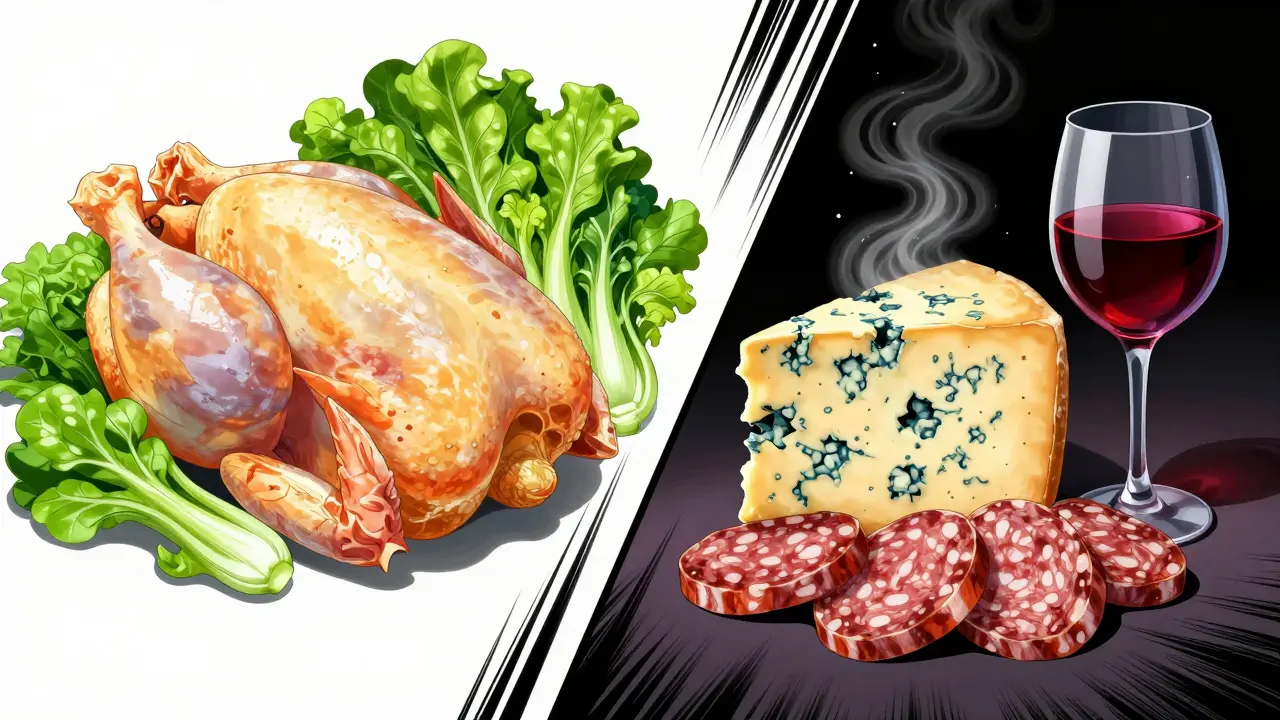
Dr. Brian Staiger, a clinical pharmacist, emphasizes in his 2025 guidance that patients must completely avoid high-tyramine foods during treatment. Here is what needs to stay off your plate:
- Aged Cheeses: Cheddar, Swiss, Gouda, Blue cheese, Brie, Camembert. Stick to fresh cottage cheese, cream cheese, or mozzarella if necessary, but check labels.
- Fermented Meats: Salami, pepperoni, summer sausage, hot dogs, bologna. These are cured and aged, making them tyramine bombs.
- Alcohol: Red wine (especially Chianti), tap beers, bottled/canned beers, ales, vermouth, liqueurs, homemade wines, and champagne. Tap beer is particularly unpredictable because yeast continues to ferment.
- Condiments: Soy sauce, teriyaki sauce, Worcestershire sauce, fava beans, broad bean pods.
- Leftovers: Meat that has been refrigerated for more than 24 hours starts accumulating tyramine. Eat it fresh or freeze it immediately.
What can you eat? Freshly cooked chicken, beef, or fish. Fresh fruits and vegetables (avoid overripe bananas or avocados if you are extremely cautious, though they are generally lower risk than aged products). Decaffeinated tea and coffee are usually fine. Plain crisps (chips) are safe. Small amounts of white wine (one unit) and chocolate in moderation are often permitted by guidelines like the NHS sheet, but individual tolerance varies. When in doubt, skip it.
The Critical 14-Day Wait After Treatment
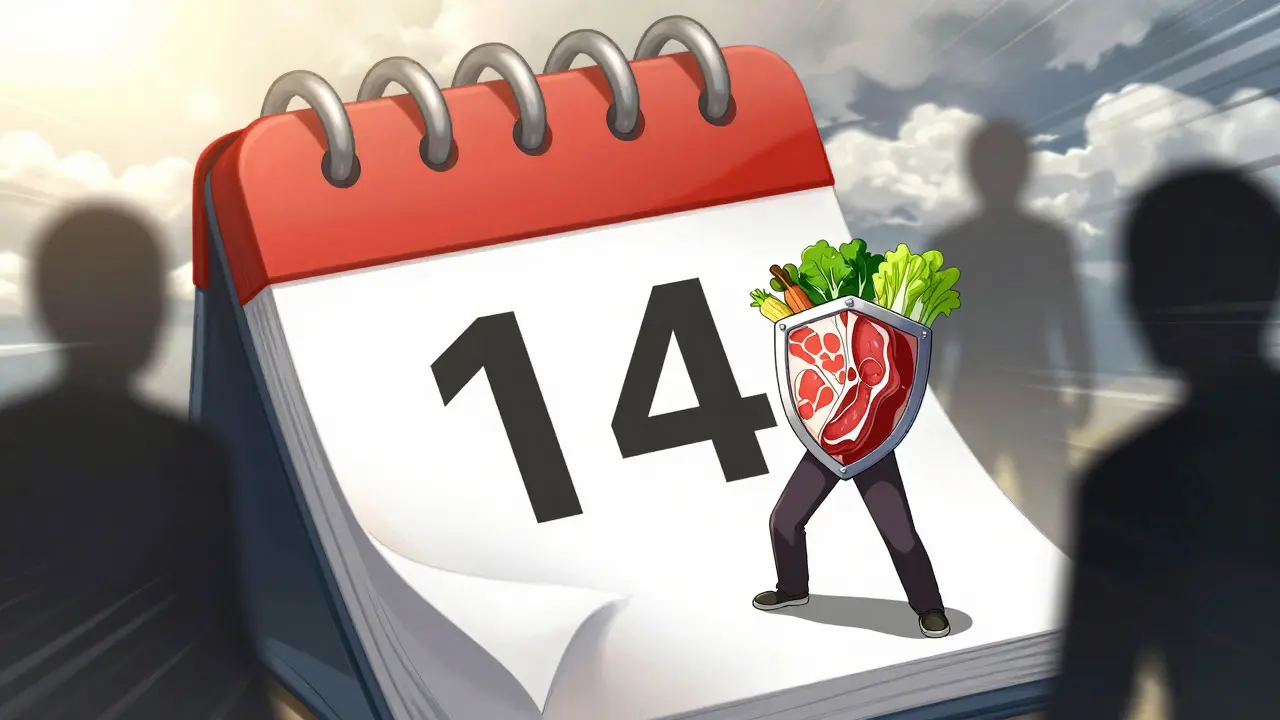
Your treatment ends, but the risk does not vanish immediately. This is where many patients make a fatal error. Linezolid has an elimination half-life of about 5 hours, meaning the drug leaves your system relatively quickly. However, its effect on MAO enzymes lingers. The inhibition is reversible, but it takes time for your body to regenerate enough active enzyme to handle tyramine again.
Expert consensus, including the Infectious Diseases Society of America (IDSA) 2024 guidelines and Dr. Staiger’s analysis, states you must wait at least 14 days after your last dose of linezolid before resuming a normal diet with high-tyramine foods. Why two weeks? Pharmacokinetic studies show this period allows MAO enzyme activity to return to baseline function. Jumping back into blue cheese or red wine on day 3 post-treatment is a recipe for disaster. In fact, data suggests that 78% of adverse events occur when patients resume high-tyramine diets too soon after completing therapy.
Recognizing the Warning Signs
Even with careful planning, mistakes happen. Knowing the symptoms of a tyramine-induced hypertensive crisis can save your life. Watch for these signs within 30 to 120 minutes of eating suspect foods:
- Severe Headache: Often described as a pounding sensation, typically starting at the back of the head.
- Neck Stiffness: A tight feeling in the neck muscles.
- Nausea and Vomiting: Sudden onset gastrointestinal distress.
- Heart Palpitations: Feeling your heart race, flutter, or beat irregularly.
- Sweating and Flushing: Unexplained sweating or skin redness.
- Vision Changes: Blurred vision or seeing spots.
If you experience these symptoms, check your blood pressure if you have a home monitor. If it is significantly elevated (e.g., systolic >180 mmHg), seek emergency medical attention immediately. Do not wait to see if it passes. Tell the medical staff you are taking or recently took linezolid and may have consumed tyramine. They may administer medications like phentolamine to reverse the vasoconstriction.
Practical Tips for Patients
Living with these restrictions for weeks can feel isolating, especially if you enjoy cooking or dining out. Here is how to manage it without losing your mind:
- Read Labels Religiously: Look for words like "fermented," "aged," "cured," or "smoked." If it sounds old, it probably has tyramine.
- Cook Fresh: Buy raw meat and cook it yourself. Avoid deli counters unless you can verify the product was made that day and kept cold.
- Communicate with Healthcare Providers: Ensure your doctor and pharmacist know you are on linezolid. Ask for a printed diet sheet. Studies show only 45% of outpatients receive adequate counseling, so you may need to ask explicitly.
- Plan Meals Ahead: Don't rely on impulse buys. Prepare meals using fresh ingredients. Grilled chicken salad with fresh veggies is your friend.
- Avoid Leftovers: Cook single servings. If you must store food, freeze it immediately. Refrigerated leftovers accumulate tyramine over time.
Why This Matters Beyond One Meal
Linezolid remains a critical weapon in our fight against multidrug-resistant bacteria like MRSA and VRE. Its global sales reached $1.2 billion in 2023, reflecting its importance. However, its use is deliberately limited to preserve efficacy. Misusing it or causing adverse events through dietary errors undermines its value. By respecting the tyramine restriction, you protect your own health and help ensure this vital antibiotic remains available for those who need it most.
The European Medicines Agency characterizes the risk as "moderate" with proper management, while the FDA emphasizes the severity of pressor responses. Both agree on one thing: education is key. You are the final line of defense. Your awareness prevents the crisis.