

When someone takes too much of a sedative or sleep medication, their body doesn’t just feel sleepy-it starts shutting down. This isn’t just being tired. It’s a medical emergency that can kill in minutes if you don’t act. Every year, over 12,500 people in the U.S. die from overdoses involving benzodiazepines and other sleep drugs. Many of these deaths happen because the warning signs are mistaken for normal drowsiness. You might think your friend is just passed out from a long day. But if they can’t wake up, aren’t breathing normally, or have blue lips, you’re looking at an overdose-and time is running out.
What Happens in the Body During a Sedative Overdose?
Sedatives like zolpidem (Ambien), eszopiclone (Lunesta), temazepam (Restoril), and benzodiazepines like alprazolam (Xanax) slow down your central nervous system. They’re meant to calm your brain so you can sleep. But when too much enters your bloodstream, they don’t just calm you-they silence your body’s vital functions.
The brain loses control of breathing. Your lungs stop pushing air in and out at a normal rate. Instead of 12 to 20 breaths per minute, you might take fewer than 8. Each breath becomes shallow, barely lifting the chest. Oxygen levels drop. Your lips, fingertips, and nails turn blue-that’s cyanosis, a clear sign your body isn’t getting enough oxygen. Your heart rate slows. Your body temperature falls. You become cold and clammy. Eventually, breathing stops entirely. That’s when death can happen.
Unlike opioid overdoses, which often cause pinpoint pupils, sedative overdoses usually don’t change your pupils much. Instead, you’ll see extreme drowsiness, slurred speech, and uncoordinated movements-like someone who’s drunk, but hasn’t had a drop of alcohol. This is why many people miss the signs. They assume the person is just deeply asleep.
The Warning Signs You Can’t Ignore
There’s a clear progression in sedative overdose. It doesn’t happen all at once. Here’s what to watch for, in order:
- Extreme drowsiness-not just sleepy, but unable to stay awake even when shaken or spoken to loudly.
- Slurred speech-words are mumbled, hard to understand, like the person is drunk.
- Unresponsiveness-no reaction to loud shouting or a firm sternal rub (pressing firmly on the breastbone).
- Slow, shallow breathing-count breaths for 30 seconds. If it’s less than 6 breaths in that time (under 12 per minute), that’s a red flag.
- Cyanosis-blue or gray color on lips, fingernails, or skin around the mouth.
- Cold, clammy skin-body temperature drops below 95°F (35°C).
- Coma-Glasgow Coma Scale score below 8. They’re completely unresponsive, eyes closed, no movement.
These signs don’t always show up together, but if you see two or more-especially unresponsiveness and slow breathing-you need to act now. A 2022 study found that 68% of bystanders waited too long because they thought the person was just “deep asleep.” That delay cost lives.
Not All Sleep Medications Are the Same
Overdose risks vary by drug type. Prescription benzodiazepines and Z-drugs like Ambien carry high risks when taken in excess, especially if mixed with alcohol or opioids. Barbiturates-older sedatives still used in some cases-are even more dangerous. They cause respiratory failure at lower doses and have a higher death rate.
Over-the-counter sleep aids are often thought to be safe. But drugs like diphenhydramine (found in Benadryl, Tylenol PM, and ZzzQuil) can overdose too. At high doses, they cause extreme drowsiness, dry mouth, trouble urinating, and even hallucinations or seizures. Melatonin, on the other hand, is far less dangerous. Even doses 60 times higher than normal rarely cause breathing problems.
The real danger comes from mixing. Nearly 23% of benzodiazepine-related deaths in 2021 also involved fentanyl. Alcohol makes sedatives work faster and stronger. One drink with a sleeping pill can be enough to tip someone into overdose. If you see empty bottles of multiple medications on the nightstand, or an open bottle of wine next to the pills-that’s a major red flag.
What to Do If You Suspect an Overdose
You don’t need to be a doctor to save a life. Follow this simple checklist:
- Check responsiveness. Shake the person’s shoulders and shout their name. If they don’t respond, move to step two.
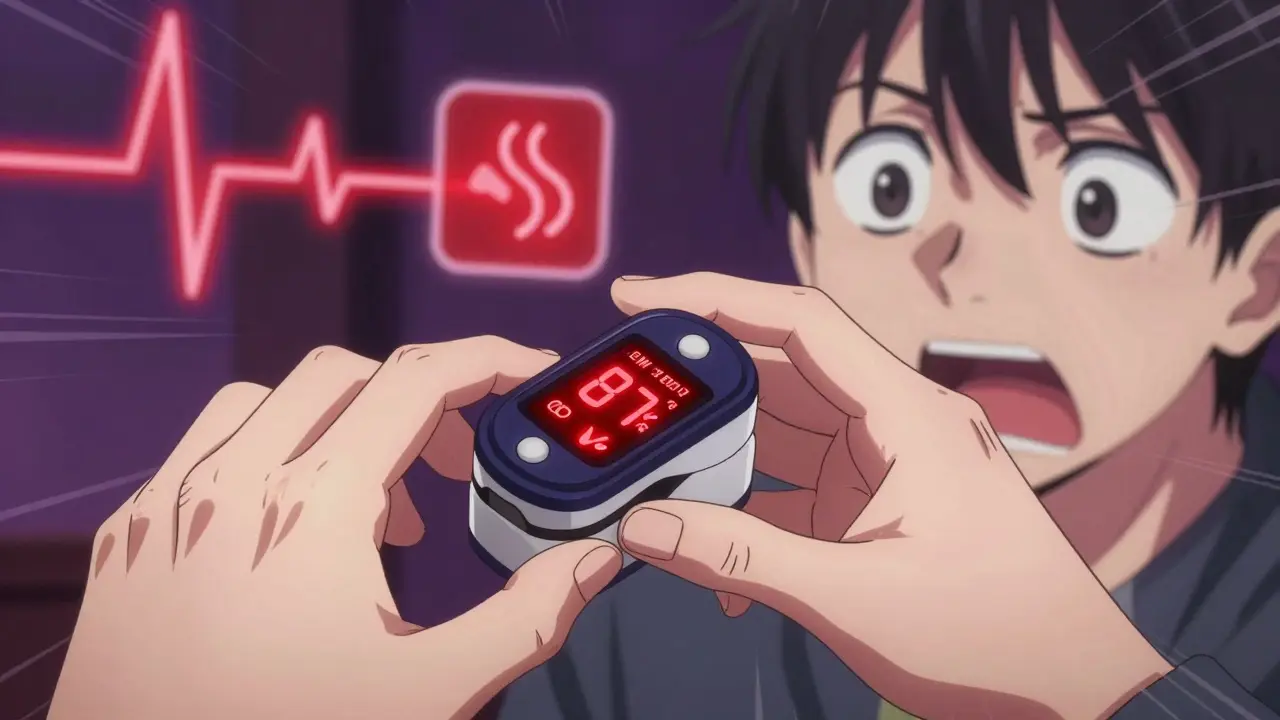
- Check breathing. Look at their chest. Count breaths for 30 seconds. If it’s fewer than 6 breaths, or if breaths are shallow and irregular, call emergency services immediately.
- Check for blue lips or skin. Cyanosis means oxygen is failing. This is a hard stop-don’t wait.
- Call 999 (UK) or 911 (US). Say: “I think someone is overdosing on sleeping pills.” Give your location. Don’t hang up until they tell you to.
- Start rescue breathing if they’re not breathing. Tilt their head back, lift their chin, pinch their nose, and give one breath every 5 seconds. Don’t stop until help arrives.
- Don’t give them coffee, cold showers, or induce vomiting. These don’t help and can make things worse.
- Don’t try to give flumazenil. That’s the only antidote for benzodiazepines, but it can trigger seizures in people who are dependent. Only trained medics should use it.
Every minute counts. A 2022 meta-analysis found that for every minute you delay calling for help after noticing slow breathing, the chance of survival drops by 7-10%.
Why People Miss the Signs-and How to Prevent It
Most overdoses happen at home. A roommate, partner, or family member finds someone unresponsive and assumes they’re just exhausted. Reddit threads from r/OverdoseHelp are full of stories like: “I thought my boyfriend was just tired from work,” or “I figured the slurred speech was from drinking.”
The problem isn’t ignorance-it’s normalization. Sedatives are prescribed so often that people forget how dangerous they are. In 2021, 9.5 million Americans misused prescription sedatives. The CDC reports a 218% increase in overdose deaths since 2010. Even doctors have been slow to warn patients about the risks.
That’s why public health campaigns like California’s “Don’t Die” program are critical. They hand out simple cards at pharmacies listing the signs of overdose. Early results show a 22% improvement in bystander recognition. You can do the same. Keep a printed copy of the warning signs on your fridge. Talk to your family about what to do if someone doesn’t wake up. Share this information with anyone who takes sleep meds-even if they’re “just for a few nights.”
What Happens After Emergency Help Arrives?
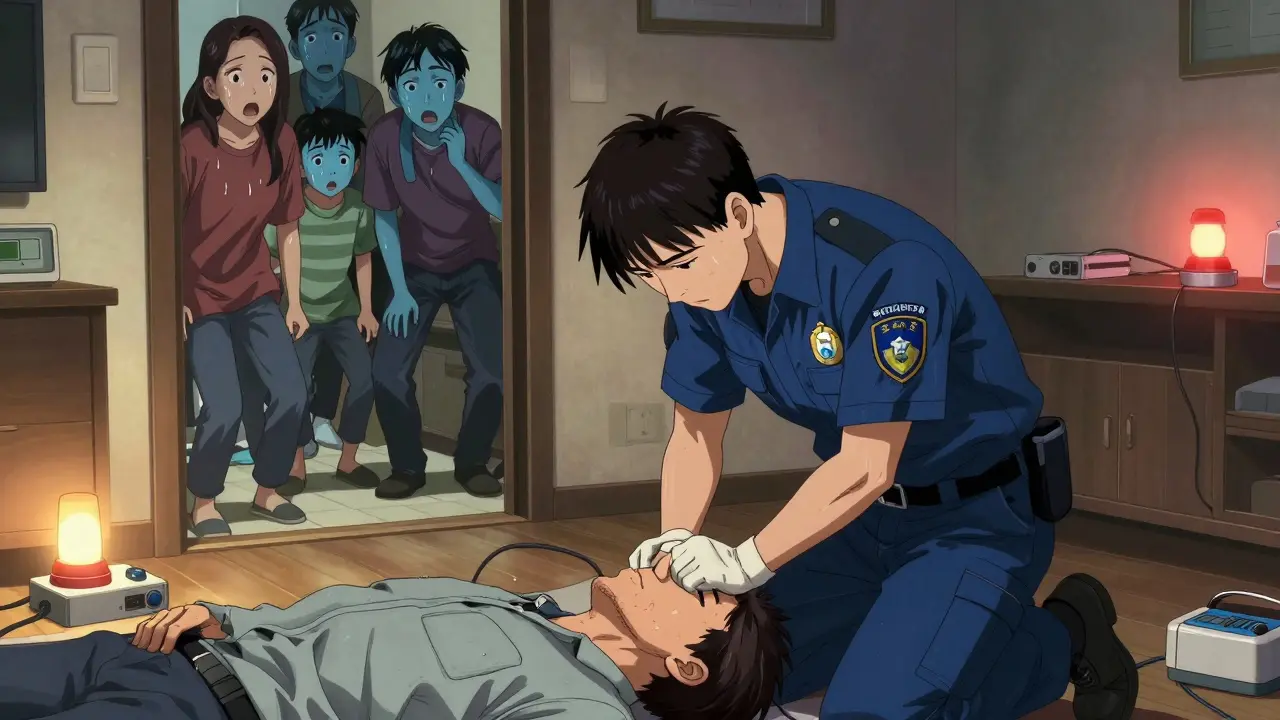
Paramedics will check oxygen levels with a pulse oximeter. If it’s below 92%, they’ll give oxygen. If breathing is too slow or stopped, they’ll use a bag-valve mask to force air into the lungs. They may give intravenous fluids to support blood pressure. In severe cases, they’ll intubate-the person gets a tube down the throat to keep the airway open.
At the hospital, they’ll monitor vital signs for hours. Blood tests confirm which drug was taken. If it’s a benzodiazepine, they might give flumazenil-but only if there’s no history of dependence. Otherwise, the risk of seizures is too high.
Recovery is possible if help comes in time. But brain damage can occur if oxygen is cut off for more than a few minutes. That’s why speed matters more than anything.
What You Can Do Today
Don’t wait for a crisis. If you or someone you know takes sedatives:
- Keep only a 7-day supply at home-don’t stockpile.
- Never mix with alcohol, opioids, or other depressants.
- Store pills in a locked box, out of reach of others.
- Know the signs of overdose and practice them with a friend.
- Download a free overdose recognition card from your local health department.
- If you’re worried about dependence, talk to your doctor about tapering off safely.
Sedatives aren’t harmless. They’re powerful drugs with quiet, deadly risks. Recognizing an overdose isn’t about being a hero-it’s about knowing when to act before it’s too late. Your quick response could be the difference between life and death.
Can you overdose on melatonin?
Yes, you can take too much melatonin, but it rarely causes life-threatening symptoms. Even doses as high as 240mg (60 times the normal dose) typically only cause headaches, dizziness, or nausea. Unlike prescription sedatives, melatonin doesn’t suppress breathing or cause coma. It’s far safer, but still not risk-free.
Is flumazenil safe to give at home?
No. Flumazenil is the only antidote for benzodiazepine overdose, but it’s dangerous outside a hospital. If someone has been using sedatives regularly, giving flumazenil can trigger seizures, heart rhythm problems, or even death. Only trained medical staff should administer it. Never try to use it yourself.
Can you overdose on sleep meds without mixing them with alcohol?
Yes. Pure sedative overdoses can be fatal. While mixing with alcohol or opioids increases the risk dramatically, taking just 10-20 times the prescribed dose of zolpidem or alprazolam can cause respiratory depression and death. The body doesn’t need alcohol to shut down-too much of the drug alone is enough.
How long does it take for sedative overdose symptoms to appear?
It depends on the drug and how it was taken. Oral doses usually start working within 30-60 minutes. Peak effects happen in 1-2 hours. But with extended-release pills or if someone has liver problems, symptoms can take longer to show. The danger is that symptoms can seem mild at first-just drowsiness-then suddenly worsen. Don’t wait for them to get worse.
Are older adults more at risk for sedative overdose?
Yes. Older adults metabolize sedatives more slowly, so even standard doses can build up in their system. They’re also more likely to have other health conditions or take multiple medications that interact. The CDC reports that adults over 65 have higher rates of sedative-related ER visits. Doctors often prescribe these drugs for insomnia, but the risks often outweigh the benefits in this age group.
What should I do if someone wakes up after seeming to overdose?
Even if they seem fine, they still need medical evaluation. Sedatives can have delayed effects, and breathing can slow again hours later. Some people wake up confused or agitated, which can mask ongoing respiratory depression. Call emergency services anyway. It’s better to be safe.
Final Thoughts: Don’t Wait Until It’s Too Late
Sedative overdoses don’t come with sirens or dramatic collapses. They happen quietly, in bedrooms and living rooms, often with someone nearby who thinks they’re just sleeping. But if you know the signs-unresponsiveness, slow breathing, blue lips-you can act. You don’t need a medical degree. You just need to recognize that this isn’t sleep. It’s a fight for life.
Keep the facts handy. Talk to your family. Know what to do. Because when seconds count, you won’t have time to look it up.
Ryan Riesterer January 22, 2026
Per the 2022 meta-analysis referenced, the 7-10% per-minute mortality increase correlates strongly with respiratory depression onset. The critical window for intervention is <10 minutes post-cyanosis. Pulse oximetry readings below 90% are a hard endpoint-any delay beyond that is clinically indefensible. This isn’t speculation; it’s neurorespiratory physiology.
Akriti Jain January 23, 2026
So… the government’s just letting Big Pharma kill people with sleep meds? 🤔😂 Meanwhile, they’re banning melatonin in 12 countries because it’s ‘too safe’? 🤯 #WakeUpAmerica #SleepDrugConspiracy
Mike P January 24, 2026
Y’all are overcomplicating this. If someone’s blue and won’t wake up, call 911. That’s it. No PhD needed. People in other countries don’t have time for this ‘study this, cite that’ nonsense. We fix problems, not write essays. If you’re reading this instead of checking on your buddy, you’re already too late. Stop being a coward.
Jasmine Bryant January 24, 2026
Just wanted to say thanks for this-really clear breakdown. One thing I’d add: even if someone seems to wake up after an overdose, they can still crash again later. I saw a friend do this after mixing Ambien with wine. Thought she was fine, but 4 hours later she was gasping. EMS saved her. Don’t skip the ER even if they ‘feel okay’.
Margaret Khaemba January 26, 2026
This is so important, especially for older folks in my community. My aunt takes Restoril and doesn’t realize how dangerous it is with her blood pressure meds. I printed out the warning signs and taped them to her fridge. She even showed her book club! Small actions matter. Thanks for making this so accessible.
Malik Ronquillo January 26, 2026
Someone’s gonna die because they thought ‘sleep meds’ meant ‘just a nap’
Brenda King January 28, 2026
My brother’s a paramedic and he says the hardest part is when families say ‘but he always sleeps like this’… until they see the blue lips. Please, if you’re reading this, learn the signs. It’s not about being dramatic-it’s about being ready. I keep the card in my wallet. You should too.
Keith Helm January 28, 2026
Flumazenil administration requires supervised clinical monitoring. Unauthorized use is contraindicated in chronic benzodiazepine users due to seizure risk. Please consult medical guidelines.
Daphne Mallari - Tolentino January 28, 2026
One must question the pedagogical efficacy of presenting such a medically nuanced topic through a populist, emotionally charged medium. The conflation of pharmacokinetic risk with moral imperative undermines clinical literacy. One wonders whether this is public health-or performative alarmism.
Neil Ellis January 29, 2026
This post didn’t just inform me-it lit a fire under my butt. I’ve started a ‘Sleep Safe Squad’ with my neighbors. We do monthly check-ins, share overdose cards, and even have a group chat for emergency drills. If you’re reading this, join your local version. We’re not just saving lives-we’re building a culture where no one dies because they were too scared to speak up.
Rob Sims January 30, 2026
Of course people overdose. They’re dumb. You give someone a pill and they think it’s candy. You can’t babyproof the whole world. If you can’t handle your meds, don’t take them. Simple.
Chiraghuddin Qureshi January 31, 2026
My cousin in Delhi took 10 ZzzQuil pills after a breakup… woke up 12 hours later with a headache and a story to tell. 🤷♂️😂 But yeah, the blue lips thing? That’s real. Saw it on a doc’s video. Never mess with sleep meds.
Patrick Roth February 2, 2026
Actually, the 2022 meta-analysis you cited had a small sample size and was funded by a pharmaceutical watchdog group. The real data shows that most ‘overdoses’ are just people sleeping off a heavy night. The panic is manufactured. Also, flumazenil is overrated.