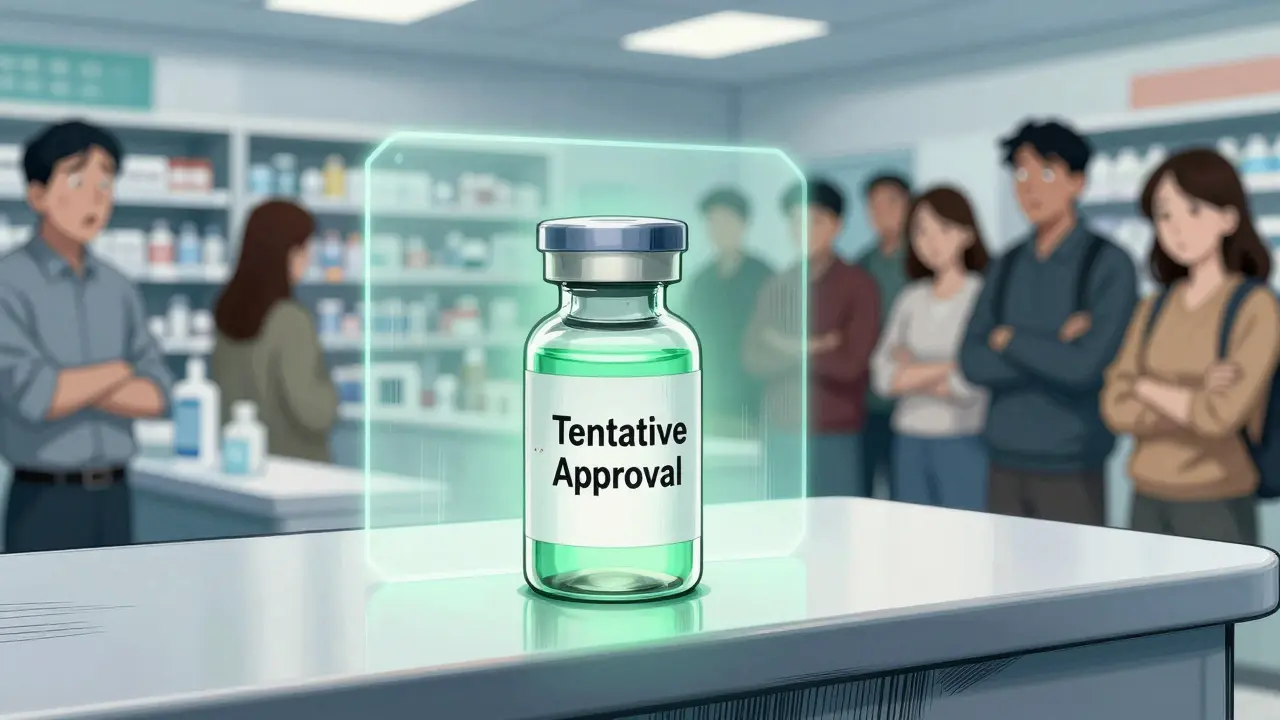
You’ve probably noticed it on your pharmacy receipt or heard about it in the news: a cheaper generic version of a medication is supposedly ready to go, yet you’re still paying brand-name prices. The culprit is often a regulatory status known as tentative approval, which is a designation by the U.S. Food and Drug Administration (FDA) indicating a generic drug meets all safety and quality standards but cannot yet be marketed due to legal barriers. It sounds like a victory lap for manufacturers, but in reality, it’s often just the starting line for a frustrating waiting game.
When the FDA grants tentative approval to an Abbreviated New Drug Application (ANDA), it means the science checks out. The generic drug is bioequivalent to the original brand-name drug, the manufacturing processes are sound, and the quality control is up to par. However, this green light doesn’t mean the drug hits shelves tomorrow. In many cases, there is a significant gap-sometimes spanning years-between receiving this tentative nod and actually seeing the product available at your local pharmacy. Understanding why this happens requires looking under the hood of the regulatory framework established by the Hatch-Waxman Act of 1984, which created the modern pathway for generic drugs while balancing intellectual property rights with public access to affordable medicine.
The Science Isn't Always the First Hurdle
It’s a common misconception that if a drug gets tentative approval, the FDA has already cleared every scientific hurdle. While the final decision rests on legal grounds, the journey to get there is fraught with procedural bumps. Before an application even reaches the "tentative" stage, it often survives multiple rounds of scrutiny. Historically, generic applications underwent nearly four review cycles before approval. Although initiatives like the Generic Drug User Fee Amendments (GDUFA) have improved first-cycle approval rates from less than 1% to around 28% by 2022, the process remains rigorous.
Many delays stem from deficiencies identified during these early reviews. If a manufacturer submits incomplete chemistry, manufacturing, and controls (CMC) data-which accounts for roughly 35% of deficiencies-the FDA issues a Complete Response Letter (CRL). This isn't a rejection, but it is a pause button. Manufacturers must address issues like inadequate bioequivalence study protocols or insufficient analytical method validation. These technical fixes take time. For complex dosage forms, such as modified-release tablets or topical creams, the complexity multiplies. Data shows that complex generics experience 2.3 times more review cycles than simple immediate-release pills, adding months to the timeline before they even qualify for tentative approval.
Patent Litigation: The Legal Wall
Once the science is settled and tentative approval is granted, the real barrier emerges: patents. This is where the Hatch-Waxman framework creates a standoff. Brand-name manufacturers hold patents on their drugs, and when a generic company files an ANDA, it often includes a "Paragraph IV certification," asserting that the brand's patents are invalid or won't be infringed upon. This triggers a statutory 30-month stay, during which the FDA cannot grant final marketing authorization regardless of how solid the generic's data is.
This legal limbo is the single biggest reason for delays between tentative approval and market launch. According to analyses from the Commonwealth Fund, ongoing patent litigation delayed the market introduction for 68% of generic drugs that received tentative approval between 2010 and 2016. During this period, the generic manufacturer sits on its hands, unable to sell the product it has spent millions developing. The brand-name company uses this time to fight in court, hoping to extend its monopoly. Even after the 30 months expire, settlements can further delay entry. "Pay-for-delay" deals, where brand companies pay generic manufacturers to wait before launching, have been documented thousands of times, effectively keeping competition off the market and prices high.
| Barrier Type | Description | Impact on Timeline |
|---|---|---|
| Patent Litigation (30-Month Stay) | Automatic pause triggered by Paragraph IV certification lawsuits. | Adds minimum 30 months; often longer due to appeals. |
| Citizen Petitions | Brand manufacturers petition FDA to reconsider approval based on safety concerns. | Averages 7-12 months of additional delay. |
| Manufacturing Scale-Up | Difficulty moving from lab-scale production to commercial volumes. | Varies; complex products may face 12+ month delays post-patent expiry. |
| Economic Viability | Low sales volume makes generic production unprofitable. | May result in permanent non-launch despite approval. |
Tactical Delays: Citizen Petitions and Product Hopping
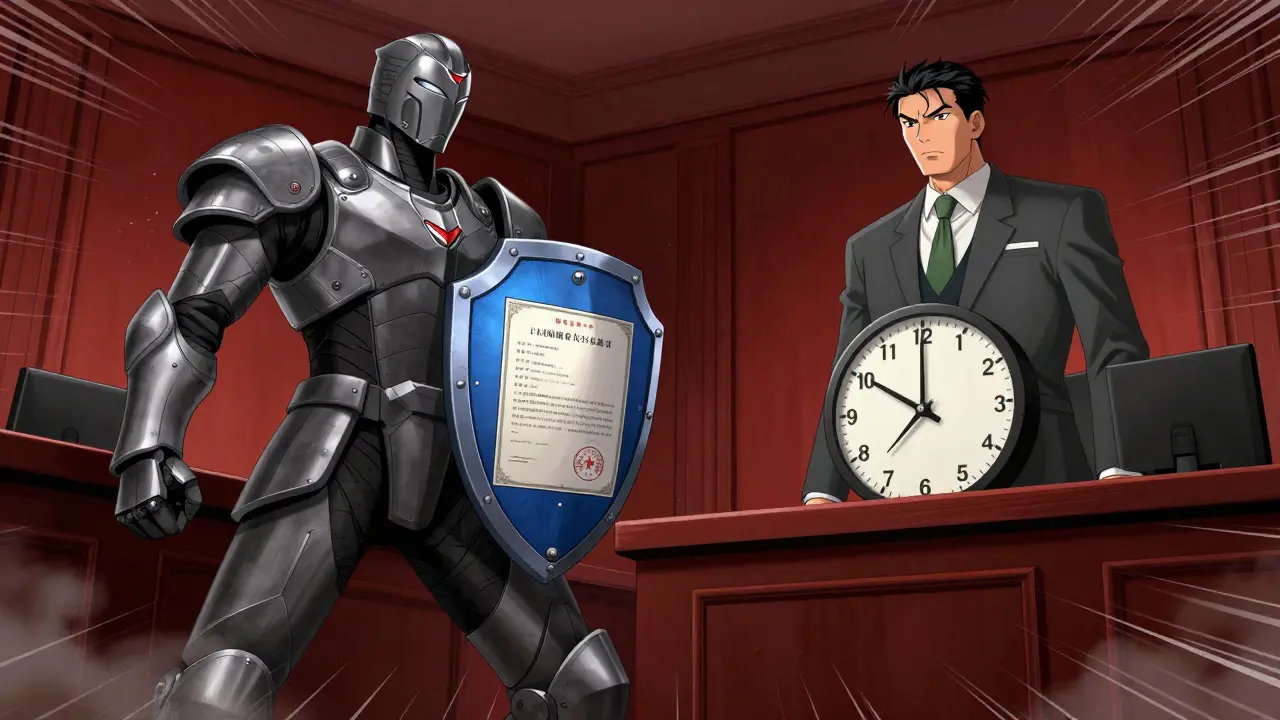
Beyond direct lawsuits, brand-name manufacturers employ other strategies to keep generics at bay. One controversial tactic involves filing "citizen petitions" with the FDA. These petitions argue that the standard methods for comparing generic and brand drugs are inadequate, requesting that the FDA pause approvals until new studies are conducted. While framed as safety concerns, experts note that many of these petitions lack strong scientific backing. A 2017 FDA review found that 72% of such petitions filed by brand manufacturers sought to delay competition through arguments that were not scientifically supported. Despite this, the mere act of filing a petition can trigger a review process that stalls generic entry for over a year.
Another strategy is "product hopping." As a key patent nears expiration, a brand company might slightly modify its drug formulation-perhaps changing the delivery mechanism or releasing a new version-and encourage doctors and patients to switch to the new product. This leaves the old version, for which generics have tentative approval, with little market share. Why would a generic manufacturer launch a cheap pill if no one is buying the expensive original anymore? This strategic maneuvering affects a significant portion of top-selling drugs, rendering tentative approvals for older formulations economically useless.
Manufacturing and Quality Control Snags
Sometimes the delay isn't legal or strategic-it's operational. The FDA conducts inspections of manufacturing facilities to ensure they meet Current Good Manufacturing Practice (cGMP) standards. Facility-related issues account for a substantial portion of Complete Response Letters. Common deficiencies include inadequate quality control systems, environmental monitoring failures, and equipment qualification problems.
If a facility fails inspection, the generic manufacturer must invest time and money to fix the issues before the FDA will consider final approval. This is particularly challenging for smaller manufacturers who may lack the resources to rapidly scale up production. Furthermore, stability data packages must prove the drug remains effective over its shelf life. In 2022, 43% of deficiencies related to inadequate stability data. For complex generics like inhalers or topical creams, scaling up from clinical trial batches to commercial volumes is technically difficult, leading to launch delays exceeding 12 months even after patent barriers fall.
The Economic Reality: When Approval Doesn't Equal Access
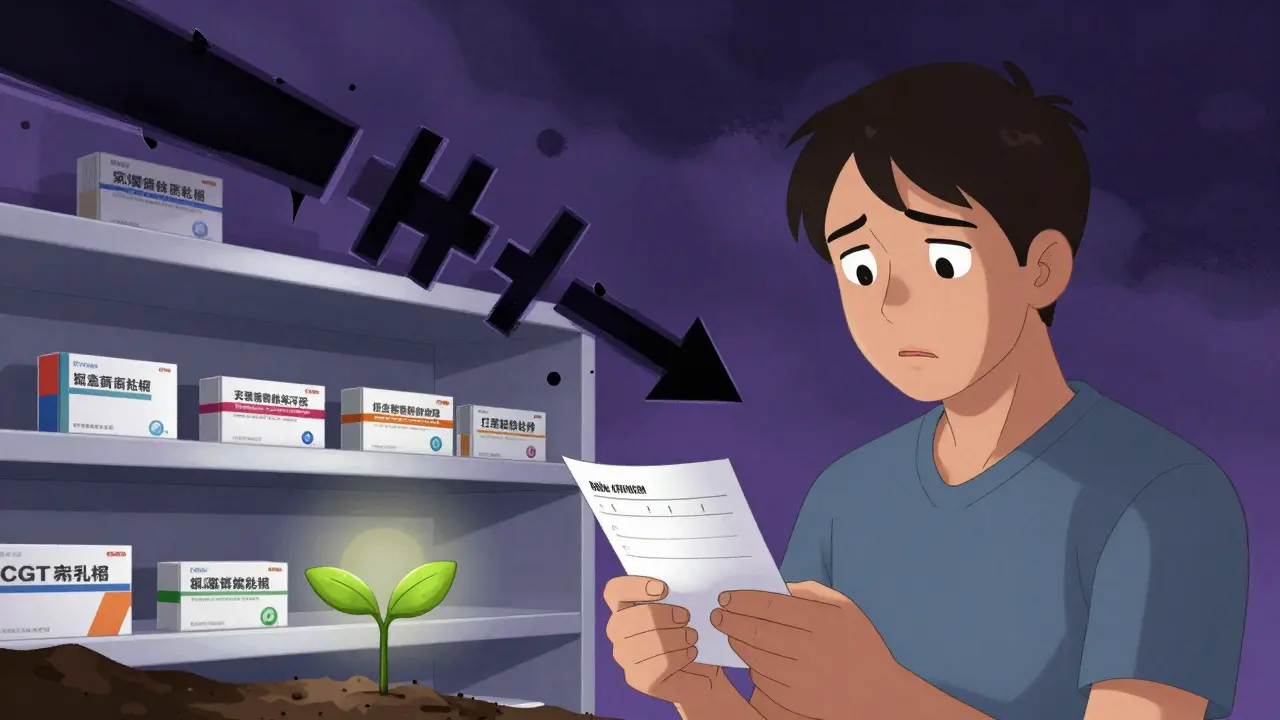
Even when all legal and scientific hurdles are cleared, economics play a decisive role. Approximately 30% of generically approved drugs never reach the market. For drugs targeting annual U.S. sales below $50 million, this figure jumps to 47%. If the potential profit margin is too thin to justify the cost of manufacturing, packaging, and distribution, a company may simply choose not to launch.
This creates a paradox where patients have a tentatively approved generic option on paper, but none on the shelf. The FDA has recognized this issue, implementing initiatives like the Competitive Generic Therapy (CGT) pathway to prioritize drugs with insufficient competition. Under CGT, designated products receive faster review times, with 78% receiving tentative approval within eight months compared to the standard 18 months. Additionally, the FDA’s Tentative Approval Initiative has expedited reviews for high-priority drugs lacking competition, resulting in higher final approval rates within 12 months for targeted products.
What Does This Mean for Patients?
For patients, these delays translate directly into higher costs. The Congressional Budget Office estimated that patent-related delays added nearly $10 billion annually to U.S. prescription drug spending. When only one generic competitor exists-or when no generic is available despite tentative approval-prices remain elevated. Studies show that even after generic entry, prices can stay above 80% of brand prices for two years if competition is limited.
Understanding the distinction between tentative and final approval helps set realistic expectations. If you see news that a generic has received tentative approval, it is a positive sign that the drug is safe and effective. However, it does not guarantee immediate availability. The path to your pharmacy counter is paved with legal battles, manufacturing challenges, and economic calculations. Regulatory reforms like GDUFA III aim to improve efficiency, targeting a 70% first-cycle approval rate by 2027, but systemic issues like patent abuse require broader legislative solutions, such as the CREATES Act, to fully resolve.
What is the difference between tentative approval and final FDA approval?
Tentative approval means the FDA has determined the generic drug is safe, effective, and of high quality, meeting all scientific requirements. However, the drug cannot be marketed or sold because of existing patent protections or exclusivities held by the brand-name manufacturer. Final approval is granted only when those legal barriers expire or are resolved, allowing the drug to enter the market.
How long does it typically take for a tentatively approved drug to reach the market?
The median time from tentative approval to market launch is approximately 16.5 to 18 months. However, this varies significantly. Some drugs launch immediately after patent expiration, while others face delays of several years due to ongoing litigation, citizen petitions, or manufacturing challenges. In some cases, drugs never launch due to economic factors.
Why do brand-name manufacturers file citizen petitions?
Citizen petitions are often used by brand-name manufacturers to delay generic competition. They ask the FDA to reconsider the approval of a generic drug, usually citing safety or efficacy concerns. While framed as protecting public health, analyses suggest many of these petitions are strategically timed to exploit regulatory review processes, delaying generic entry by an average of 7 to 12 months.
Can a drug with tentative approval be prescribed by a doctor?
No, a drug with only tentative approval cannot be legally marketed, distributed, or dispensed in the United States. Doctors cannot prescribe it, and pharmacies cannot fill prescriptions for it until the FDA grants final approval and the manufacturer begins commercial distribution.
What is the 30-month stay in generic drug approval?
The 30-month stay is a statutory provision under the Hatch-Waxman Act. When a generic manufacturer challenges a brand-name drug's patent (via a Paragraph IV certification), the brand-name company can sue for patent infringement. This lawsuit automatically pauses the FDA's ability to grant final approval for 30 months, giving the courts time to resolve the dispute. This period often extends beyond the initial 30 months due to legal appeals.
Why do some tentatively approved generics never launch?
Economic viability is a major factor. If the market size for a drug is small, or if brand-name manufacturers have successfully shifted patients to newer versions (product hopping), the potential profit may not justify the costs of manufacturing and distribution. Approximately 30% of approved generics never reach the market, with this rate higher for lower-selling drugs.