
Imagine taking a common cold pill that suddenly sends your blood pressure soaring to dangerous levels. It sounds like a movie plot, but for people taking Monoamine Oxidase Inhibitors, this reality happened to many patients decades ago and still poses risks today. MAO Inhibitors are a class of antidepressant medications that work by blocking an enzyme responsible for breaking down brain chemicals. While they are incredibly effective for certain types of depression, their reputation for risky interactions is well-deserved. If you or a loved one is prescribed these drugs, understanding the hidden dangers isn't just helpful-it can save a life.
How MAO Inhibitors Work in Your Body
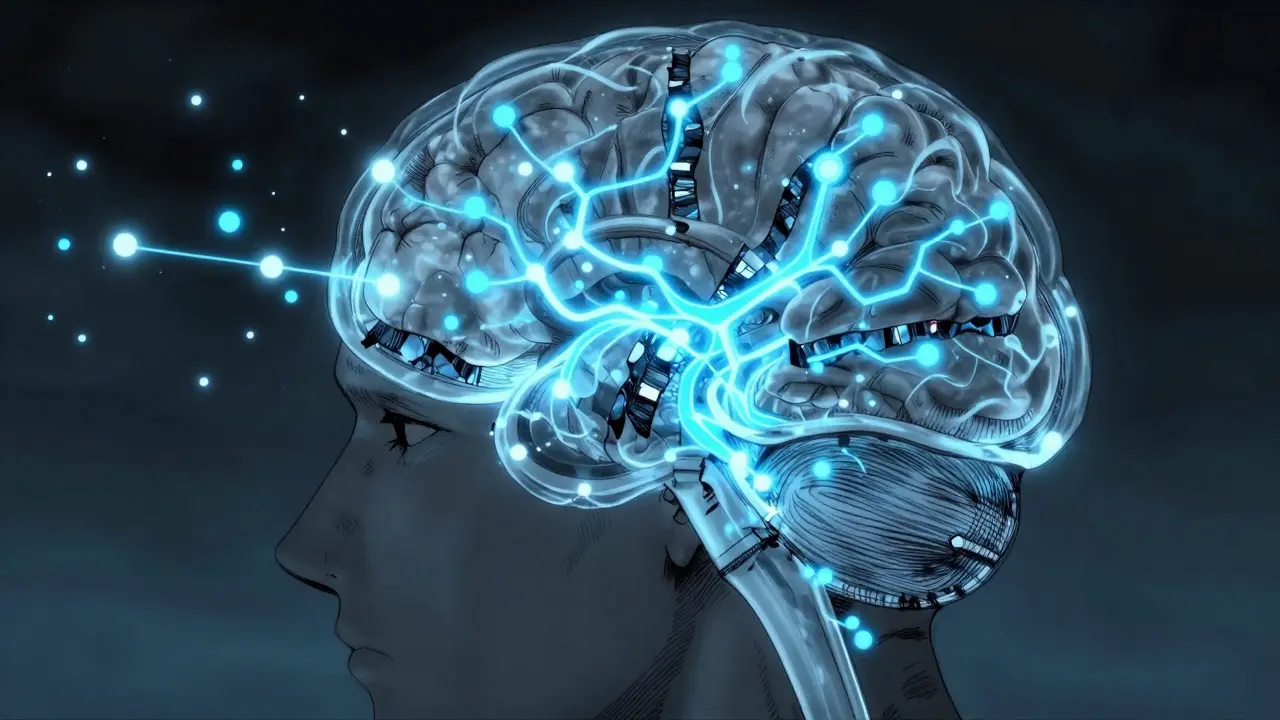
To understand why these interactions are so dangerous, you have to look at how the medicine functions inside your system. Normally, your body uses an enzyme called monoamine oxidase to clean up neurotransmitters like serotonin, norepinephrine, and dopamine after they have done their job. When you take an MAOI, you stop this cleanup process. This keeps more of those happy chemicals floating around in your brain, which improves mood.
However, this same mechanism becomes the weak point when other substances enter the mix. Because the enzyme is blocked, any external source of these chemicals-whether from food or another drug-cannot be broken down efficiently. Instead of being processed safely, these substances build up. Think of it like plugging a drain in a bathtub. If you turn the water on slowly, it's fine. But if you open a second tap, the water rises fast and overflows. In medical terms, this overflow leads to two major emergencies: hypertensive crisis and serotonin syndrome.
The Twin Dangers: Hypertensive Crisis and Serotonin Syndrome
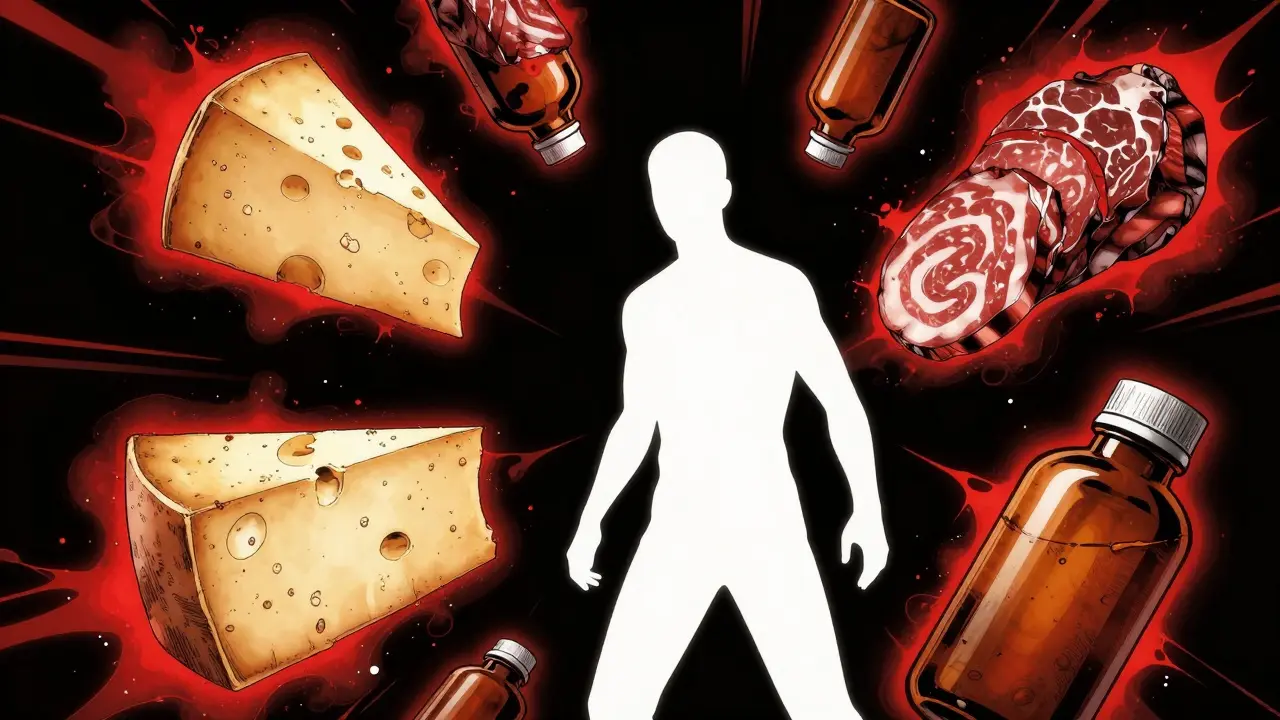
Hypertensive Crisisis a sudden, severe increase in blood pressure that requires immediate medical attention. This specific condition is triggered primarily by tyramine. Tyramine is naturally found in aging and fermented foods. When healthy people eat aged cheese, the enzymes break down the tyramine quickly. On an MAOI, that breakdown stops. The accumulated tyramine triggers a massive release of norepinephrine, spiking blood pressure within minutes.
Clinical reports show systolic blood pressure can jump 50 to 100 mmHg in under an hour. A patient consuming just one ounce of strong aged cheese could see readings hit 200-250 mmHg. Symptoms include a pounding headache, sweating, neck stiffness, and nausea. Without emergency treatment, this can lead to stroke or heart attack.
The second major risk is Serotonin Syndromea potentially fatal reaction caused by excessive accumulation of serotonin in the body. First described in 1960, this happens when too much serotonin builds up due to drug combinations. Symptoms range from mild shivering and diarrhea to severe muscle rigidity, confusion, fever, and even death. The mortality rate for severe cases ranges from 2% to 12%. The danger lies in the fact that many over-the-counter remedies hide ingredients that trigger this.
Meds You Absolutely Cannot Mix With MAOIs
Hospital records and case studies highlight specific medications that create immediate red flags. Doctors often warn about antidepressants, but the most common accidents happen with everyday illness treatments.
- Dextromethorphan: Found in over 100 cough and cold products. A documented case involved a 26-year-old woman on phenelzine who took a standard dose of dextromethorphan. She experienced severe agitation, hyperthermia, and required hospitalization. Even small doses can be lethal.
- Phenylephrine: Commonly used as a nasal decongestant. It directly stimulates vascular receptors. Combined with MAOIs, it bypasses normal safety limits and causes rapid blood pressure elevation.
- Opioids: Tramadol, meperidine, and methadone are absolutely contraindicated. A 32-year-old man was recently intubated after taking tramadol while on selegiline. These painkillers boost serotonin significantly.
- Antibiotics: Linezolid inhibits monoamine oxidase itself. Taking linezolid with an MAOI essentially puts you on a double-dose of the enzyme blocker, leading to high serotonin levels.
The risk extends to natural supplements too. Many people assume "natural" means "safe," but St. John's Wort is actually a potent serotonergic agent. Combining it with MAOIs can spike blood pressure and body temperature rapidly. Ginseng has also been linked to mania and tremors in patients taking these inhibitors, possibly due to caffeine contamination or direct chemical interference.
Food Restrictions You Must Follow
If you start this medication, you aren't just taking pills; you are adopting a stricter diet. The goal is to keep your tyramine intake below the threshold that triggers a crisis. For most people on oral MAOIs, even 10mg of tyramine can cause issues. You need to be vigilant about what goes into your mouth.
| Food Item | Why It's Dangerous | Tyramine Level |
|---|---|---|
| Aged Cheeses | Fermentation creates tyramine | 6+ mg per serving |
| Tap Beers / Draft Beer | Unfiltered yeast increases levels | 8-20 mg per 12oz |
| Soy Sauce | High concentration in fermentation | 1-30 mg per tablespoon |
| Cured Meats | Nitrates and aging process | 5-100 mg per ounce |
While older formulations like Nardil require strict adherence to these rules, modern versions offer some relief. The transdermal patch version of Selegiline (Emsam)Transdermal MAOI delivers medication through the skin. Studies show that at the lowest dose (6mg/24hr), it bypasses the liver enzymes responsible for the tyramine reaction. This allows patients to eat more normally compared to the pill versions, though caution is still advised at higher doses.

Switching Meds Safely: The Washout Rule
Perhaps the trickiest part of managing MAOIs is changing medications. You cannot simply stop one antidepressant and start another. There is a mandatory gap required between stopping an MAOI and starting an SSRI (Selective Serotonin Reuptake Inhibitor).
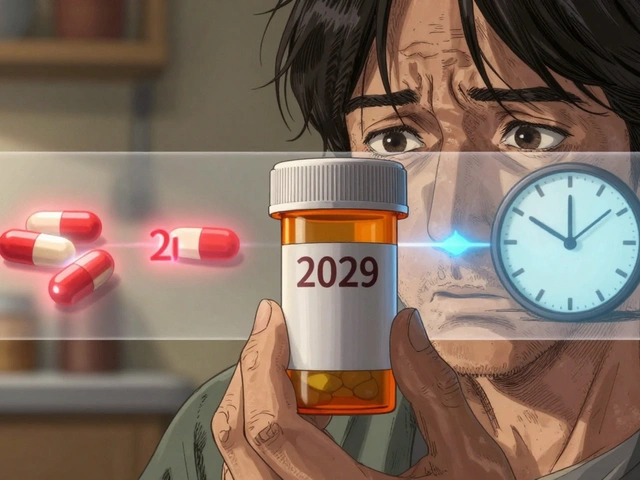
Standard protocol requires a 14-day waiting period. However, for fluoxetine (Prozac), you must wait five weeks. This is because fluoxetine stays in your body much longer than others due to its active metabolite, norfluoxetine. Ignoring this timeline is a common mistake that results in serotonin toxicity. Modern Electronic Health Record systems now have hard stops built in, meaning a computer will refuse to process the prescription if both drugs are flagged simultaneously. Despite this, mistakes happen, especially when patients see multiple specialists who might not share records instantly.
Dr. Alan F. Schatzberg, a leading psychiatrist, has noted that the margin of safety is narrow. A single dose of a forbidden medication can trigger a reaction. Because of this, patients are strongly encouraged to carry a wallet card listing contraindicated medications. Surveys show 78% of psychiatrists provide these, but only 34% of primary care doctors realize the full extent of the drug interactions.
Why Doctors Still Prescribe Them
Given these risks, why haven't these drugs disappeared completely? While prescriptions account for less than 1% of antidepressant use, they remain vital tools. They are often the last resort for treatment-resistant depression or atypical depression. Recent data shows usage is stable, driven largely by specialist psychiatrists rather than general practitioners.
They work differently than newer drugs, targeting specific pathways that others miss. For the 92% of users seeing specialists, the trade-off is managed carefully. Research continues into safer alternatives like reversible MAO-A inhibitors, such as moclobemide, available outside the US. Until safer replacements dominate the market, knowing the rules of engagement with MAOIs remains a critical skill for maintaining mental health without compromising physical safety.
Can I take Tylenol with MAO inhibitors?
Generally, yes. Acetaminophen (Tylenol) is considered safe with MAOIs. However, always check combination cold medicines that contain additional ingredients like dextromethorphan or phenylephrine, as those are unsafe.
Is alcohol safe while on MAOIs?
Beer and wine pose significant risks due to tyramine content. Spirits are generally safer but should be avoided or limited. Always consult your doctor before drinking any alcohol to assess individual tolerance.
How long does a washout period take?
For most MAOIs switching to SSRIs, a 14-day gap is standard. If switching from fluoxetine specifically, you need to wait five weeks due to its long half-life and active metabolites.
Are there any MAOIs that don't require a special diet?
The transdermal selegiline patch (Emsam) at the lowest 6mg dose typically does not require the strict low-tyramine diet, making it a safer option regarding food interactions.
What symptoms should I watch for?
Watch for severe headaches, high blood pressure, sweating, confusion, muscle rigidity, or rapid heart rate. These could signal hypertensive crisis or serotonin syndrome and require immediate emergency care.



Tommy Nguyen March 27, 2026
It's good to know there are still tools available for severe depression cases even if the side effects are rough. Many people give up too soon when newer meds dont work well enough for them. Having a backup plan like this gives me hope for stubborn cases. We just have to respect the protocol completely and stay vigilant about food choices. Everyone deserves a chance at feeling better mentally regardless of the diet restrictions required.
Kameron Hacker March 28, 2026
The notion that hope overrides safety is dangerously naive in a clinical context. Negligence regarding dietary restrictions leads to hypertensive crises that are preventable through strict adherence to guidelines. Patients must understand that optimism does not metabolize tyramine or block dangerous enzyme pathways. Medical protocols exist precisely because the margin for error is non-existent here. Casual approaches to these inhibitors result in catastrophic physiological responses. One requires absolute discipline to avoid emergency interventions. Hopefulness is irrelevant when facing the potential of stroke due to dietary errors.
Paul Vanderheiden March 29, 2026
I feel like the diet part gets overlooked way too often in the general advice sections online. Its pretty wild how much cheese is off limits and you gotta watch out for tap beer especially. I know its annoying to skip certain snacks but keeping yourself safe matters way more. Some people say its manageable once you know what triggers actually cause problems for them personally. Just remember to carry that wallet card everywhere so you never forget what is banned during doctor visits
Jordan Marx March 31, 2026
You are touching on the bioavailability variance inherent in the phenylethylamine compounds present in fermented matrices. The inhibitory action on MAO-A versus MAO-B isoforms dictates the tyramine tolerance threshold significantly. Clinical pharmacology suggests that transdermal delivery bypasses first-pass hepatic metabolism effectively. This reduction in systemic tyramine exposure minimizes the sympathetic nervous system response typically observed with oral ingestion. Patients often fail to appreciate the kinetics of norepinephrine release triggered by amine accumulation. Understanding the metabolic clearance rates helps explain why patch formulations offer superior safety profiles. We must prioritize the biochemical mechanisms over anecdotal dietary reports alone.
kendra 0712 March 31, 2026
Did anyone else notice the massive gap required between stopping fluoxetine!!! It really takes five full weeks which seems like forever waiting time!!!!! But safety really comes first when we are dealing with active metabolites staying in the body for such long periods!! Ignoring this timeline causes toxic buildup that nobody wants to deal with later!!! Always consult your pharmacist about the specific washout window for your unique medical history!!
Richard Kubíček March 31, 2026
There is indeed a philosophical weight to the decision of prioritizing mental health stability over immediate dietary freedom. Society often expects convenience above risk management when treating chronic conditions like depression. Choosing these medications represents a commitment to long-term wellness despite significant lifestyle sacrifices. The balance between quality of life and physical safety defines much of the treatment journey. We must consider how autonomy is impacted when chemical dependency limits food choices daily. Ultimately the goal remains restoring function to the individual suffering from the illness.
Monique Louise Hill April 2, 2026
You really need to read the label before putting anything in your mouth because your life depends on it 😬🙏
Sarah Klingenberg April 3, 2026
It is honestly scary to think about how easy it is to accidentally trigger a crisis with just one bite 🍕. I remember reading about someone eating leftover meat at a potluck and they got sick super fast. They did not realize that curing meats holds high levels of tyramine that react badly with the meds. The blood pressure spike happened faster than anyone could call an ambulance for help in time. People often forget that natural does not always mean safe or harmless for everyone taking these drugs. Supplements like St John Wort act very similarly to prescription serotonergic drugs in the brain chemistry. We have to be extra careful when doctors do not share their notes properly between different specialists too. Primary care physicians sometimes miss the red flags in electronic records during routine checkups. A washout period is absolutely mandatory before switching any medication types to avoid bad reactions. Waiting five weeks for Prozac specifically is nonnegotiable in my book for total safety. Rushing that process puts the patient right back in danger zones immediately without warning signs. Emergency room visits for serotonin syndrome are incredibly traumatic for families watching this happen live. Muscle rigidity can turn into respiratory failure within hours without proper hospital intervention quickly. Knowing the symptoms allows you to get help before the worst things ever happen to you. We need better education systems for patients starting these specific treatments so mistakes stop occurring now. Plus everyone should keep a card in their wallet for emergencies just in case something goes wrong 🛡️😷.