
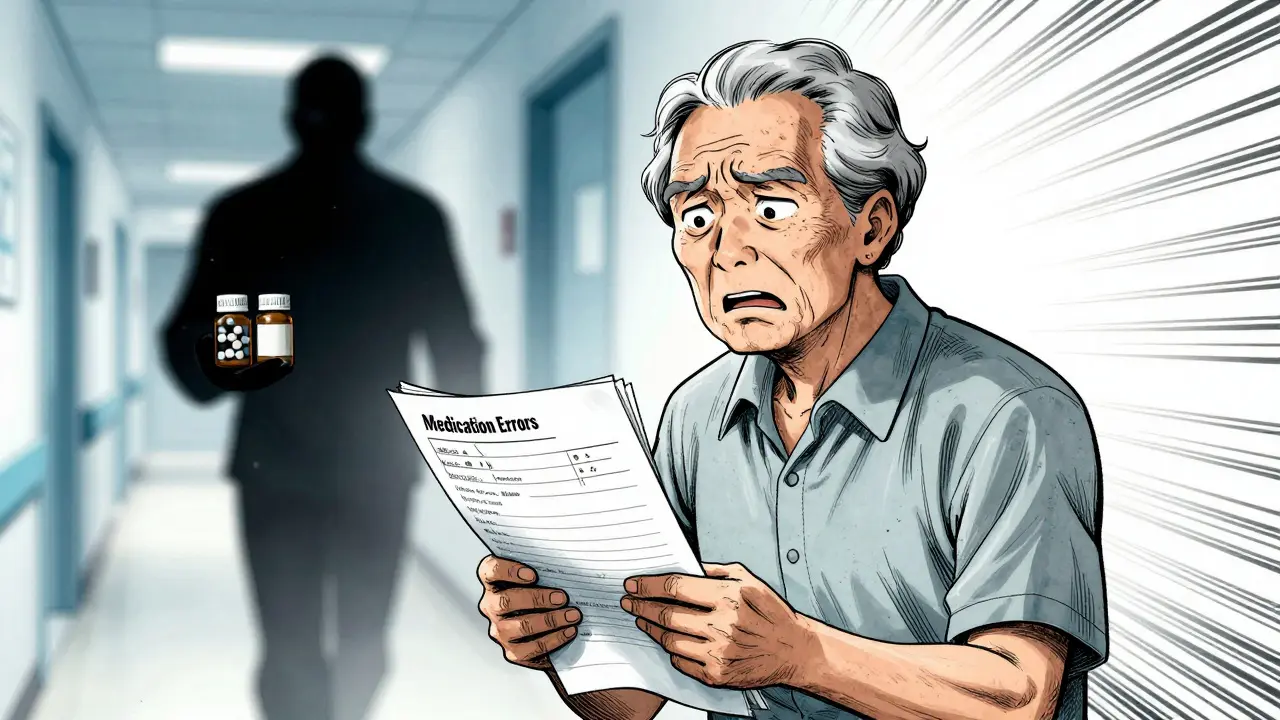
Leaving the hospital is supposed to be a victory. You’ve been treated, you’re stable, and you’re heading back to your own bed. But for many people, especially seniors, that moment of relief turns into danger almost immediately. The biggest threat isn’t usually the illness itself-it’s the medicine cabinet.
Medication errors during the transition from hospital to home are shockingly common. Research published in the Journal of General Internal Medicine shows that one in five patients experiences a medication error within just three weeks of being discharged. These mistakes account for roughly half of all medication errors seen in primary care later on. They lead to confusion, dangerous side effects, and often result in being sent right back to the hospital. Preventing these errors requires more than just reading the discharge papers; it demands a proactive, structured approach involving you, your family, and your healthcare team.
The Hidden Danger of Discharge Papers
When you leave the hospital, you get a stack of papers. One of them is the discharge summary. It lists what happened during your stay and what medications you should take. Here is the hard truth: those papers are frequently wrong or incomplete. A study by Dr. Joanne Schnipper found that even when hospitals claim they have "reconciled" (checked) the medications, nearly three-quarters of those summaries still contained clinically significant errors.
Why does this happen? Doctors are rushed. Nurses are busy. And often, the list doesn't include over-the-counter drugs, herbal supplements, or vitamins you take at home. If you are taking blood thinners like Warfarin, insulin, or strong painkillers, even a tiny mistake in dosage or timing can be life-threatening. The goal isn't just to get the paper; it's to ensure the information on that paper matches exactly what is in your bag and what your body needs.
Understanding Medication Reconciliation
The medical term for fixing these mismatches is medication reconciliation. According to The Joint Commission, this is the process of comparing the doctor's orders against every single substance you have been taking. It sounds simple, but it is the most critical step in keeping you safe.
Effective reconciliation happens at three specific moments:
- Admission: Within two hours of arriving, staff should verify what you were taking before you got sick.
- Transfer: If you move between units in the hospital, checks must happen within an hour.
- Discharge: Before you walk out the door, a final check ensures the new plan matches your old routine plus any necessary changes.
If you don't see a pharmacist or nurse doing this actively with you, speak up. Ask directly: "Has my medication list been reconciled?" This question alone can trigger the protocol that saves lives.
The "Brown Bag" Review: Your Best Defense
You are the expert on your own body. The best way to catch errors is to bring everything with you. This is called the "Brown Bag Medication Review." Before you leave the hospital-or better yet, before you even arrive if you know you're going-gather every pill bottle, inhaler, cream, and supplement you use. Put them in a brown paper bag or a clear plastic tote.
Show this bag to the discharging doctor or pharmacist. Do not rely on memory. Memory fails under stress. Instead, say: "Here is everything I take at home. Please tell me which ones to stop, which ones to keep, and which ones to start." This visual aid prevents the "I thought you stopped that" conversation that leads to double-dosing or missed doses.

Mastering the Teach-Back Method
Getting the right pills is only half the battle. You also need to understand how to use them. Many seniors struggle because the instructions are written in complex medical jargon. This is where the Teach-Back method comes in.
In this method, the healthcare provider explains a medication, and then asks you to explain it back in your own words. For example, they might ask: "Can you show me how you will take this new heart medication?" or "What will you do if you miss a dose?"
A study in Patient Education and Counseling showed that using this technique improves medication adherence by 32%. Don't feel shy about asking for this. If the doctor writes "take BID" on the paper, ask them to write "twice a day" instead. Clarity saves lives. If you cannot repeat the instructions clearly, you haven't understood them yet, and that is a risk you cannot afford.
High-Risk Medications Require Extra Attention
Not all medicines carry the same risk. Some require close monitoring immediately after you go home. Pay special attention to these high-risk classes:
| Medication Class | Common Examples | Key Risk Factor | Action Required |
|---|---|---|---|
| Anticoagulants | Warfarin, Apixaban | Bleeding or clotting | INR test within 72 hours |
| Hypoglycemics | Insulin, Metformin | Low blood sugar | Daily glucose logs |
| Opioids | Morphine, Oxycodone | Sedation, respiratory depression | Stool softeners, strict dosing |
| Antiplatelets | Clopidogrel, Aspirin | Bleeding | Monitor for bruising |
If you are prescribed any of these, ensure you have a follow-up appointment scheduled within seven days. The American Heart Association specifically recommends pharmacist-led reconciliation for heart failure patients as a top-tier standard of care. Do not wait for symptoms to appear. Proactive monitoring is key.

The Critical First Seven Days
The window of highest risk is the first week after discharge. Data from the Centers for Medicare & Medicaid Services shows that early follow-up drastically reduces readmissions. You should aim to see your primary care physician or a specialist within seven days. If you have multiple chronic conditions, such as kidney disease or diabetes, this timeline is non-negotiable.
During this visit, bring your updated medication list and the "Brown Bag" again. The outpatient doctor may not have access to the hospital's electronic records due to system fragmentation. Only 35% of U.S. hospitals share data seamlessly with outpatient providers. Therefore, you are the bridge. You must physically transfer the correct information from the hospital to your home doctor.
Technology and Tools for Safety
While human interaction is vital, technology can provide a safety net. Consider using a smartphone app that creates visual schedules. A 2023 study in JAMA Network Open found that apps providing visual cues reduced errors by 41% in elderly patients. Alternatively, use a weekly pill organizer. Fill it once a week, preferably with a family member present, to double-check that each compartment contains the correct number of pills.
If you live alone, consider setting up automated reminders. Simple alarms on a phone or a dedicated medication dispenser can prevent missed doses. Remember, consistency is crucial for maintaining therapeutic levels of medication in your body.
When to Call for Help
Know the signs of a medication error. If you experience unexpected dizziness, confusion, nausea, or bleeding after starting a new regimen, call your doctor immediately. Do not assume it is just part of recovering from the illness. Also, if you notice discrepancies between the hospital discharge list and what your pharmacy dispenses, stop and clarify before taking the next dose. Pharmacist involvement in discharge planning has been shown to reduce discrepancies by 67%, so don't hesitate to call your local pharmacy for advice-they are often more accessible than your doctor for quick questions.
What is medication reconciliation?
Medication reconciliation is the process of creating the most accurate list possible of all prescription drugs, over-the-counter medications, and dietary supplements a patient is taking, including name, dose, frequency, and indication. This list is compared against the orders of the admitting, transferring, or discharging healthcare provider to ensure continuity and safety.
Why are medication errors so common after hospital discharge?
Errors occur due to fragmented communication between hospital staff and outpatient providers, rushed discharge processes, and reliance on patient memory. Studies show that discharge summaries often contain significant discrepancies, and many patients lack the health literacy to identify these errors themselves.
What is the "Brown Bag" review?
The "Brown Bag" review is a practical strategy where patients bring all their current medications in a bag to their appointments. Healthcare providers then physically inspect each container to verify names, dosages, and expiration dates, ensuring the official record matches reality.
How does the Teach-Back method work?
The Teach-Back method involves healthcare providers asking patients to explain back, in their own words, what they were just told about their medications or treatment plan. This confirms understanding and identifies gaps in knowledge before the patient leaves the clinical setting.
When should I follow up with my doctor after discharge?
For high-risk patients, particularly those with heart failure, COPD, or polypharmacy (taking 4+ medications), follow-up should occur within 7 days. For moderate-risk patients, a follow-up within 14 days is recommended to review medications and assess recovery.
Which medications are considered high-risk during transitions?
High-risk medications include anticoagulants (like Warfarin), insulin, opioids, antiplatelet agents, and certain antibiotics. These drugs have narrow therapeutic windows or severe side effects, requiring close monitoring and precise dosing instructions.
Can pharmacists help prevent medication errors?
Yes. Pharmacist-led interventions during discharge planning have been shown to reduce medication discrepancies by up to 67%. Pharmacists are experts in drug interactions and dosing, making them invaluable partners in ensuring safe transitions from hospital to home.
What role does technology play in medication safety?
Technology aids safety through electronic health records (though interoperability remains a challenge), mobile apps for visual scheduling, and automated reminder systems. AI-powered tools are also emerging to flag potential errors in medication lists before they reach the patient.





victoria catharinaa May 21, 2026
you really need to listen to what this post says because it could save your life or someone you love. i am so tired of seeing people get hurt because they did not check their pills. please just bring the bag to the doctor. do not be lazy about it. your health matters more than being too proud to ask questions. stop ignoring the warnings.
Glen Speck May 23, 2026
the system is broken but we have to work within it anyway. bringing the brown bag is a smart move because it forces the truth into the room. doctors are busy and they make mistakes so we have to help them see the whole picture. it is about taking control of your own narrative in a chaotic environment. silence is dangerous here. speak up when something feels wrong.
Sam Mackellar May 24, 2026
This article provides a comprehensive overview of the necessary steps to ensure patient safety during hospital transitions. The emphasis on medication reconciliation is well-founded and supported by extensive clinical data. It is imperative that patients understand the significance of the Brown Bag review in identifying potential discrepancies. The Teach-Back method serves as an effective mechanism for verifying comprehension and reducing ambiguity. I appreciate the detailed explanation of high-risk medications and the specific actions required for each class. The recommendation for follow-up appointments within seven days is particularly crucial for patients with chronic conditions. We must acknowledge the limitations of current electronic health record interoperability. Therefore, the physical transfer of information remains essential. Thank you for sharing this valuable resource with the community.
Justina Ingram May 26, 2026
lol i almost died because of this stuff once :o the doctors were so rushed they barely looked at me. i had to tell them twice about my allergies. always bring the bag guys. dont trust the paper. it is messed up half the time. stay safe out there :)
amit kumar May 28, 2026
This is such important information for everyone! 🌟 I always forget to bring my old meds to the new doctor. I will definitely start using the brown bag method now. It makes so much sense to show them exactly what I am taking. Thanks for sharing this guide! 💊🏥
Lori Wildrick May 28, 2026
I feel so much better reading this because it gives me concrete steps to take. I was worried about my mom's discharge last week. She has so many pills and it is confusing. I think I will help her gather everything into a bag next time. It is scary how easy it is to make a mistake. We need to look out for each other. Small actions can make a big difference in safety.
Emma Olliff May 30, 2026
It is pathetic that we even need to write articles about basic competence in medicine. The average person should know to check their prescriptions without needing a hand-holding guide. These hospitals are failing miserably at their most basic duties. People are too stupid to read the discharge papers properly. If you cannot manage your own pills you deserve the consequences. Stop expecting the system to fix your incompetence. Read the labels yourself. Do not rely on incompetent staff to save you from your own ignorance.
Diana Wiechecka May 31, 2026
Great tips! 📝 I love the idea of the teach-back method. It helps so much to say it out loud. I will try this next time I go to the doctor. Stay healthy everyone! ✨
Kathryn Byrd June 1, 2026
The section on technology is interesting. I wonder if apps really reduce errors significantly. I prefer the pill organizer myself. It is simple and works. I do not like relying on phones too much. They run out of battery. But the point about visual cues is valid. Clarity is key.
Tanya KLIMCHUK Klimchuk June 2, 2026
You absolutely must pay attention to the high-risk medications list. Warfarin and insulin are not toys. One wrong dose can send you back to the ER immediately. I have seen too many people ignore the signs of bleeding or low blood sugar. Call your doctor if you feel dizzy. Do not wait. Your life depends on you being proactive. Stop making excuses and start managing your health seriously. This is non-negotiable.
Anthony Red June 4, 2026
Hey everyone, just wanted to chime in here. I used to be super confused about my meds after leaving the hospital. Then my wife started doing the brown bag thing with me. It was a game changer. Now I actually know what I am taking. Doctors respect it too. They like having the bottles right there. Give it a shot. It takes five minutes and saves a lot of headaches later. Keep it chill but stay informed.
Javier Arauz June 5, 2026
This is typical American bureaucracy gone wrong. Our hospitals are bloated and inefficient. We spend billions and still make stupid mistakes. Other countries handle this better without all the extra paperwork. Fix the system first. Stop blaming the patients for the failures of the healthcare industry. It is a disgrace.
Christina Moran June 6, 2026
i totally agree with the brown bag idea. i forgot my vitamins last time and the doctor thought i wasnt taking them. it was so annoying. i will remeber to bring them next time. thanks for the tip. hope everyone stays safe.
mardy duffy June 7, 2026
boring. just take the pills.