Heartburn is annoying. It’s also common. About one in five people in the US deals with GERD, a condition where stomach acid flows back into the esophagus. But for some, this daily discomfort is a warning sign of something more serious. Chronic GERD lasting five years or longer is the strongest known risk factor for esophageal adenocarcinoma. Recent data shows that having GERD increases your odds of developing this specific type of cancer by more than three times compared to someone without it. The good news? The pathway from reflux to cancer is slow, giving you plenty of time to catch changes early.
The Pathway From Reflux to Cancer
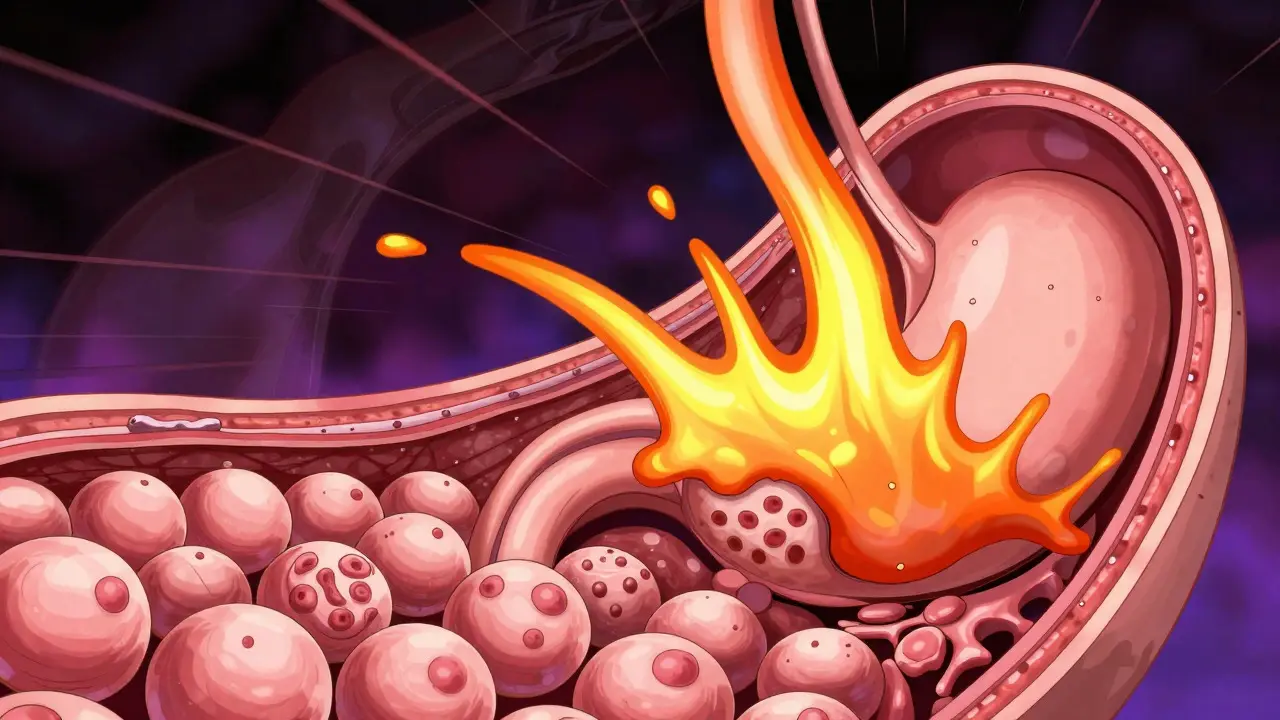
It doesn’t happen overnight. When acid splashes up into your esophagus repeatedly over years, the lining gets damaged. To protect itself, the body tries to adapt. The cells in the esophagus start to look and act like the cells in the stomach. This change is called Barrett’s esophagus. It’s not cancer itself, but it is the only known precursor to esophageal adenocarcinoma. Think of it as a pre-stage. If left unchecked, some of these changed cells can mutate further, leading to cancer. Dr. Seper Dezfoli notes that this transformation happens because the esophageal lining isn’t built to handle constant acid exposure. Once the adaptation process goes wrong, cell division speeds up, creating a precancerous state.
Here’s the reality check: most people with GERD never develop Barrett’s esophagus. Only about 0.5% to 2% of GERD patients get it each year. And of those who do have Barrett’s, only 0.2% to 0.5% progress to cancer annually. So while the risk is real, it’s not inevitable. However, the numbers are rising. Esophageal adenocarcinoma cases have jumped by 850% since 1975, largely tracking with the surge in obesity rates in the US. That trend makes understanding your personal risk factors critical.
Who Is at Higher Risk?
Not all GERD patients face the same level of danger. Your risk climbs when several factors stack up. If you have long-term reflux (five or more years) plus any three of the following, your likelihood of developing Barrett’s esophagus goes up significantly:
- Male sex: Men are 3 to 4 times more likely to develop esophageal cancer than women.
- Age over 50: Roughly 90% of cases occur in people older than 55.
- White non-Hispanic ethnicity: White Americans have three times higher rates of adenocarcinoma than Black Americans.
- Obesity: A BMI of 30 or higher doubles or triples your risk. Extra weight pushes on your stomach, forcing acid upward.
- Smoking history: Current or past smokers face 2 to 3 times higher risk.
- Family history: Having a first-degree relative with esophageal cancer adds to the equation.
If you’re a white male over 50 with ten or more years of acid reflux symptoms-even if they feel mild-you’re in a high-risk group. The American College of Gastroenterology recommends upper endoscopy for white men over 50 with chronic GERD plus two additional risk factors. Yet only 13% of eligible individuals actually get screened. That gap is where preventable cancers slip through.
Red Flag Symptoms You Shouldn’t Ignore
Most esophageal cancer is caught late. About 75% of cases are diagnosed at an advanced stage because early symptoms mimic regular indigestion. But certain signs should make you call your doctor immediately. These aren’t just “uncomfortable” feelings; they’re measurable changes in how your body functions.
| Symptom | What It Looks Like | Prevalence in Cases |
|---|---|---|
| Dysphagia | Difficulty swallowing solids, progressing to liquids | 80% |
| Unexplained Weight Loss | Losing more than 10 lbs in 6 months without dieting | 60-70% |
| Persistent Heartburn | More than twice weekly for 5+ years | 90% of adenocarcinoma patients |
| Food Impaction | Feeling food stuck in throat or chest | 30-40% |
| Chronic Hoarseness | Voice changes or cough lasting over 2 weeks | 20-25% |
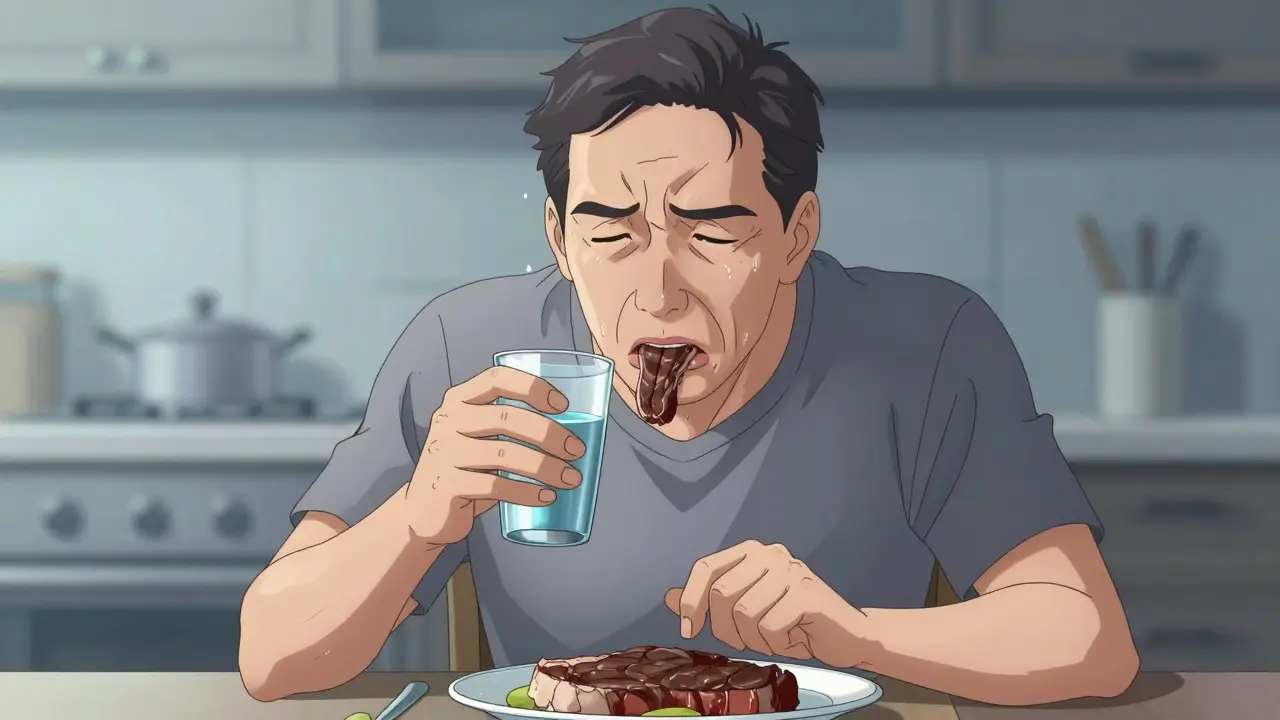
New or persistent acid reflux after age 50, especially if combined with other risk factors, warrants an endoscopic evaluation. Don’t wait for pain. Dysphagia often starts subtly-maybe steak feels hard to swallow one day. By the time liquids become difficult, the narrowing is significant. Early detection changes everything. The 5-year survival rate for localized esophageal cancer is 50-60%, compared to just 21% for all stages combined.

How Screening Works and Why It Matters
For high-risk groups, endoscopic surveillance is the gold standard. During an upper endoscopy, a doctor uses a thin tube with a camera to look inside your esophagus. Newer techniques like narrow-band imaging and confocal laser endomicroscopy improve detection rates by 25-30%. If Barrett’s esophagus is found, doctors monitor it regularly. For patients with dysplasia (pre-cancerous cell changes), surveillance reduces cancer mortality by 60-70% according to 2022 guidelines from the American Gastroenterological Association.
You don’t need to panic if you’ve had heartburn for a few years. But if you’ve been dealing with it for five or more years, especially with lifestyle risk factors, ask your doctor about screening. The BE MAPPED risk calculator, introduced in 2022, helps quantify individual risk based on seven factors including age, sex, BMI, smoking status, GERD duration, family history, and race. It offers 85% accuracy in predicting who needs closer monitoring. In the future, non-endoscopic methods like the Cytosponge-a pill-sized sponge that collects esophageal cells-may make screening easier. A 2022 study showed it detects Barrett’s esophagus with nearly 80% sensitivity.
Steps to Lower Your Risk Today
You can actively reduce your chances of progression. Here’s what works:
- Treat GERD consistently: Taking proton pump inhibitors (PPIs) for five or more years can cut esophageal cancer risk by 70% in Barrett’s patients. Even for general GERD management, consistent treatment helps protect the esophageal lining.
- Quit smoking: Stopping tobacco reduces esophageal cancer risk by 50% within ten years. The combination of GERD and smoking multiplies risk, so quitting is doubly important.
- Limit alcohol: Heavy drinking (3+ drinks/day) increases squamous cell carcinoma risk five-fold. Stick to no more than one drink per day for women and two for men to keep risk down by 25-30%.
- Manage weight: Losing 5-10% of your body weight can decrease GERD symptoms by 40% in obese patients. Less abdominal pressure means less acid reflux.
- Eat smart: Avoid large meals before bed. Elevate your head while sleeping. Limit trigger foods like spicy dishes, citrus, and caffeine if they worsen your symptoms.
Dr. Smink from Mass General Brigham emphasizes that early GERD treatment can reduce the risk of Barrett’s esophagus by 40-60%. It’s not just about feeling better; it’s about protecting your cellular health. If you’ve been managing GERD on your own for years, now is the time to bring your doctor into the loop. Ask about your specific risk profile. Consider whether an endoscopy makes sense for you. Knowledge is power, and in this case, it could save your life.
Does everyone with GERD get esophageal cancer?
No. While chronic GERD is the strongest risk factor, only a small percentage of GERD patients develop Barrett’s esophagus, and even fewer progress to cancer. Most people with reflux will never face this diagnosis. However, those with long-term symptoms and multiple risk factors should be vigilant.
What is the difference between Barrett’s esophagus and esophageal cancer?
Barrett’s esophagus is a precancerous condition where the esophageal lining changes due to acid exposure. It is not cancer itself. Esophageal cancer occurs when cells in the esophagus grow abnormally and invade surrounding tissues. Barrett’s is the main gateway to adenocarcinoma, but it does not automatically turn into cancer.
At what age should I get screened for esophageal cancer?
Screening is generally recommended for white men over 50 who have had chronic GERD for five or more years and have at least two additional risk factors like obesity, smoking, or family history. Women and other demographics may also benefit from screening if they have strong risk profiles, so consult your doctor for personalized advice.
Can lifestyle changes reverse Barrett’s esophagus?
Lifestyle changes like weight loss, quitting smoking, and taking PPIs can help manage symptoms and reduce the risk of progression to cancer. They may also slow the development of new Barrett’s tissue. However, existing Barrett’s esophagus usually requires medical monitoring rather than complete reversal through lifestyle alone.
Is heartburn always a sign of serious disease?
Usually, heartburn is caused by benign conditions like GERD or dietary triggers. It becomes a concern when it persists for many years, especially after age 50, or when accompanied by red flags like difficulty swallowing, unexplained weight loss, or chronic hoarseness. Persistent symptoms warrant medical evaluation to rule out complications.