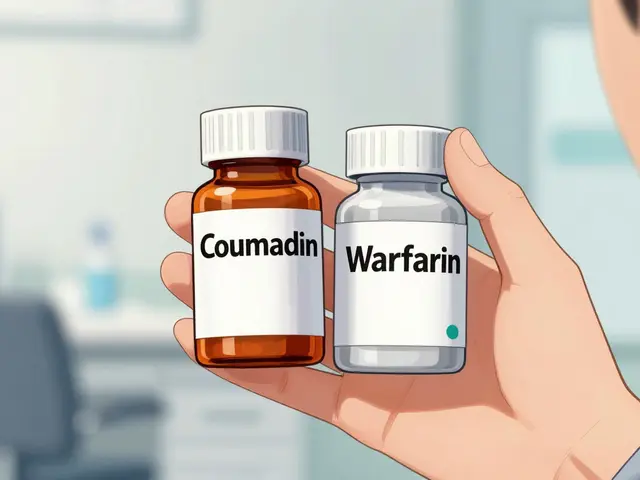

Antidepressant Risk & Monitoring Guide
Patient Profile Assessment
Did You Know?
The Black Box Warning applies to patients under 24 years old. However, untreated depression carries a higher baseline risk of suicide than the marginal risk added by medication for most patients.
Your Personalized Risk Summary
Calculating...Risk Factors Identified:
Protective Factors:
Recommended Monitoring Checklist
When to Seek Immediate Help
Contact emergency services or a crisis hotline if you observe sudden aggression, extreme anxiety, panic attacks, insomnia, or any mention of death/dying.
Imagine being prescribed a medication to lift the heavy fog of depression, only to be handed a leaflet that warns the drug might make you want to end your life. It sounds like a cruel paradox, doesn't it? This is exactly what the Black Box Warning is for antidepressants. For over two decades, this stark warning has sat at the front of every prescription package for drugs treating depression in young people. But does it actually keep patients safe, or does it do more harm than good by scaring them away from treatment?
The debate is fierce, complex, and deeply personal. On one side, we have the logic that untreated depression is deadly. On the other, we have data suggesting these medications can spark dangerous thoughts in some young minds. If you are a parent, a patient, or just someone trying to understand the headlines, you need to know the facts behind the fear. Let’s break down what this warning means, where it came from, and what the latest science says about the real risks involved.
What Is the Antidepressant Black Box Warning?
To understand the controversy, you first need to know what a Black Box Warning actually is. In the world of pharmaceuticals regulated by the U.S. Food and Drug Administration (FDA), a Black Box Warning is the most severe safety alert they can issue without banning a drug entirely. It appears in boldface text inside a literal black border at the very beginning of the package insert-the document doctors read before prescribing. You cannot miss it.
This specific warning applies to all classes of antidepressants, including selective serotonin reuptake inhibitors (SSRIs) like fluoxetine (Prozac) and sertraline (Zoloft), as well as others like bupropion (Wellbutrin). The core message is simple but alarming: antidepressant usage may increase the risk of suicidality (suicidal thoughts and behaviors) in children, adolescents, and young adults up to age 24.
It is crucial to note a key distinction here. The warning speaks to suicidal thoughts and behaviors, not necessarily completed suicides. In the original trials that triggered this warning, no actual suicides occurred among the participants taking the drugs. However, the statistical jump in suicidal ideation was enough to trigger the highest level of alarm from regulators.
How Did This Warning Start?
The story begins in October 2004. At that time, the FDA conducted a massive review of clinical trial data. They looked at 24 short-term, placebo-controlled trials involving nine different antidepressant drugs. These studies covered over 4,400 patients with major depressive disorder (MDD), obsessive-compulsive disorder (OCD), and other psychiatric conditions.
Here is what they found:
- Placebo Group: About 2% of patients taking sugar pills reported suicidal events.
- Antidepressant Group: About 4% of patients taking the actual medication reported suicidal events.
In May 2006, the agency expanded the scope. They raised the age limit for the warning from under 18 to under 24 years old. This meant that college students and young adults were now included in the "at-risk" category. The decision was driven by a joint meeting of advisory committees who believed that caution was better than regret, even if the absolute number of cases remained low.
The Great Debate: Does the Warning Save Lives?
Since 2004, the medical community has been split down the middle. This isn't just academic disagreement; it has real-world consequences for millions of young people struggling with mental health issues.
The Argument Against the Warning A landmark study published in Health Affairs in 2023 by Jeffrey A. Bridge and colleagues analyzed over fifteen years of data using rigorous methods. Their conclusion was striking: the warning likely causes more harm than good. Here is why:
- Fear Stops Treatment: After the warning went out, physician visits for depression dropped by 14.5%. Diagnoses fell by nearly 20%.
- Less Therapy: Visits for psychotherapy decreased by 17.1%, suggesting families were avoiding mental health care altogether.
- Rising Deaths: Paradoxically, suicide deaths among youth increased by 14.9% in the years following the warning's implementation.
- Dangerous Substitutions: Emergency department visits for psychotropic drug poisonings jumped by 28.6%. Researchers suggest that when standard treatments are avoided or feared, desperate individuals may turn to more lethal methods.
The Argument For the Warning On the other side, experts like David Healy and various case-control studies maintain that the biological risk is real. They critique the "warning causes harm" studies as methodologically weak, citing issues like failing to control for confounding variables. Their stance is that clinical trials offer the cleanest data possible, and that data shows a clear spike in suicidal ideation when young brains are exposed to SSRIs. For them, ignoring this signal would be negligent.
What Happens in Real Clinics?
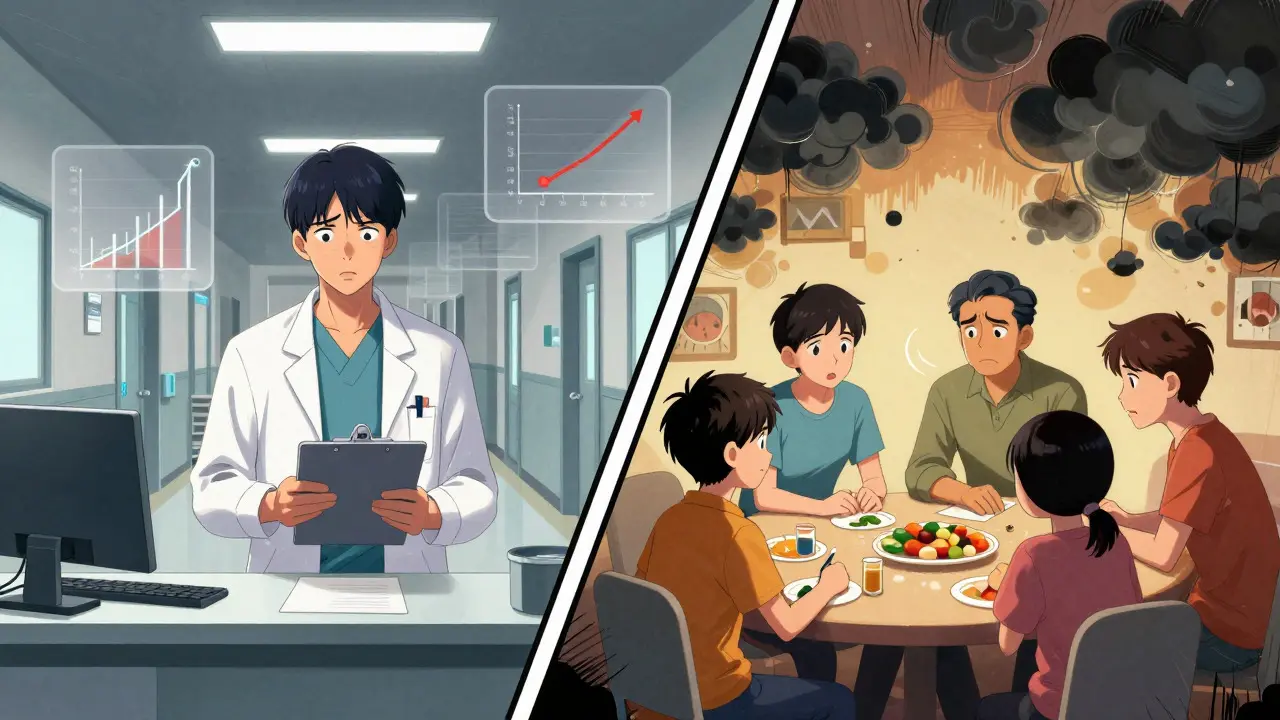
If you walk into a psychiatrist’s office today, you will feel the tension of this debate. Doctors face a difficult balancing act. They know that Major Depressive Disorder itself carries a high risk of suicide. Yet, they also know that starting an SSRI can cause agitation, anxiety, or racing thoughts in the first few weeks of treatment-a phenomenon sometimes called "activation syndrome."
Clinicians report that many patients and families misinterpret the Black Box Warning. They hear "this drug causes suicide" rather than "this drug may increase suicidal thoughts during early treatment, requiring close monitoring." This misunderstanding leads to refusal of treatment. There are documented cases where patients refused pharmacological treatment specifically because of the warning, potentially leaving their severe depression unmanaged and increasing their long-term risk.
The American Psychiatric Association (APA) has tried to bridge this gap. Their guidance emphasizes that while the warning is important, the benefits of antidepressant treatment generally outweigh the risks for most patients. The key, they say, is not avoidance, but vigilance.
Who Is Most at Risk?
Not all antidepressants are created equal, nor are all patients. The risk profile varies significantly based on age, medication type, and individual history.
| Factor | Details & Implications |
|---|---|
| Age Group | Children, adolescents, and young adults (under 24) show the highest relative increase in suicidal thoughts compared to older adults. |
| Timing | Risk is highest during the initial weeks of treatment or after dosage changes, before the therapeutic mood-lifting effects kick in. |
| Paroxetine (Paxil) | A 2021 meta-analysis suggested paroxetine may carry a higher risk of suicidality compared to other SSRIs. |
| Fluoxetine (Prozac) | One of the few antidepressants approved for pediatric MDD and OCD, often considered a first-line treatment despite the class-wide warning. |
| Untreated Depression | Carries a consistently high baseline risk of suicide, which often exceeds the marginal risk added by medication. |

Current Status and Future Directions
As of 2026, the Black Box Warning remains in place. However, the landscape is shifting. In September 2022, the FDA’s Pediatric Advisory Committee reviewed new evidence. While they decided to keep the warning, they modified the language to better clarify the risk-benefit profile. The goal is to move away from fear-mongering toward informed consent.
The future likely holds a more nuanced approach. Rather than a blanket warning for all antidepressants, experts advocate for medication-specific warnings. A 2021 meta-analysis by Gibbons et al. supported this, showing that risk varies significantly by drug. Some antidepressants show minimal increased risk, while others pose higher concerns. Additionally, the American College of Neuropsychopharmacology recommends increased emphasis on individualized risk assessment and careful monitoring during the initial treatment phase.
The trend is moving toward precision psychiatry. Instead of telling everyone "be afraid," the focus is shifting to "watch closely." This means frequent check-ins during the first four to six weeks of treatment, involving both the patient and their family members, to spot any signs of agitation or emerging suicidal thoughts immediately.
What Should You Do?
If you or a loved one is considering antidepressants, do not let the Black Box Warning paralyze you into inaction. Untreated depression is a serious, life-threatening condition. Here are practical steps to navigate this safely:
- Open Communication: Discuss the warning openly with your doctor. Ask specifically about the risks associated with the prescribed medication versus the risks of staying untreated.
- Monitor Closely: The first month is critical. Family members should watch for sudden changes in behavior, sleep patterns, or mood swings.
- Combine Treatments: Evidence suggests that combining medication with psychotherapy (like CBT) yields better outcomes and may mitigate risks.
- Have an Emergency Plan: Know who to call if things go wrong. Keep crisis hotline numbers visible and accessible.
Does the Black Box Warning mean antidepressants cause suicide?
No. The warning states that antidepressants may increase the risk of suicidal thoughts and behaviors, particularly in young people under 24. In the original trials that led to the warning, no actual suicides occurred among those taking the medication. The risk is primarily related to emergent agitation or activation syndrome in the early stages of treatment, not direct causation of death.
Which antidepressants have the Black Box Warning?
The warning applies to all classes of antidepressants, including SSRIs (like Prozac, Zoloft, Paxil), SNRIs (like Effexor), and others (like Wellbutrin). It is a class-wide warning issued by the FDA to cover all medications used to treat depression, anxiety, and related disorders in patients under 24.
Is it safer to avoid antidepressants due to the warning?
Recent research suggests that avoiding treatment may be more dangerous. Studies indicate that the warning led to fewer diagnoses and less therapy, correlating with an increase in youth suicide deaths. Untreated depression carries a high inherent risk of suicide. Most experts agree that the benefits of treatment, when monitored closely, outweigh the risks for most patients.
When is the risk of suicidal thoughts highest?
The risk is highest during the initial weeks of starting the medication or after a dosage increase. This is often referred to as the "activation period," where energy levels may rise before mood improves, potentially allowing a depressed person to act on suicidal thoughts. Close monitoring during the first 4-6 weeks is essential.
Why did the FDA expand the warning to age 24?
Originally, the warning applied only to children and adolescents under 18. In 2006, the FDA expanded it to include young adults up to age 24 because data showed that this demographic also exhibited a higher relative risk of suicidal ideation compared to older adults. Young adulthood is a transitional period with unique stressors and brain development factors.
How does the EMA's warning differ from the FDA's?
The European Medicines Agency (EMA) issued a similar warning but without the strict "Black Box" format. Their approach focuses more on routine monitoring and risk management plans rather than the stark, fear-inducing label used in the U.S. This reflects different regulatory philosophies regarding risk communication and patient perception.
Can I get a waiver for the Black Box Warning?
There is no formal "waiver" process for the Black Box Warning itself, as it is part of the drug's labeling. However, doctors can prescribe off-label or use alternative treatments if they believe the risks outweigh the benefits for a specific patient. The decision is made through shared decision-making between the clinician and the patient/family.
What should parents look for in their teen starting antidepressants?
Parents should watch for sudden irritability, aggression, extreme anxiety, panic attacks, insomnia, or impulsive behavior. Any mention of death, dying, or hopelessness should be taken seriously. Regular, non-judgmental conversations about how the teen is feeling are crucial during the first month of treatment.