
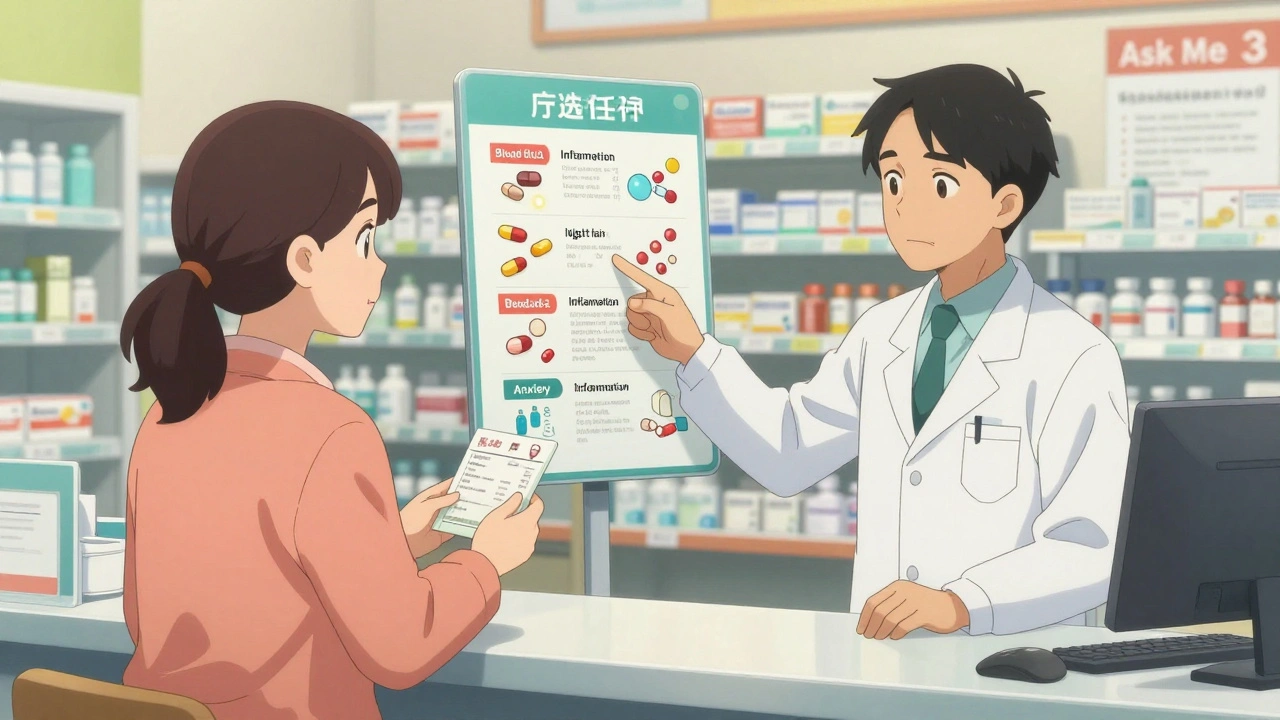
When you pick up a new prescription, most people grab the bag and head out the door. But what if you don’t know what the pill is for, or why you’re taking it? Or what happens if you miss a dose? You’re not alone. Nearly half of all patients don’t fully understand how to take their meds - and that’s where things go wrong.
What is this medicine actually for?
Start with the basics. Don’t assume the label tells you everything. Ask: "What is this medication for and how will it help me?" Many people take pills for months without knowing the reason. A Brown University Health study found that 30% of medication errors happen because patients don’t understand why they’re taking a drug. If your doctor prescribed it for high blood pressure, but the bottle says "for anxiety," something’s off. Ask for clarity. If the pharmacist says it’s for pain, but your doctor said it was for inflammation, get it sorted before you leave the counter.When and how should I take it?
Timing matters. Some meds need to be taken with food to avoid stomach upset. Others work better on an empty stomach. Some must be taken at the same time every day. Ask: "Should I take this with or without food?" and "What time of day is best?" If you’re supposed to take it in the morning but it makes you drowsy, tell them. Maybe it’s better at night. One patient in a Gundersen Health case took a blood pressure pill at night - and ended up dizzy at work. The pharmacist adjusted the timing, and the side effect vanished. Also ask: "Should I avoid certain activities?" Some drugs make you dizzy. Others make you sensitive to the sun. If you’re planning a beach trip or a night shift, you need to know.What side effects should I watch for?
Not all side effects are equal. Some are annoying, like a dry mouth. Others are dangerous. Ask: "What are the most common side effects?" and "Which ones mean I need to call a doctor right away?" For example, if you’re on a statin and get unexplained muscle pain, that could be a sign of a serious reaction. If you’re taking an antidepressant and feel sudden mood swings or suicidal thoughts, that’s an emergency. Pharmacists hear this stuff every day. They know which side effects are normal and which are red flags. Don’t wait until you’re in panic mode. Ask upfront.Could this interact with anything else I’m taking?
This is one of the most overlooked questions. You might think your doctor knows everything you take. But they often don’t. Supplements, herbal teas, over-the-counter painkillers - all of it matters. Ask: "Does this interact with my other medications, supplements, or foods?" The FDA says 15% of hospital admissions are caused by drug interactions that could’ve been avoided. One Reddit user asked about hawthorn berry - a popular heart supplement - and found out it dangerously lowered their blood pressure when mixed with their prescription. Their doctor never mentioned it. The pharmacist caught it. Another patient took St. John’s Wort for low mood and tramadol for pain. The combo triggered serotonin syndrome - a life-threatening reaction. Neither knew. Ask the pharmacist. Bring a list. Even if it’s just a vitamin.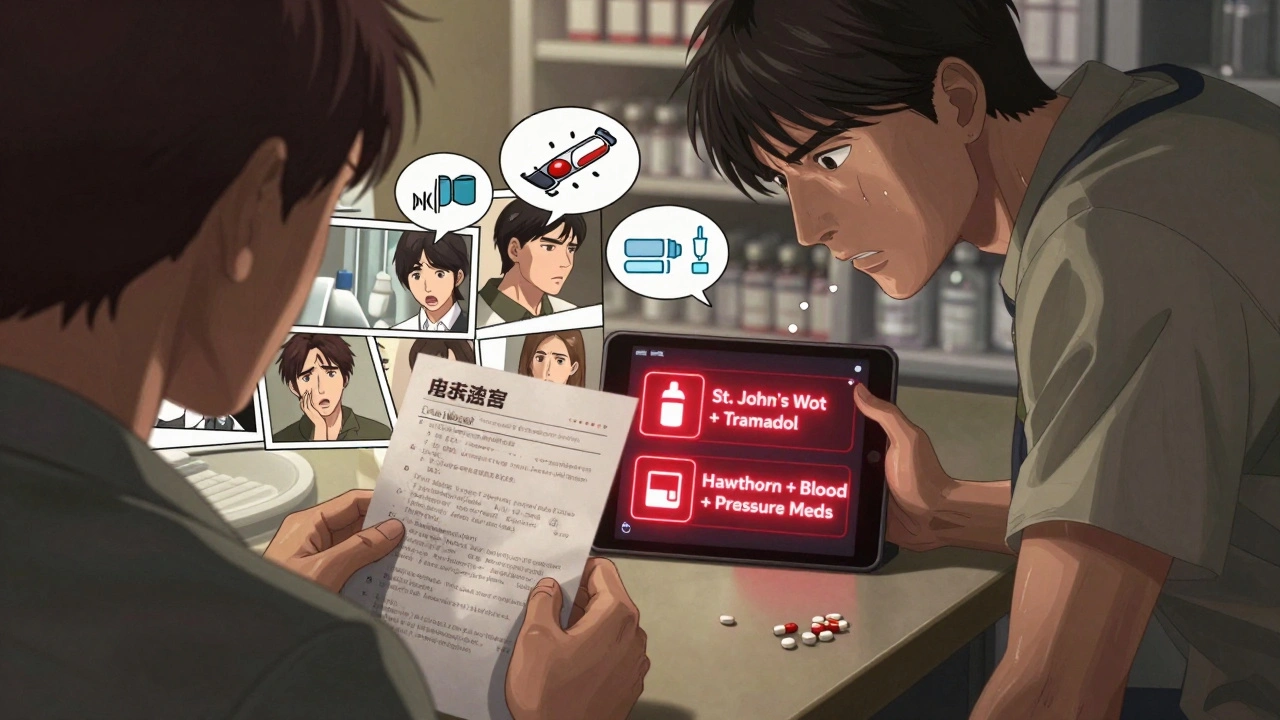
What if I miss a dose?
Life happens. You oversleep. You forget. You run out. Ask: "What should I do if I miss a dose?" Some meds you can take right away. Others you should skip and wait for the next scheduled time. Taking two pills to make up for one can be dangerous. For example, missing a blood thinner dose and doubling up later could cause internal bleeding. A 2023 University of Michigan study found that patients who asked this question had 65% fewer medication-related problems. Also ask: "Are there reminders or tools to help me stay on track?" Many pharmacies offer blister packs, phone alerts, or apps. Don’t guess. Get help.Will this work? How will I know?
How long before you feel better? Some meds take days. Others take weeks. If you stop because you don’t see results, you might be doing more harm than good. Ask: "When will I notice improvement?" and "Will I need tests to check if it’s working?" For example, cholesterol meds won’t make you feel different - but your blood work will show results. Thyroid meds can take 6-8 weeks to stabilize. If your doctor didn’t mention follow-up tests, ask your pharmacist. They know what labs are needed and when. A 2019 My HealtheVet survey found that 68% of patients couldn’t say when their meds should start working. Don’t be one of them.Is there a cheaper or simpler option?
Cost is a real barrier. Many people skip doses or stop taking meds because they can’t afford them. Ask: "Is there a generic version?" Generic drugs are legally required to work the same as brand names - but cost 80-85% less. The FDA confirms this. Ask: "Are there non-drug alternatives?" For mild arthritis, weight loss, or early-stage high blood pressure, lifestyle changes can help. Your pharmacist can point you to proven diet, exercise, or supplement options. Also ask: "Can I get a 90-day supply?" Many insurers save you money on larger fills. Some pharmacies offer discount cards or patient assistance programs. Don’t assume it’s expensive - ask.Where can I find trustworthy info?
Google is full of misinformation. A Reddit thread from May 2023 had a user who read online that their medication caused weight gain - but the official FDA label didn’t mention it. The pharmacist checked the source and found it was a misinterpreted forum post. Ask: "Where can I find reliable information about this medication?" Pharmacists can point you to FDA-approved patient guides, trusted websites like MedlinePlus, or printed materials from the manufacturer. They know what’s legit and what’s not. If they say, "Check the box insert," ask them to explain it. You shouldn’t have to decode medical jargon alone.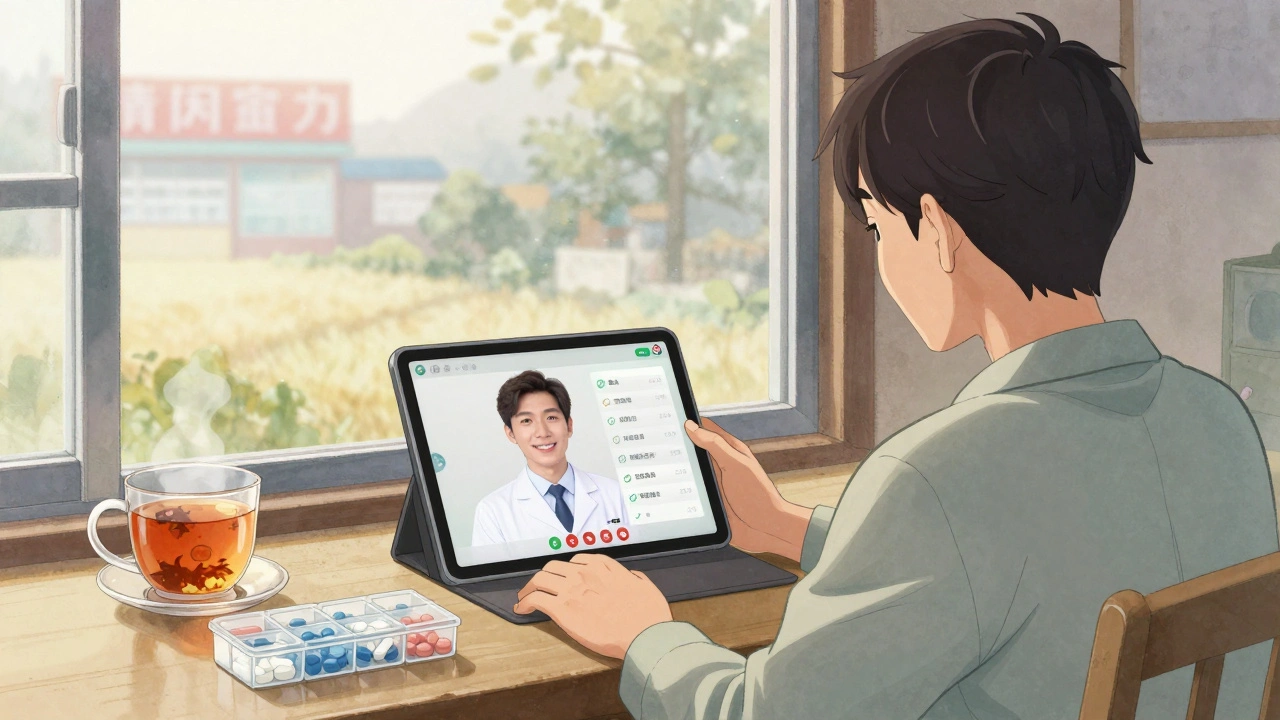
How to prepare for your visit
Don’t walk in blind. Bring a list of everything you take: prescriptions, over-the-counter drugs, vitamins, herbs, even eye drops or patches. Use the FDA’s free "My Medicine Record" form - it’s simple and covers all the basics. Arrive early. The best time to ask questions is when you pick up your prescription. Pharmacists usually have 5-7 minutes before the next customer. If you’re rushed, ask if you can schedule a short consultation later. Some pharmacies offer 15-minute appointments just for med reviews. Bring your insurance card and ID. If you’re on Medicare, ask if you qualify for Medication Therapy Management (MTM) - it’s a free, in-depth review of all your meds.Why this matters
Pharmacists are the most accessible healthcare professionals in the U.S. - 94% of Americans live within five miles of one. They’re trained to catch mistakes doctors miss. Studies show pharmacist interventions reduce hospital visits by 33% and prevent 27% of hospital admissions. In 2023, 8.7 million Medicare patients got free medication reviews through MTM programs - and 92% said they understood their meds better afterward. Yet, a 2022 Consumer Reports survey found that 63% of patients felt they couldn’t ask all their questions during a typical 2.7-minute pharmacy visit. That’s not enough time to save a life. Don’t settle for rushed answers. Be ready. Be clear. Be persistent.What if you’re in a rural area?
In 7,306 U.S. areas, pharmacist shortages mean long drives or no access at all. But telepharmacy is growing. Sixty-two percent of rural hospitals now offer virtual pharmacist consultations. If you can’t get there in person, call or video chat. Ask for a remote med review. Many pharmacies offer this now. Don’t let distance stop you from getting the info you need.Final thought: Ask at least three questions
The American Pharmacists Association’s "Ask Me 3" campaign encourages patients to ask: "What is my main problem?" "What do I need to do?" and "Why is it important?" Patients who ask these three questions have 31% fewer medication errors. That’s not luck. That’s knowledge. Your pharmacist isn’t just filling a bottle. They’re your safety net. Use them.Can pharmacists change my prescription?
No, pharmacists can’t change your prescription on their own. But they can call your doctor to suggest alternatives - like switching to a generic, adjusting the dose, or fixing a potential interaction. In 45 states, pharmacists now have limited prescribing authority for things like naloxone or smoking cessation aids, but they still need a doctor’s original order for most medications.
Do I need to tell my pharmacist about supplements?
Yes. Supplements like St. John’s Wort, ginkgo, garlic, or fish oil can interact with blood thinners, antidepressants, or blood pressure meds. Many people think supplements are "natural" so they’re safe - but that’s not true. A 2023 study found that 68% of patients didn’t tell their pharmacist about supplements. That’s a major risk.
What if I don’t understand what the pharmacist says?
Ask them to explain it again - or better yet, use the "teach-back" method. Say: "Just to make sure I got this right - you’re saying I should take this after breakfast and avoid grapefruit?" If you can repeat it correctly, you’re more likely to follow it. Research shows this increases adherence by 40%. Don’t be afraid to ask for simpler words.
Can I ask about side effects I read online?
Absolutely. Bring up anything you’ve seen - even if it sounds scary. Pharmacists see misinformation all the time. They can tell you if it’s rare, common, or made up. One patient worried about a side effect they read about on a forum. The pharmacist checked the official data and found it was listed in fewer than 1 in 10,000 cases. That kind of reassurance matters.
Is it okay to ask for a different brand if the one I got is too expensive?
Yes. If you can’t afford it, say so. Pharmacists know about discount programs, manufacturer coupons, and alternative generics. Some even have sample packs or patient assistance applications they can help you fill out. Don’t assume you’re stuck with the price on the label.
How often should I talk to my pharmacist?
Every time you get a new prescription. Also, if your meds change - even slightly - schedule a quick check-in. If you’re on five or more medications, ask about a Medication Therapy Management (MTM) review. Medicare Part D patients can get this for free once a year. It’s a full review of everything you take, with a written plan.



aditya dixit December 5, 2025
It's wild how we treat pills like magic beans and never ask what they actually do. I used to just swallow whatever was handed to me until my dad had a bad reaction to a statin he didn't know was for cholesterol. Turns out he thought it was for his back pain. Now I ask the pharmacist three questions every time: what's this for, what should I watch for, and is there a cheaper version? Simple stuff, but it saves lives.
Pharmacists aren't just cashiers with stethoscopes. They're the last line of defense before something goes sideways. And most people treat them like they're just there to hand out bottles.
Bring a list. Even if it's scribbled on a napkin. Even if you're embarrassed about the supplements you're taking. They've seen it all. The weird herbal teas, the random vitamins from the gas station, the 'natural' remedies your aunt swears by. None of it's too silly to mention.
And if they give you an answer that sounds like jargon? Ask them to explain it like you're five. Seriously. That's how you know you really understand it.
Also - yes, tell them about the turmeric you're taking with your blood thinner. It matters. A lot.
Lynette Myles December 6, 2025
They’re not telling you the whole truth. Big Pharma pays pharmacists to downplay side effects. You think they want you to know about the 1 in 10,000 risk of liver failure? Nah. They want you to keep coming back for refills. Always check the FDA’s MedWatch database yourself - not what they tell you.
Jimmy Jude December 7, 2025
Let me just say this - if you’re not asking your pharmacist if your meds are secretly making you depressed, you’re doing life wrong.
I took lisinopril for six months. Felt like a zombie. Couldn’t cry. Couldn’t laugh. Just… existed. Went to the pharmacy, asked, ‘Is this thing making me emotionally dead?’ They looked at me like I was a ghost.
Turns out? Yes. It was. They switched me. I cried for three hours after. Not from sadness - from relief.
Pharmacists know. They just don’t always say it. You gotta push. You gotta be dramatic. You gotta scream into the void until someone hears you.
And if they say ‘it’s rare’? That’s code for ‘we’ve seen it happen before.’
Chris Brown December 8, 2025
It is regrettable that the general populace continues to demonstrate such a profound lack of diligence regarding pharmaceutical administration. The responsibility for safe medication use does not rest solely with the prescribing physician or the dispensing pharmacist - it is, in fact, an ethical imperative incumbent upon the patient to be adequately informed.
One cannot, in good conscience, accept a prescription without inquiring as to its pharmacological mechanism, potential contraindications, and the veracity of information disseminated by commercial entities.
The normalization of passive compliance is not merely irresponsible - it is a systemic failure of civic duty. One must be vigilant. One must be precise. One must not allow convenience to supersede comprehension.
Carole Nkosi December 9, 2025
You people are so naive. You think the pharmacist gives a damn about you? They’re paid by the corporation to get you to take more pills. The ‘free MTM review’? It’s a trap. They use it to upsell you on brand-name drugs you don’t need. I’ve seen it. I’ve reported it. They don’t care if you live or die - they care if your insurance pays.
And don’t even get me started on generics. ‘Same thing’ my ass. The fillers are different. The absorption rates are different. You’re basically taking a knockoff iPhone and expecting it to last like the real one.
Stop trusting the system. Start reading the FDA’s full adverse event reports. And if you’re still taking anything prescribed without doing your own research? You’re not a patient. You’re a data point.
Mellissa Landrum December 11, 2025
OMG I JUST REALIZED MY PHARMACIST GAVE ME THE WRONG PILLS LAST WEEK 😭 I THOUGHT IT WAS MY BP MED BUT IT WAS A DIABETES ONE?? I TOOK IT FOR 3 DAYS. I THINK I’M GONNA DIE. SOMEONE HELP. ALSO I THINK THEY’RE TRACKING US WITH THOSE BLISTER PACKS. THEY KNOW WHEN WE SKIP DOSES. THEY KNOW.
Mark Curry December 11, 2025
Good post. Really helpful.
I started bringing my meds list every time I pick something up. Even if it’s just a new vitamin. My pharmacist remembers my name now. That’s kinda nice.
Also - yeah, tell them about the fish oil. I didn’t, and I got a weird bruise on my arm. Turned out it was thinning my blood. They fixed it in 5 minutes. No drama. Just good info.
Just ask. It’s not weird. They’re there for that.
:)
Manish Shankar December 12, 2025
It is with profound respect for the professional integrity of pharmacists that I acknowledge their indispensable role in the healthcare ecosystem. The average patient, often overwhelmed by the complexity of polypharmacy, stands to gain significantly from structured engagement with the pharmacist as a clinical resource.
It is advisable to approach the pharmacy with a written inventory of all pharmaceuticals, including botanical supplements and over-the-counter agents, as the absence of such documentation may lead to inadvertent therapeutic conflict.
Furthermore, the practice of employing the teach-back method - wherein the patient paraphrases instructions in their own words - has been empirically validated to enhance adherence and reduce error rates by a statistically significant margin.
One ought not to perceive the pharmacist as a mere dispenser of medication, but rather as a guardian of therapeutic safety. To neglect this relationship is to forfeit a vital safeguard.
luke newton December 14, 2025
Everyone’s acting like this is some revolutionary idea. Like, wow, ask questions? Groundbreaking.
Meanwhile, people are still swallowing antibiotics they got from their cousin’s friend who ‘swears by them’ and then blame the system when they get C. diff.
I’ve been in the ER twice because people didn’t ask. Once for a drug interaction between melatonin and a beta-blocker. Melatonin. From CVS. In the ‘natural sleep’ aisle.
It’s not that people don’t know they should ask. They just don’t care enough to do it until it’s too late.
And don’t get me started on the ‘I don’t want to bother them’ nonsense. They get paid to be bothered. That’s their job. Stop being polite and start being alive.