
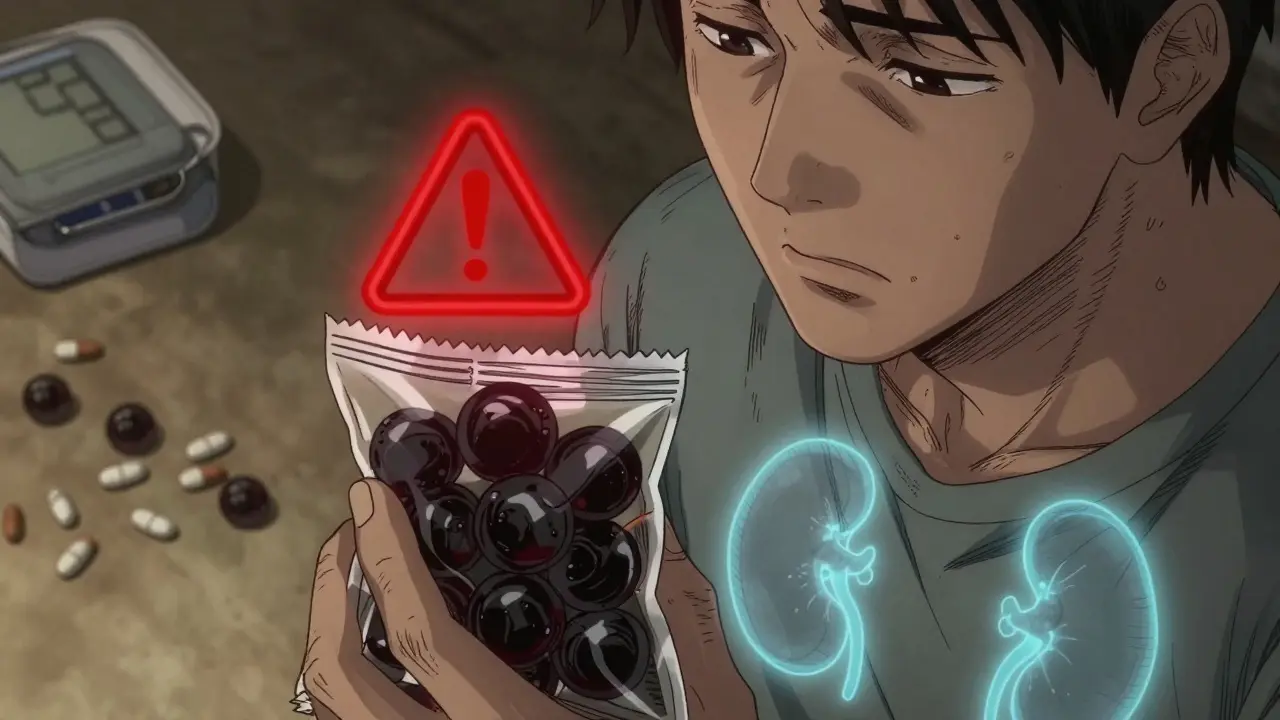
If you're taking medication for high blood pressure, eating black licorice candy or drinking licorice tea might be more dangerous than you think. It’s not just about sugar or taste-it’s about a compound called glycyrrhizin that can quietly undo the work of your meds. This isn’t speculation. It’s been documented in medical journals since the 1950s. And it’s happening right now to people who think they’re just enjoying a sweet treat.
How Licorice Actually Raises Blood Pressure
Glycyrrhizin, the main active ingredient in real licorice root, doesn’t just make things sweet. It messes with your kidneys. Specifically, it blocks an enzyme called 11β-HSD2, which normally keeps cortisol-the stress hormone-from acting like aldosterone, a hormone that tells your body to hold onto salt and water. When this enzyme is turned off, cortisol starts behaving like aldosterone. Result? Your body keeps more sodium and water, and flushes out more potassium. That’s a one-way ticket to higher blood pressure.
This isn’t subtle. Studies show that consuming more than 100 mg of glycyrrhizin a day-roughly 60 to 70 grams of traditional black licorice candy-can raise systolic blood pressure by over 5 mmHg. That might sound small, but in someone already struggling with hypertension, it’s enough to push them out of their target range. And it doesn’t just stop there. Potassium levels drop, too. A typical drop of 0.5 to 1.0 mmol/L can cause muscle weakness, cramps, or even dangerous heart rhythms.
Why Your Blood Pressure Meds Stop Working
All blood pressure medications work by lowering pressure in different ways-by relaxing arteries, reducing fluid, or slowing heart rate. But licorice works in the opposite direction. It increases blood volume. That means drugs like ACE inhibitors (captopril, lisinopril), beta-blockers, or calcium channel blockers (amlodipine, felodipine) have to work harder, often failing to do their job. The effect isn’t just theoretical. Patients on these meds who regularly eat licorice often show no improvement, even when they’re taking pills exactly as prescribed.
The worst combo? Licorice with diuretics like hydrochlorothiazide or furosemide. Both make you lose potassium. Together, they can send potassium levels crashing below 3.5 mmol/L-the danger zone. That’s when you start seeing symptoms: fatigue, palpitations, muscle twitching, and in severe cases, paralysis or cardiac arrest.
The Digoxin Danger: A Life-Threatening Mix
If you’re taking digoxin (Lanoxin) for heart failure or atrial fibrillation, licorice is a red alert. Digoxin works by affecting the sodium-potassium pump in heart cells. Normally, potassium keeps it in check. But when licorice drains potassium from your blood, digoxin binds too tightly to the pump. That’s when toxicity kicks in. There’s a documented case of an elderly man admitted to hospital with congestive heart failure after using a herbal laxative containing licorice. His digoxin levels spiked. His heart couldn’t keep up. He nearly died.
Doctors now treat unexplained low potassium and sudden heart rhythm problems as possible signs of licorice overuse-especially in older adults or those already on heart meds. It’s not rare. It’s underdiagnosed.
Who’s at Highest Risk?
Not everyone reacts the same way. Some people can eat a small piece of licorice once in a while with no issue. But others? They’re sitting on a time bomb.
- Older adults: Kidney function declines with age. Your body clears glycyrrhizin slower, so it builds up.
- Women: Studies show women are more sensitive to glycyrrhizin’s effects, even at lower doses.
- People with existing high blood pressure: Your body is already struggling to manage pressure. Licorice adds fuel to the fire.
- Those on multiple heart meds: The more drugs you take, the higher the chance of a dangerous interaction.
Even if you’re not on meds, if you’ve ever had a heart problem, kidney disease, or liver issues, you should avoid licorice. It’s not worth the risk.

What Counts as “Licorice”?
Not all licorice-flavored products are the same. Many candies, especially in the U.S. and some parts of Europe, use anise oil instead of real licorice root. That’s safe. But if it says “licorice root extract,” “Glycyrrhiza glabra,” or “natural licorice flavor” on the ingredients list, you’re getting glycyrrhizin.
Common sources include:
- Traditional black licorice candy (especially European brands)
- Herbal teas labeled as “licorice root tea”
- Dietary supplements for digestion, adrenal support, or “natural energy”
- Some tobacco products and throat lozenges
Check labels. If it’s not clear, assume it contains glycyrrhizin. When in doubt, skip it.
What to Do If You’ve Been Eating Licorice
If you’ve been regularly eating licorice while on blood pressure meds, here’s what to do:
- Stop consuming any licorice root products immediately.
- Don’t quit your meds. That’s dangerous on its own.
- Call your doctor. Tell them you’ve been eating licorice-be specific about how much and how often.
- Ask for a blood test: Check potassium levels and cortisol:cortisone ratio if possible.
- Monitor your blood pressure daily for the next week. Look for sudden spikes.
Most people see improvement within days after stopping licorice. Blood pressure drops. Potassium levels rise. But if you’ve had symptoms like chest pain, irregular heartbeat, or extreme weakness, go to urgent care. Don’t wait.
What’s the Safe Amount?
There’s no perfectly safe dose for people on blood pressure meds. But for the general public, health agencies like Medsafe (New Zealand) and the European Food Safety Authority say 100 mg of glycyrrhizin per day is the upper limit to avoid side effects. That’s about 70 grams of licorice candy-more than two standard packs.
But if you’re on medication? That number drops to zero. Even 20 mg a day might be enough to interfere with your treatment. The safest choice is to avoid it completely.
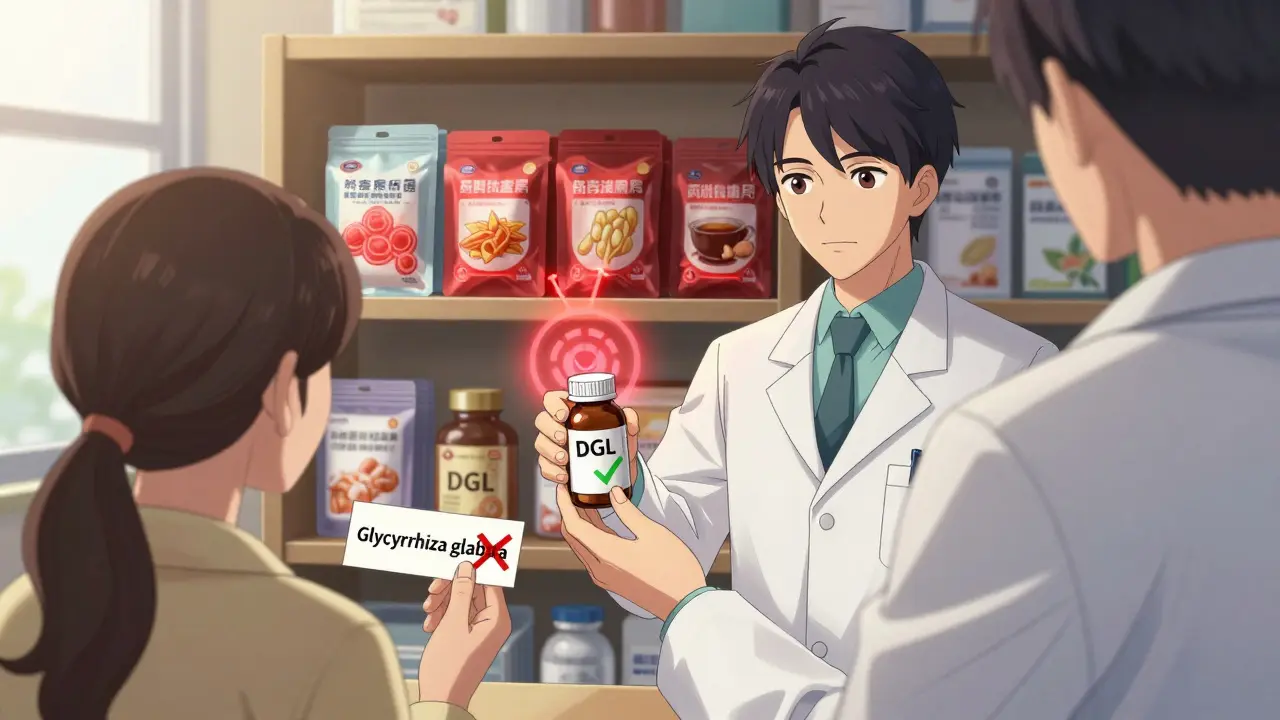
What About Deglycyrrhizinated Licorice (DGL)?
You might see DGL supplements marketed for stomach ulcers or acid reflux. These are processed to remove glycyrrhizin. That means they don’t raise blood pressure or lower potassium. DGL is generally safe for people on blood pressure meds. But always check the label. Not all DGL products are created equal. Look for “deglycyrrhizinated” on the ingredient list. If it’s not there, it’s not safe.
Why This Isn’t Common Knowledge
Here’s the problem: there’s no legal requirement in the U.S. or many other countries to list glycyrrhizin content on food or supplement labels. You can buy a bag of “licorice” candy and have no idea how much you’re consuming. Supplements? Even worse. One study found that some herbal teas labeled as licorice contained up to 10 times more glycyrrhizin than advertised.
Doctors don’t always ask about herbal products or candy. Patients don’t think of licorice as a drug. That’s why this interaction flies under the radar-until someone ends up in the hospital.
Bottom Line
If you’re taking blood pressure medication, licorice isn’t just a sweet snack. It’s a hidden risk. It can make your meds fail, spike your blood pressure, drop your potassium, and trigger dangerous heart problems. You don’t need to give up all sweets. Just avoid anything made with real licorice root. Read labels. Ask your pharmacist. And if you’ve been eating it regularly, talk to your doctor. Your heart will thank you.
Can I eat licorice if I have high blood pressure but don’t take medication?
It’s not recommended. Even without medication, regular consumption of licorice can raise your blood pressure and lower potassium, increasing your risk of heart rhythm problems, fluid retention, and muscle weakness. If you have high blood pressure, avoiding licorice is the safest choice.
Does red licorice contain glycyrrhizin?
Usually not. Most red licorice is flavored with anise, strawberry, or cherry-none of which contain glycyrrhizin. But always check the ingredients. Some imported or artisanal brands may use real licorice root, even in red varieties.
How long does it take for licorice to affect blood pressure?
Effects can start within a few days of daily consumption, but significant changes usually appear after 2-4 weeks of taking more than 100 mg of glycyrrhizin per day. Some people notice symptoms like swelling, fatigue, or headaches sooner.
Can I have licorice tea occasionally?
If you’re on blood pressure medication, even one cup of licorice root tea a day can be risky. A single cup can contain 50-100 mg of glycyrrhizin. It’s not worth the chance. Choose herbal teas without licorice root, like chamomile or peppermint.
What should I do if I accidentally ate a lot of licorice?
Stop eating it immediately. Monitor for symptoms like muscle weakness, irregular heartbeat, or swelling in your legs. If you’re on medication, contact your doctor or pharmacist. They may recommend a blood test to check potassium and blood pressure. Don’t wait for symptoms to get worse.





Rosalee Vanness January 14, 2026
Okay, I just read this and my heart dropped. I’ve been sipping that ‘herbal calming tea’ every night for months-turns out it had licorice root in it. I’m on lisinopril and have been wondering why my BP won’t budge. No wonder. I’m dumping the whole stash tonight. Also, I just checked my pantry-three bags of ‘black licorice’ from that fancy European shop. Gone. I didn’t think candy could be this sneaky. Thanks for the wake-up call. My kidneys are already thanking you.
mike swinchoski January 14, 2026
You people are ridiculous. It’s just candy. If you can’t handle a little sugar, don’t take meds. My grandma ate licorice every day and lived to 92. Stop being dramatic.
Angel Tiestos lopez January 15, 2026
Brooo… this is wild 🤯 Like, imagine your body’s a little factory and licorice is the intern who shows up with a sledgehammer and says ‘I’m here to help!’ and then just smashes the cortisol switchboard. 😅 I used to think ‘natural’ meant safe. Nope. Turns out nature’s got a dark side… and it’s sweet. 🍬🩺 I’m gonna start reading labels like I’m decoding a spy novel now. #GlycyrrhizinIsTheNewCaffeine
Acacia Hendrix January 15, 2026
The clinical implications of glycyrrhizin-mediated 11β-HSD2 inhibition are profoundly underappreciated in primary care settings. The mineralocorticoid excess syndrome induced by chronic licorice ingestion mimics primary hyperaldosteronism, yet is frequently misattributed to non-compliance or essential hypertension. The potassium-wasting effect synergizes catastrophically with thiazide diuretics-potassium levels <3.0 mmol/L are not anecdotal, they’re iatrogenic emergencies. We need mandatory labeling. This is public health negligence.
Adam Rivera January 16, 2026
Man, I just told my mom about this. She’s 74, on amlodipine, and loves those licorice twists from the corner store. She said, ‘But it’s just a treat!’ Now she’s holding the bag like it’s radioactive. I printed out this whole post for her. She’s gonna switch to red licorice now-just to be safe. Thanks for making it so clear. Seriously, this is the kind of info that saves lives.
Priyanka Kumari January 18, 2026
This is such an important post. I’m a nurse in Mumbai, and I’ve seen patients come in with severe hypokalemia and arrhythmias, and they never mention licorice tea. In India, licorice root is used in almost every Ayurvedic remedy-for coughs, digestion, even ‘energy boosting.’ No one realizes it’s a drug. We need to educate people here too. I’m sharing this with my colleagues. Thank you for writing this with such clarity and care. Your work matters.
Avneet Singh January 18, 2026
How is this even a thing? I mean, the FDA doesn’t regulate herbal supplements properly. And people still buy ‘natural’ tonics like they’re buying vitamins from a gas station. It’s embarrassing. If you’re going to ingest phytochemicals with pharmacological effects, you need to be regulated like a drug. Otherwise, it’s just snake oil with a fancy label.
vishnu priyanka January 19, 2026
So I went back and checked my old tea boxes-yep, three of ‘em had licorice root. I thought it was just for flavor. Turns out I’ve been doing a slow-motion experiment on my own BP. I stopped last week. My legs aren’t puffy anymore. I sleep better. I didn’t even realize it was happening. Now I’m telling my whole family. Even my aunt who makes ‘healing tea’ for everyone. She’s gonna have to find a new ingredient. 🙏
Alan Lin January 19, 2026
Thank you for this meticulously researched, clinically grounded, and urgently necessary article. As a physician who has seen patients hospitalized for licorice-induced hypokalemia and digoxin toxicity, I can confirm this is not theoretical-it is routine, preventable, and tragically overlooked. I will be distributing this to every hypertensive patient I see. The failure of labeling regulations is a systemic failure of public health policy. This is not a dietary choice-it is a pharmacological exposure. Stop consuming licorice root if you are on cardiovascular medication. Period. Your heart is not a gamble.