
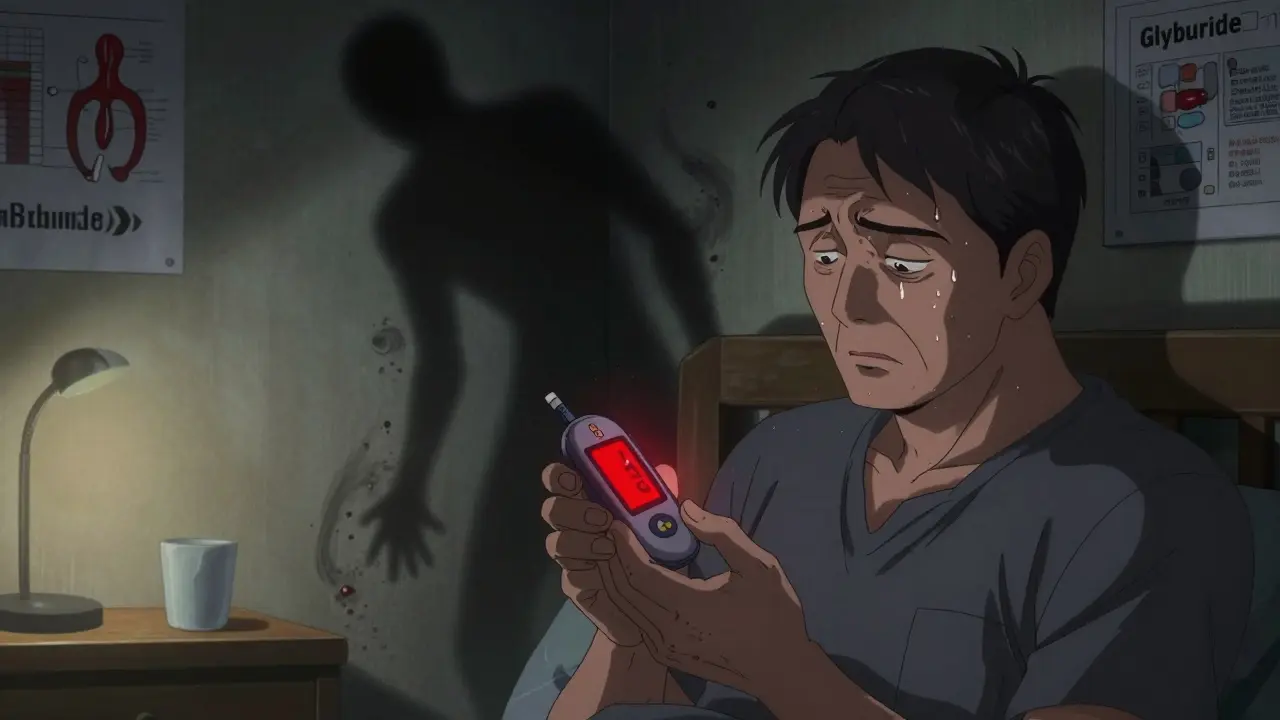
Sulfonylurea Safety Comparison Tool
Glyburide (glibenclamide)
Duration: Long-acting (10-24 hours)
Hypoglycemia episodes: 12.1 per 1,000 patient-years
Recommendation: Avoid in patients over 65 or with kidney impairment
Glipizide
Duration: Short-acting (2-6 hours)
Hypoglycemia episodes: 4.2 per 1,000 patient-years
Recommendation: Preferred option for all age groups
Glimepiride
Duration: Intermediate (up to 24 hours)
Hypoglycemia episodes: 7.8 per 1,000 patient-years
Recommendation: Use with caution in elderly or kidney impairment
Tolbutamide
Duration: Short-acting (4-8 hours)
Hypoglycemia episodes: 3.5 per 1,000 patient-years
Recommendation: Rarely used in U.S., but safer option
When you're managing type 2 diabetes, choosing the right medication isn't just about lowering blood sugar-it's about avoiding dangerous lows. Sulfonylureas have been around since the 1950s, and they still work. But not all of them are created equal. If you're on one, or your doctor is considering one, you need to know which version puts you at the highest risk for hypoglycemia-and which ones are safer.
Not All Sulfonylureas Are the Same
Sulfonylureas are a group of oral drugs that tell your pancreas to release more insulin. They’re cheap, effective, and still used in about 1 in 7 people with type 2 diabetes in the U.S. But here’s the problem: some of them stick around in your body way too long. That’s where the danger lies.
Take glyburide (also called glibenclamide). It’s one of the most prescribed sulfonylureas in the U.S., but it’s also the one most linked to severe low blood sugar. Why? Because it has a long half-life-up to 24 hours-and it produces active metabolites that keep working even after the original dose wears off. In older adults, especially those with kidney issues, those metabolites build up. A 2017 study in Diabetes Care found glyburide caused nearly three times more severe hypoglycemia than shorter-acting options. The FDA has since required stronger warning labels on its packaging.
Compare that to glipizide. It’s gone in 4 to 6 hours. No lingering metabolites. No overnight lows. A 2019 analysis in the American Journal of Managed Care showed glipizide caused only 4.2 episodes of severe hypoglycemia per 1,000 patient-years-less than a third of glyburide’s 12.1. That’s why the American Geriatrics Society’s 2023 Beers Criteria says: avoid glyburide in anyone over 65. Glipizide? It’s the preferred choice if you need a sulfonylurea.
The Numbers Don’t Lie
Let’s break it down with real data:
| Drug | Duration of Action | Hypoglycemia Episodes per 1,000 Patient-Years | Recommended for Elderly? |
|---|---|---|---|
| Glyburide (glibenclamide) | Long-acting (10-24 hours) | 12.1 | No-avoided in 65+ |
| Glimepiride | Intermediate (up to 24 hours) | 7.8 | Use with caution |
| Glipizide | Short-acting (2-6 hours) | 4.2 | Yes-preferred option |
| Tolbutamide | Short-acting (4-8 hours) | 3.5 | Yes-rarely used in U.S. |
These numbers aren’t theoretical. In a 2021 survey of over 2,000 patients, 78% of glipizide users said they had no severe low blood sugar episodes in the past year. Only 42% of glyburide users could say the same. On patient forums, stories like “I had 3 ER visits in 8 months on glyburide” are common. After switching to glipizide? Zero.
Why Does This Matter So Much?
Severe hypoglycemia isn’t just a scary moment-it can be life-threatening. A drop in blood sugar can lead to seizures, falls, car accidents, or even cardiac events. For older adults, it’s especially dangerous. One study of people over 65 found that those on glyburide had a 19.9% chance of serious hypoglycemia per year. That’s nearly 1 in 5. For tolbutamide? Just 3.5%.
The risk isn’t just about age. It’s also about kidney function. Glyburide is cleared through the kidneys. When kidney function drops below 60 mL/min, the drug and its metabolites accumulate. Glipizide, on the other hand, is mostly cleared through the liver. It’s safe even with mild kidney disease. The National Kidney Foundation says glipizide doesn’t need dose adjustment until eGFR falls below 30. Glyburide? Stop it at 60.
What About Cost? Isn’t Glipizide More Expensive?
Nope. In fact, glipizide costs about the same as glyburide-around $4 to $5 per month as a generic. The real cost isn’t the pill. It’s the ambulance ride, the ER visit, the hospital stay. A 2022 study found that the average cost of a severe hypoglycemia event in Medicare patients was over $8,000. That’s more than a year’s supply of glipizide.
And while newer drugs like GLP-1 agonists (Ozempic, Mounjaro) are safer, they cost $500+ per month. For many people, especially those on Medicare or without good insurance, sulfonylureas are the only affordable option. That’s why choosing the right one matters even more. You don’t have to give up affordability to reduce risk.
What Should You Do?
- If you’re on glyburide and you’re over 65, have kidney issues, or have had a low blood sugar episode in the past year-talk to your doctor about switching to glipizide.
- If you’re starting a sulfonylurea, ask for glipizide by name. Don’t accept glyburide unless there’s a clear reason.
- Start low. Even glipizide can cause lows if you start at 10 mg. Begin with 2.5 mg and increase slowly.
- Learn the 15-15 rule: If you feel shaky, sweaty, or confused, eat 15g of fast-acting sugar (like 4 glucose tablets or ½ cup juice), wait 15 minutes, check your blood sugar. Repeat if needed.
- Always carry medical ID. If you pass out from low blood sugar, someone needs to know you’re on a sulfonylurea.
New Developments: Is There Hope for Safer Options?
Yes. In early 2023, the FDA approved a new extended-release version of glipizide called Glucotrol XL. In clinical trials, it cut hypoglycemia risk by 32% compared to the regular pill. Why? Because it releases the drug slowly, avoiding the insulin spike that causes lows.
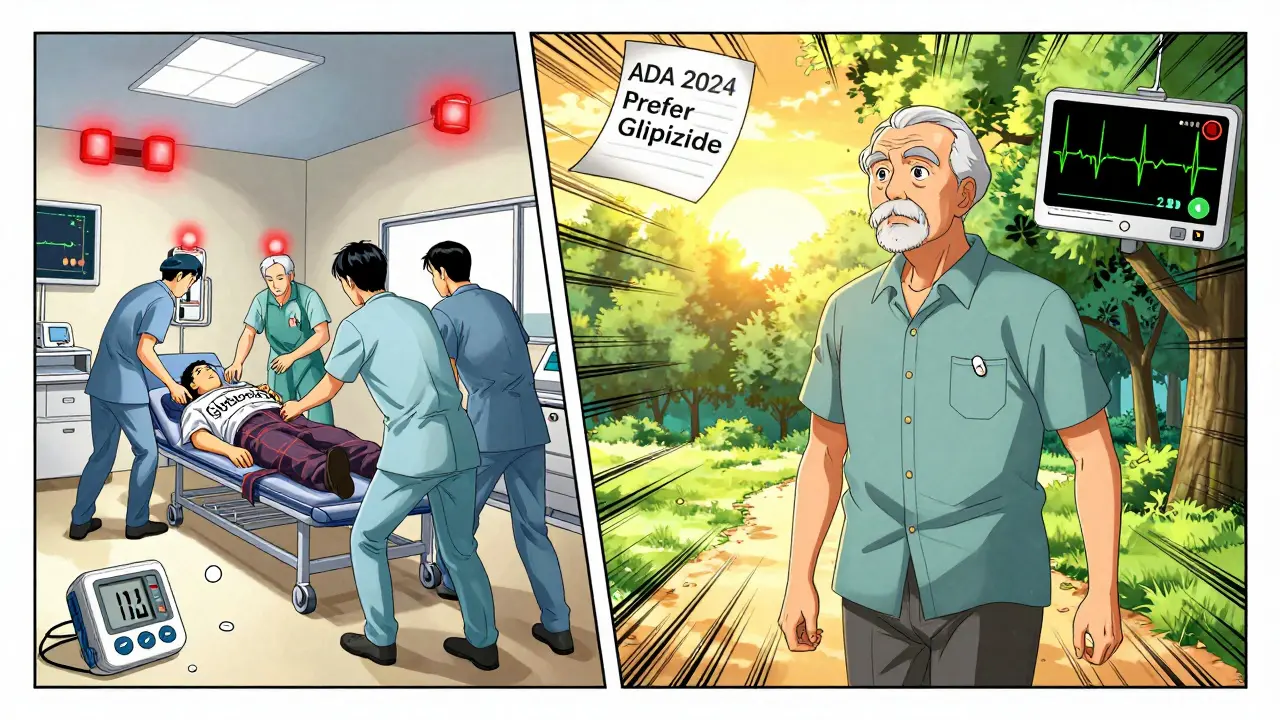
The American Diabetes Association updated its 2024 Standards of Care to say: “Prefer short-acting sulfonylureas (glipizide) over long-acting agents (glyburide, glimepiride) when sulfonylurea therapy is indicated.” That’s the clearest signal yet: the days of treating all sulfonylureas the same are over.
Final Thought
Sulfonylureas aren’t going away. They’re too cheap, too effective, and too necessary for millions worldwide. But the idea that they’re all interchangeable? That’s outdated. The data, the guidelines, and real patient experiences all point to one thing: if you’re taking a sulfonylurea, make sure it’s glipizide-not glyburide. Your body will thank you.


Ivan Viktor March 4, 2026
Glyburide is the diabetes equivalent of using a sledgehammer to crack a nut. I’ve seen patients on it go from "I feel fine" to "I need a ride to the ER" in 20 minutes. Glipizide? Now that’s a precision tool. No drama. No midnight panic attacks. Just steady, quiet work. Why anyone still prescribes glyburide is beyond me.
Zacharia Reda March 4, 2026
I mean, I get that glyburide is cheap, but so is a broken leg. You don’t save money by choosing the drug that turns your grandma into a human emergency button. Glipizide costs the same, works better, and doesn’t make you sleep with one eye open. If your doc pushes glyburide, ask them if they’d take it themselves.
Donna Zurick March 5, 2026
Switched from glyburide to glipizide last year. No more 3am panic attacks. No more ER visits. Just quiet, stable numbers. My doctor said it was a "minor change" but it felt like getting my life back. Seriously, if you’re on glyburide-ask for glipizide. It’s not a request. It’s a survival tactic.
Tobias Mösl March 7, 2026
Let’s be real. This whole "glipizide is safer" thing is Big Pharma’s distraction tactic. They want you to think it’s about safety. It’s about patents. Glipizide’s patent expired in 1998. Glyburide’s is still sticky because the metabolites are harder to replicate. The FDA doesn’t care about your kidneys-they care about liability. You think they’re protecting you? They’re protecting lawsuits. Glipizide isn’t safer. It’s just less profitable to sue over.
tatiana verdesoto March 7, 2026
I’m a nurse and I’ve seen so many patients crash on glyburide. One man, 78, had three falls in six months. All from lows. We switched him to glipizide. He started gardening again. He told me, "I didn’t realize how much I was scared to walk to the mailbox." That’s the real cost-not the pill. It’s the loss of freedom. Please, if you’re reading this and on glyburide: talk to your doctor. You deserve to feel safe.
Ethan Zeeb March 9, 2026
I’ve been on glipizide for five years. I started at 2.5 mg like they said. Didn’t even need to increase. No lows. No drama. I used to be on glyburide. I lost a weekend once because I passed out in the garage. My wife called 911. I don’t care what the data says. I care that I’m still here. Glipizide saved me. End of story.
Darren Torpey March 11, 2026
Glyburide is the diabetes equivalent of driving a tank through a kindergarten. Glipizide? That’s a Tesla with autopilot. Smooth. Quiet. Doesn’t randomly lurch into a wall. And yeah, it’s dirt cheap. You’re not paying for a luxury. You’re paying for not dying. Why are we still having this conversation in 2024? The science is clear. The patient stories are screaming. The FDA’s warning labels are basically a neon sign. Stop ignoring it.
Mariah Carle March 11, 2026
There’s a deeper truth here. We treat diabetes like it’s a math problem. But it’s not. It’s a dance between biology, fear, and the illusion of control. Glyburide gives you control-until it doesn’t. Then you’re just a statistic. Glipizide doesn’t promise control. It offers rhythm. A gentle pulse. A breath. Maybe that’s why it works. Not because it’s better. But because it listens.
Justin Rodriguez March 12, 2026
For anyone considering a switch: if you have any kidney impairment-even mild-glipizide is the only rational choice. Glyburide’s metabolites hang around like uninvited guests at a funeral. Glipizide? It leaves quietly. No trace. No buildup. Just clean hepatic clearance. And yes, it’s generic. No copay drama. No insurance hurdles. Just science. And it works.
Siri Elena March 12, 2026
Oh honey. You think glipizide is the answer? How quaint. The real problem is that we’re still using 1950s pharmacology to treat 21st-century bodies. Why not just admit sulfonylureas are obsolete? We’ve got GLP-1s, SGLT2s, even once-weekly insulin. Why are we clinging to this? It’s not about glyburide vs. glipizide. It’s about clinging to the past because the future is too expensive. And frankly? We’re all just patients in a waiting room for a better world.