

Every year, millions of people in the U.S. take benzodiazepines for anxiety, insomnia, or seizures. Drugs like valium, xanax, and lorazepam work fast. They calm nerves, help you sleep, and stop seizures. But for many, especially older adults, the cost is higher than they realize. These drugs don’t just ease symptoms-they change how your brain works. And the changes can stick around long after you stop taking them.
How Benzodiazepines Affect Memory
Benzodiazepines don’t just make you drowsy. They block your brain’s ability to form new memories. This is called anterograde amnesia. You might forget what you ate for breakfast, where you put your keys, or even a conversation you had five minutes ago. It’s not just being forgetful-it’s your brain temporarily shutting down the part that saves new information. Studies show this effect happens with every benzodiazepine, no matter the brand. The hippocampus, the brain’s memory center, gets suppressed. Even if you feel fine, your brain isn’t recording things the way it should. This isn’t just a short-term glitch. Long-term users-those taking these drugs for months or years-show clear deficits in recent memory, working memory, and processing speed. One 2023 review found that long-term users scored, on average, 10 to 15 points lower on IQ tests than non-users. That’s like going from an average IQ of 100 to 85 or 90. It’s not dementia, but it feels like it. Worse, these memory problems don’t vanish when you quit. A study tracking people for 10 months after stopping found that only 45% returned to normal memory function. The rest kept struggling with brain fog, forgetting names, losing track of conversations. Brain scans show no permanent damage, but the brain’s wiring still doesn’t work right. Functional changes, not structural ones, are to blame. Your brain learned to rely on the drug-and now it’s out of practice.Falls and the Hidden Danger for Older Adults
If you’re over 65 and taking a benzodiazepine, you’re at higher risk of falling. Not just slipping on a wet floor-serious falls that break hips, cause head injuries, or land you in the hospital. The data is clear: benzodiazepine users have a 50% higher chance of falling and a 70% higher chance of breaking a hip compared to those who don’t take them. Why? These drugs slow down your reaction time by 25%, mess with your balance, and dull your awareness of where your body is in space. You might not feel dizzy, but your muscles aren’t responding fast enough to catch yourself. High-potency drugs like alprazolam and lorazepam are even riskier than older ones like diazepam. That’s why the American Geriatrics Society has listed benzodiazepines as unsafe for older adults since 2012. In the U.S. alone, benzodiazepines contribute to about 93,000 emergency room visits for falls each year. Most of these are preventable. Many older adults are prescribed these drugs for insomnia or mild anxiety without ever being told about the fall risk. And because the effects are subtle, patients often don’t connect their falls to the medication. They blame age, poor lighting, or bad stairs. But the drug is often the hidden cause.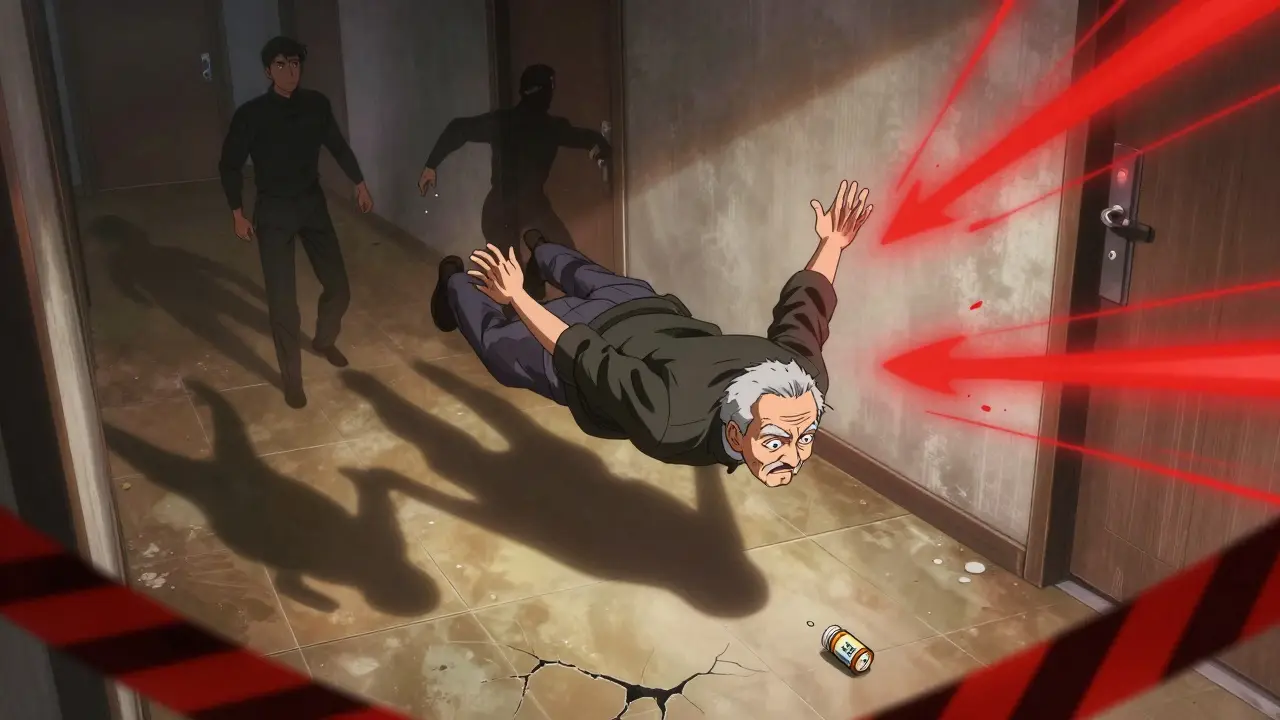
Tapering Is Not Optional-It’s Essential
Stopping benzodiazepines cold turkey is dangerous. You could have seizures, extreme anxiety, hallucinations, or even delirium. That’s why tapering-gradually lowering your dose-is the only safe way out. The gold standard is the Ashton Protocol, developed by Dr. C. Heather Ashton in the 1980s. It recommends cutting your dose by 5% to 10% every one to two weeks. For long-term users, even slower is better-some people need only 2% to 5% reductions per month. The goal isn’t speed. It’s stability. Switching from a short-acting drug like xanax to a long-acting one like diazepam makes the process smoother. Diazepam stays in your system longer, giving your brain fewer abrupt shocks. A 2021 study of 312 long-term users found that using this method led to a 68.5% success rate at six months. That’s more than double the success rate of people who tried to quit without a plan. But tapering isn’t easy. About 22% of people need to pause their taper for a few weeks because withdrawal symptoms get too intense. Around 8% give up entirely. Common symptoms include anxiety spikes, insomnia, ringing in the ears, and a feeling of being detached from reality. Many describe it as “brain zaps” or “cotton-headed thinking.”What Recovery Looks Like After Stopping
People who stick with a slow taper often see improvement. Cognitive gains start within weeks. Processing speed improves by 15% by week 8. Sustained attention gets better. Brain fog lifts. Memory starts returning. One survey of over 1,200 people who attempted to quit found that 73% reported noticeable cognitive recovery within six to twelve months. They regained the ability to focus at work, remember names, follow conversations. But it takes patience. You can’t rush it. Some people need a full year to feel like themselves again. Tools like BrainBaseline or other cognitive tracking apps help. Writing down daily mental clarity on a scale of 1 to 10 can show progress even when it feels invisible. Many users on forums like r/benzowithdrawal say the same thing: “I didn’t believe I’d get better-but I did. Just slowly.”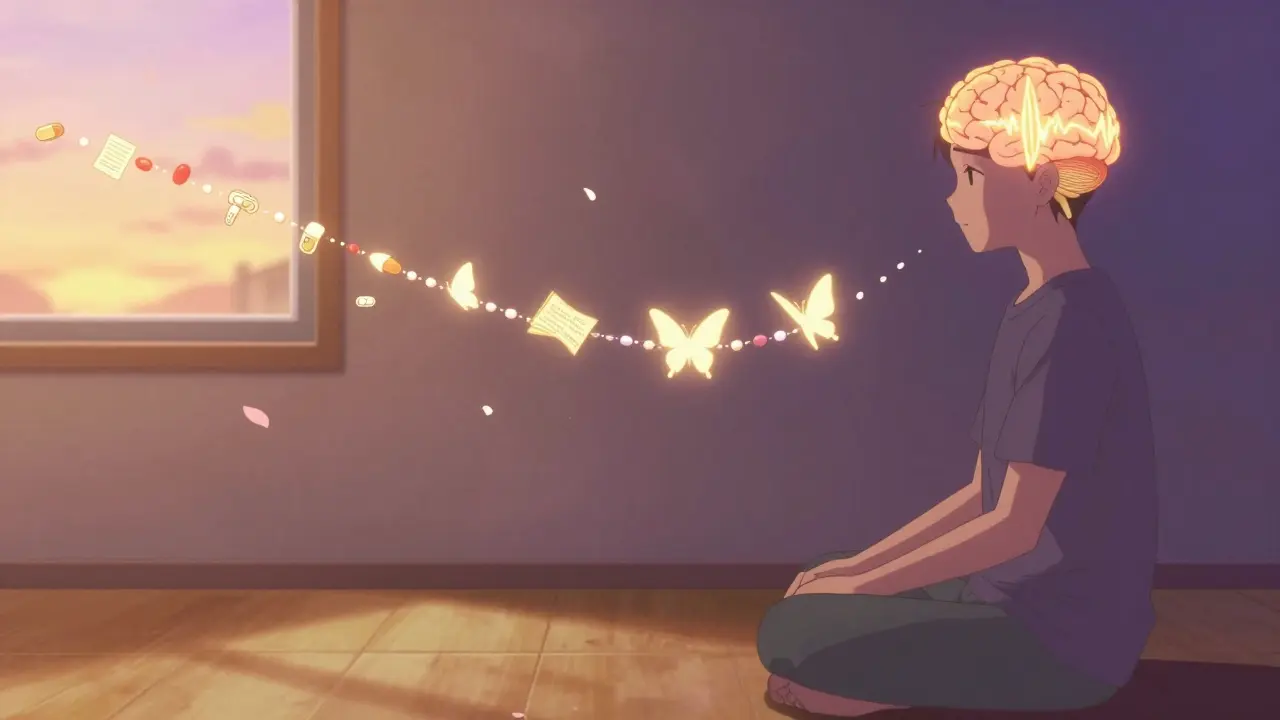





veronica guillen giles January 3, 2026
Oh wow, another ‘benzos are evil’ manifesto from someone who clearly never had a panic attack at 3 a.m. while their house is on fire. I get it, memory loss is scary-but so is spending 12 years in a psychiatric ward because your doctor didn’t give you a lifeline. Not everything is a villain. Some of us needed these drugs to stay alive. Just saying.
erica yabut January 4, 2026
Oh, so now we’re treating anxiety like it’s a bad haircut? ‘Oh, you feel unsafe? Here’s a 50mg dose of diazepam and a pat on the head.’ No, no, no. This isn’t medicine-it’s emotional sedation for a culture that can’t tolerate discomfort. We’ve outsourced inner peace to a pill because therapy costs $200/hour and mindfulness requires… effort. How quaint. The hippocampus isn’t the only thing being suppressed here-it’s our collective will to grow.
Tru Vista January 4, 2026
benzos = bad. memory loss = real. taper = hard. ashton protocol = gold. xanax = short acting = bad for taper. diazepam = better. brain zaps = real. 73% recover. 22% pause. 8% quit. done.
Vincent Sunio January 6, 2026
The assertion that benzodiazepines cause a 10–15 point IQ decline is misleading. The cited study does not control for pre-existing cognitive deficits, socioeconomic status, or comorbid psychiatric conditions. To imply causality without multivariate analysis is not scientific-it is alarmist. Furthermore, the Ashton Protocol, while historically significant, lacks randomized controlled trial validation in modern populations. One must question the editorial integrity of this piece.
JUNE OHM January 7, 2026
THEY’RE DOING THIS ON PURPOSE. 🤯 Big Pharma knows if you get off benzos, you start thinking. And if you start thinking… you might ask why your rent doubled, why your meds cost $500, why your therapist is on a 6-month waitlist. So they keep you doped up, doc. They don’t want you healed-they want you compliant. 🇺🇸 #BENZOSAREBRAINWASH #CIAFARMS
Philip Leth January 8, 2026
Man, I lived in Tokyo for three years and saw so many elderly folks on these meds. No one talks about it. They just… fade. Quietly. One grandma I knew would forget her grandson’s name every time he visited. She’d smile and say, ‘Oh, you’re so sweet to come by.’ But she didn’t remember he was her grandson. That’s not aging. That’s pharmacology. This post? It’s the truth we’re too polite to say out loud.
Angela Goree January 8, 2026
93,000 ER visits?! That’s not an accident-it’s negligence. Why are doctors still writing these prescriptions like they’re candy? It’s not just the elderly-it’s moms with anxiety, veterans with PTSD, college students with insomnia. And then they blame the fall on ‘old age’ or ‘bad lighting.’ No. It’s the damn pill. We need a federal ban on long-term benzo scripts. Period. 🚫
Shanahan Crowell January 9, 2026
I was on 2mg of lorazepam for 8 years. I thought I was managing stress. Turns out I was just avoiding life. Tapering was the hardest thing I’ve ever done-but I did it. Took 14 months. Brain fog? Gone. Memory? Back. I can read a book now without rereading the same paragraph 5 times. If you’re reading this and you’re scared-don’t be. Just start slow. You’re not broken. You’re just wired wrong. And you can rewire.
Kerry Howarth January 9, 2026
Good post. Key takeaway: don’t stop cold. Talk to your doctor. Track your progress. Use a journal. Recovery isn’t linear. Some days you’ll feel worse. That’s normal. You’re not failing. You’re healing. Keep going.
Tiffany Channell January 11, 2026
Of course the ‘recovery’ stats are inflated. People who succeed are the ones who had supportive families, stable housing, and no trauma history. The rest? They’re the ones screaming into the void on r/benzowithdrawal with no job, no money, and no hope. This article romanticizes recovery like it’s a TED Talk. It’s not. It’s a war zone.
Joy F January 11, 2026
It’s not just the benzodiazepines-it’s the entire capitalist neuro-industrial complex that pathologizes normal human suffering. We’ve turned existential dread into a DSM-5 code. We’ve commodified trauma. We’ve turned the sacred act of grieving, of being overwhelmed, of being tired, into a chemical correction. The hippocampus doesn’t just forget your keys-it forgets your soul. And the system? It doesn’t care. It just wants you to stay medicated, productive, and quiet.
Haley Parizo January 12, 2026
They told me it was ‘safe’ because it was ‘non-addictive.’ They lied. I was on Xanax for three years. I didn’t know I was dependent until I tried to quit and my heart was pounding like a drum solo in my chest. I thought I was dying. I wasn’t. I was detoxing. And the worst part? No one warned me. Not my doctor. Not my therapist. Not my mom. We need mandatory patient education. Like warning labels on cigarettes. Only worse. Because this isn’t just cancer. This is erasure.
Ian Detrick January 12, 2026
It’s funny-when you finally stop, you realize you were never anxious. You were just numb. The anxiety was the noise you drowned out. Now that it’s back? It’s not the enemy. It’s the signal. The system didn’t break. It was trying to tell you something. And now you’re listening.
Angela Fisher January 13, 2026
I’ve been off benzos for 18 months. I still have brain zaps. I still forget names. I still feel like I’m underwater sometimes. And I’m not alone. But here’s the thing: I’ve met people who died trying to quit. People who jumped off bridges. People who OD’d because their doctor said ‘just stop.’ This isn’t just about memory. It’s about survival. And if you’re reading this and you’re still on them? Please-don’t wait for a ‘perfect plan.’ Find a doctor who knows the Ashton Protocol. Find a community. You’re not weak. You’re not broken. You’re just tired. And you deserve better than a pill that steals your mind to make you feel okay.